Friday, October 18, 2013

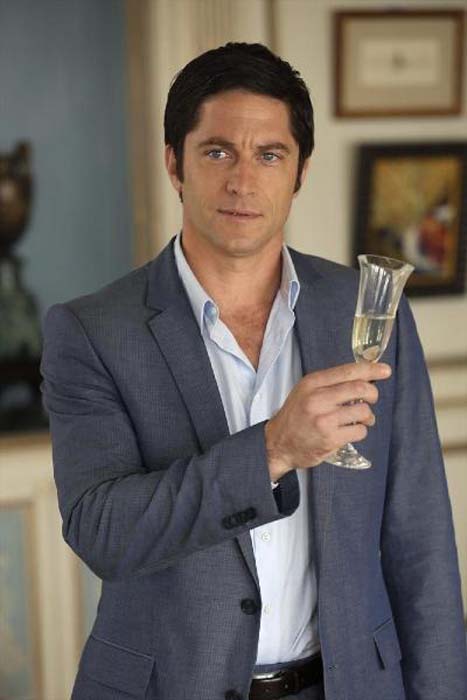
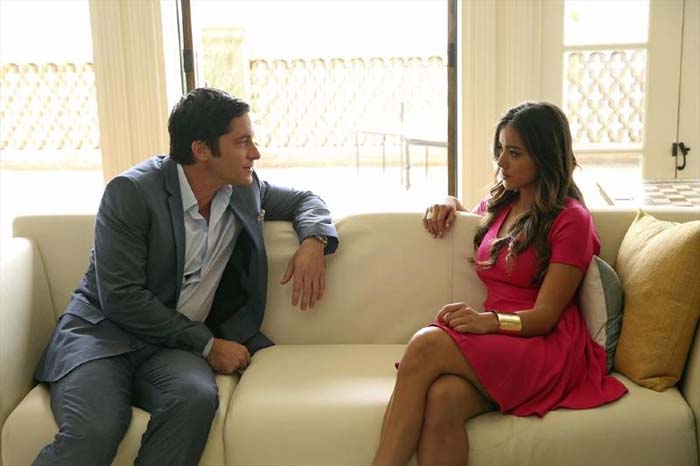
In Which I Review Once Upon A Time in Wonderland (1x2)

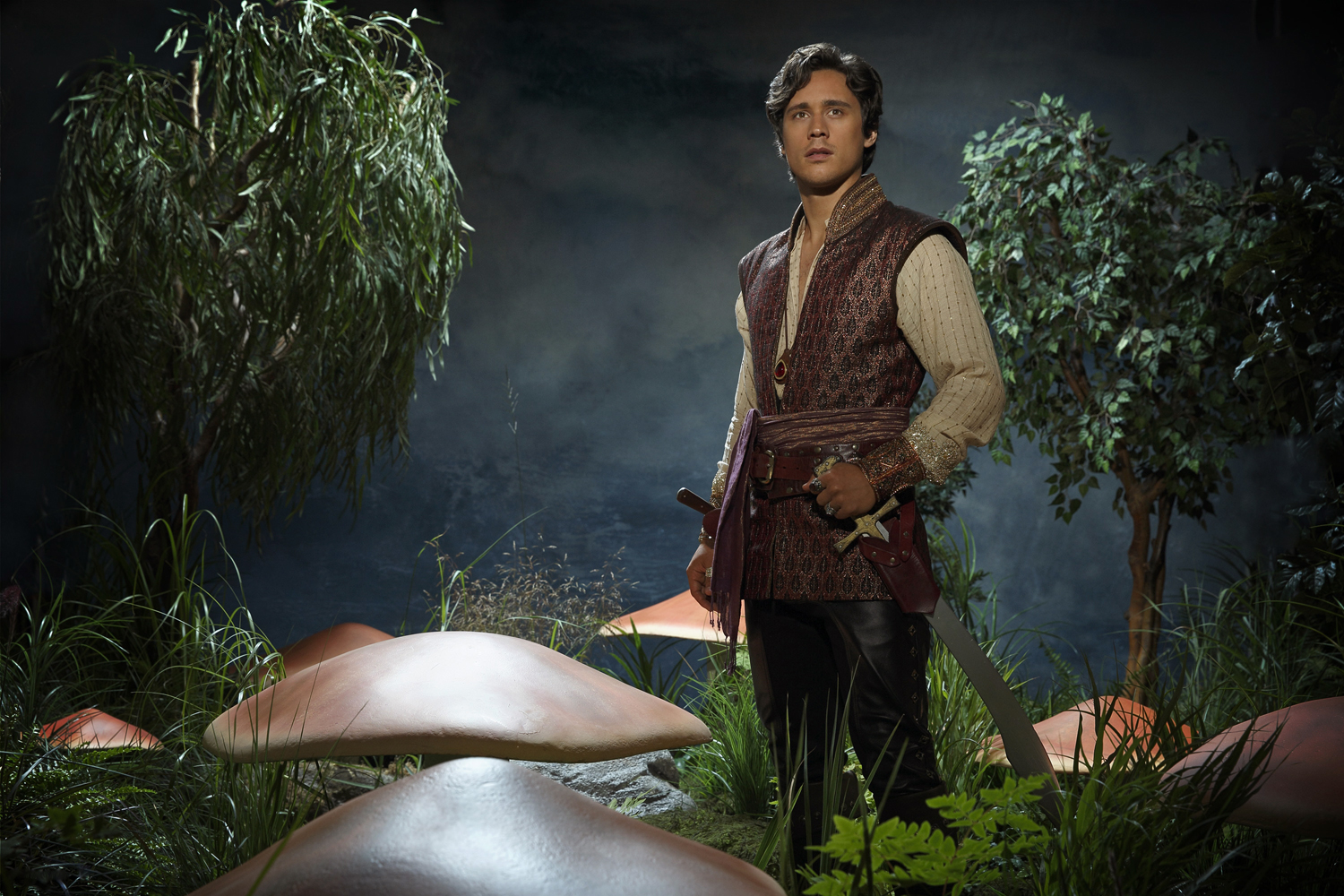
The real basis of trust is faith. But the problem with faith is that you can never be one hundred percent sure that your faith isn't being misplaced. What do you put your faith and trust in? True love? Friendship? Family? Magic? And when evidence is telling you that your faith and trust are wrong, what then? In this weeks episode, "Trust Me," Alice struggles with her faith in Cyrus and everyone begins to doubt each other. 

There was a lot going on this week--Agrabah of the past, Wonderland of the past, Wonderland of the present with Alice and Knave, Wonderland of the present with the Red Queen and Jafar, and Wonderland of the present with Cyrus. Honestly it was a bit overwhelming. I understand that OUATinWL is supposed to be an open and shut book with 13 episodes telling a whole story but there is so much going on that it doesn't feel like they are taking time to build anything properly. Cyrus and Alice are cute together but so far their interactions haven't given me the happy shipper heart that I've come to expect from ONCE. Actually, I really like Alice and the Knave at the moment, even though I'm not supposed to be shipping them. Streamlining is hard when you've literally opened the door to having any possible fairy tale or classic story at your disposal. I really like Jafar as a character but it's hard to fit him into the story right now because everything is supposed to be heavily focused on Wonderland. It makes reviewing difficult because I'm trying to pick up themes and motifs but the plot is getting in the way.

I think the first thing we need to establish are the laws of magic. According to our genie, Cyrus, there are four: cannot kill anyone; can't bring back the dead; can't change the past and can't make anyone fall in love. Jafar wants to change the rules of magic and believes he can do this with Cyrus. In the Disney version of Aladdin, the blue genie also gives a similar speech about the rules of his wishes, with the exception of the third. Because the writers deliberately stuck in the third rule concerning the past, I would contend that it is probably the rule we need to be the most concerned about. For some reason, Jafar wants to change the past. Given that most often our villains motivations are both self serving and poignant, I suspect Jafar has what he considers to be a good reason. Does he want to prevent someone from dying? We know there are consequences to trying to resurrect someone from the dead--it basically turns them into Frankenstein's monster. If Jafar wanted to avoid this, the best option would be to prevent them from dying. Also, I suspect it is someone from when he was much younger. The show opened in Agrabah many years ago and Jafar was already on his mission. Jafar has probably been obsessed with this mission and collecting power for himself for a very long time.

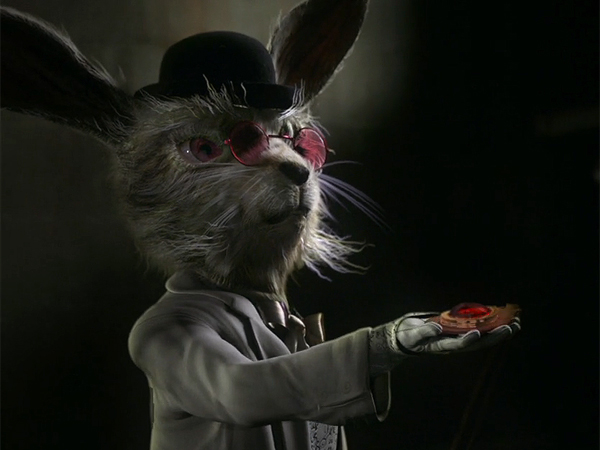
So what is his relationship with the Red Queen--who, I'm sad to say, isn't improving in the second week. She and Jafar have a relationship that is laced with sexual overtones but ones that are dangerous and violent. The Red Queen has no interest in hearing the complaints of her subjects, in fact she is out right bored with them. She shows no signs of regret or sadness when Jafar turns several of her people to ash; yet she declares that she "took" Wonderland (from Cora, the Queen of Hearts I suspect) and Jafar points out that her only flaw is that she wants to earn her people's respect, not just take it. However, the Red Queen does have a cunning streak to her--which is to be expected, she is a chess piece in the original book. She outsmarts Jafar by using the White Rabbit (poor sad bunny) and now has an equal share in the overall scheme by possessing the bottle.

Meanwhile Alice has formulated a plan to rescue Cyrus. It's a two part plan: find Cyrus's bottle and then make three very simple and easy wishes. Once Alice makes her wishes, Cyrus returns to his bottle and the Knave can summon him again and wish them together. When the Knave says "doesn't this mean that Cyrus would be my genie?" Alice replies, "Guess I'll just have to trust you." They then set out to find the bottle which Alice says is under the Tum Tum Tree. The interaction between the Knave and Alice is really the highlight of the show.
The romance between Cyrus and Alice is slowly building but they haven't won me over yet. This was hindered by the doubts Alice and the Knave expressed along the way that Alice's genie love has moved on in the year they've been apart. Their flashback scenes together were cute, especially the sword play but I guess I'm confused as to why they need to hide the bottle. Why not just keep it on Alice at all time? If she refuses to spend her wishes then the bottle is fine. It seems to me that hiding the bottle might cause more problems. The relationship aspect escalated quickly. This was what ONCE did perfectly with Snow White and Prince Charming. We saw their happy life for a brief instant in the pilot and then the writers flashbacked so that we could see them falling in love. This time around we're jumping so fast that during one flashback Alice and Cyrus have clearly just met, the next they are kissing and then declaring their love for each other. There are a lot of missing pieces that need to be considered.

Along the way we learn a bit about the Knave, Will. Apparently he's a bit of a Lothario--but only because his heart was broken by someone named Anastasia. (Bells went off in my head. Let's lay down money that Anastasia is really the Red Queen). We don't know the whole story yet but I suspect we'll get it soon enough. After an unfortunate adventure with Silvermist, the fairy, the two take a Mock Turtle to the Tum Tum Tree where they discover Jafar. Alice then reveals how clever she really is: the bottle isn't at the Tum Tum Tree, she just wanted to see who they were up against. The real location of the bottle is at the Dandy Lion bush (it's Wonderland. There are mock turtles and clothes horses and dandy lions). But sadly when they get there, they find the bottle gone, it having been taken by the White Rabbit to the Red Queen. I think the White Rabbit's wife and children have been captured and are being held prisoner by the Red Queen--as someone with a bunny, this is a sad thought, indeed.

Miscellaneous Notes on Trust Me

--Sadly the ratings have completley plummeted. I hope ABC lets the story play out but it's not looking good.

--The Knave is full of snarky comments:
"Now you've gone and hurt the tree. Happy?"
Care Bear reference

--Cyrus's magic paper is impressive but that whole scene was such a Lord of the Rings ripoff with Gandalf and the moths.

Wednesday, October 16, 2013

In Which I Review Agents of S.H.I.E.L.D (1x4)

What happened to Coulson? This is probably the biggest mystery on SHIELD. The Centipede agenda and "superhero of the week" can take a backseat. This show should be Coulson and nothing but Coulson. The rest of the cast merely floats rather boringly around his obvious charisma and charm. After this week's episode "Eye Spy" I am wondering if our beloved Agent Coulson (or A.C. as *ahem* precious Skye has taken to calling him) is something like season 3 of Alias's Sydney Bristow--a double agent who worked for a less than ethical organization, but who now has no memory of it. If this is true, is he still getting orders? Is SHIELD in danger from Coulson and not Rising Tide/Skye like I've been thinking? Interesting twists are interesting. However this week, these predicaments were only roughly teased out. The focus of this episode was about regret and control. 

Meet Akela Amondor. Once upon a time, she was one of SHIELD's best and brightest. She was smart, resourceful, and full of potential. Akela was also, however, not a team player. She didn't value the concept of working together and that's really the driving home message of this show: teamwork solves ALL the things. The guilt over having pushed Akela too hard to be open to teamwork has been eating at Coulson ever since. (sidenote: this is not only very Marvel universe but very Whedon. Consider his best shows. Buffy = teenagers working together to defeat evil. Angel = adults fighting together to solve crimes. Firefly  = ragtag mismatch team working together to survive. Teamwork makes the world go 'round in Whedon-ville). Akela was trained by Coulson prior to the battle of New York but after a mission went wrong, SHIELD wrote her off as dead, though Coulson himself never believed it. He suspected she was out there somewhere.  And, of course, he was right.

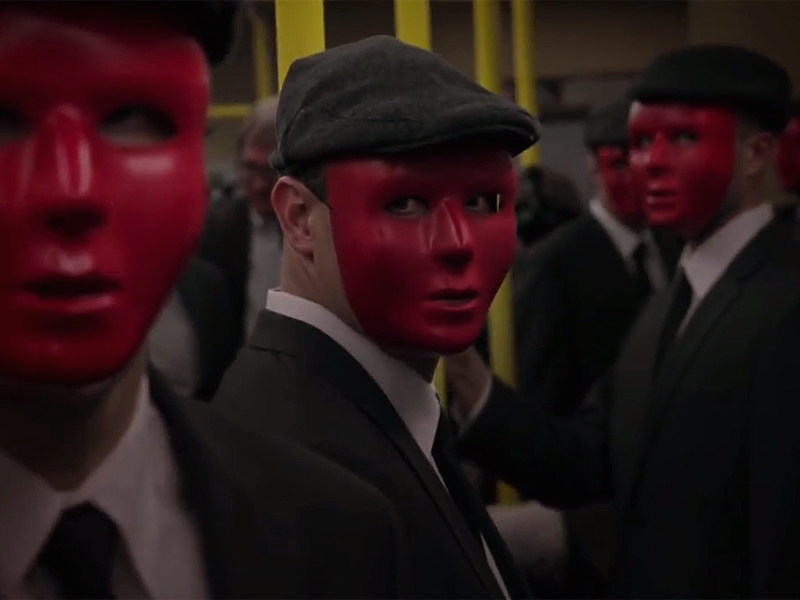
Our introduction to Akela finds her in less than noble circumstances. As in, we watch her stalk, disarm, and rob a red masked gentleman. All the red masked gentlemen are carrying briefcases handcuffed to their writs. In the blink of an eye, Akela manages to shut off the lights to the subway car and forcibly remove one of the cases. And she does this all with her eyes closed. We later find out that the red masked gentlemen are ploys by a wealthy bank who has experienced a string of robberies designed to draw out the thief. Only one of the briefcases held diamonds, the others empty. We now know that not only was Akela rather super in her disarming but that she has possess some sort of intuition/ESP in order to figure out which case had the diamonds. Coulson and the team set out to track her down, though there is a difference of opinion between Coulson and May about how to proceed. Coulson wants to hold off the manhunt and try to bring Akela in on his own--he deeply regrets the way he pushed her when she worked for SHIELD and he's determined to make it right. May, stoic stubborn May, thinks they need to use all of SHIELD's assets and get her back and take her down.

Meanwhile Akela has met with a buyer who takes the diamonds in exchange for an all access levels key card to a building in Belarus. There is a bit of a long tracking segment that really serves no purpose outside of some eyebrow raising bathroom humor and a bit of action but the overall point of it was that Akela managed to send a message to the agents.
Using her computer science know-how Skye is able to hack into a camera to find Akela. The catch? The camera is in Akela's eye. The SHIELD agents watch carefully as Akela demonstrates that she has been enhanced with a genius level camera in her eye that has X-ray vision and can receive messages from her handler. So while up until now we've been led to believe that Akela is a rouge agent who struck out on her own, turns out that she was being manipulated and controlled the entire time. The agents watch Akela over the night (she has to ask permission to sleep!) before May, who has issues with the way Coulson is handling this assignment decides to strike out on her own and bring in Akela herself. I find that Melinda May really bothers me. She's so one note--there is no emotion (good or bad) coming from her. She delivers her lines as if she is fully detached from her surroundings. And all this time we've been led to believe that May has extraordinary human ability and yet Akela almost manages to take her down and it's only when Coulson shows up with a tranqulizer that Akela is brought down. The writers better develop May quickly as I'm finding her more irritable than Skye.

Having been brought in, Akela gives us her story. After the mission that supposedly ended with her death, Akela was taken by an unseen group and kept as a prisoner for a very long time, going blind in one eye. Finally "they" brought her out of her underground cage and performed many surgeries on her eye, restoring her sight. But it wasn't really her eye; it was a synthetic eye that doubled as a camera. Akela could either work for this mysterious "they" or die--a kill switch attached to the camera that would cause instant death. Is there any chance this is what happened to Coulson? Was he working as a secret agent for some covert organization? Is he a sleeper agent inside of SHIELD?

Meanwhile, Akela still has a mission to complete and Coulson sends Skye and Ward to do it. After "seducing" a male guard to gain access to a backroom with some sort of mysterious board of weird, FitzSimmons work on removing Akela's eye-camera and tracking down her handler who Akela describes as 30yr old Englishman. When Coulson finally does track him down, the man is instantly killed by his own eye camera; he was a puppet to this shadow organization just like Akela. We have no more information on who these people are--but I suspect it will call come back around to Centipede, especially when Coulson speculates that the mysterious board of weird contains alien equations.

Miscellaneous Notes on Eye-Spy

--Much better episode than the two previous. The strength of this show is really in Coulson and letting Clark Gregg shine.

--"I live outside the box."

--Akela's final "what happened to him" line to May suggests that she alone recognizes that something other than his "death" at the battle of New York has happened to Coulson. She obviously knew him quite well and can tell that something is off.

--Bromance seduction scene was pretty funny.

--Skye is really starting to bother me. Not because I think she's a double agent or anything but she has this tendency to deliver the cringe worth  emotional "You believed in me now I'm going to save you" speeches. Every week.

Tuesday, October 15, 2013

In Which I Review Sleepy Hollow (1x5)

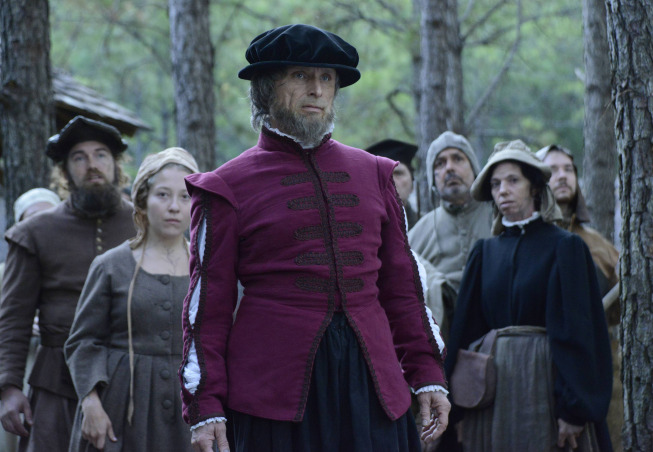
Roanoke Colony was a late 16th century attempt by Queen Elizabeth to establish a permanent English settlement in the New World. Of course, there is a reason why Roanoke Colony is remembered today even though it wasn't successful like Plymouth or Jamestown. No, Roanoke is remembered because it vanished. Or, rather, the people vanished. When the final shipment of supplies from England came back, the people of Roanoke were nowhere to be found. Naturally this has become the source of Hollywood fodder. Vampires, angles, portals of hell, and disease run amok have all been explanations for why the people of Roanoke vanished. In actuality, the settlers probably integrated with local tribes, starved to death, or were killed for being interlopers. I'm fairly certain mystical and mysterious forces were not at work here. But, that doesn't make for a good compelling television story. So what does make for a good Roanoke story? Death! Horseman! Time travel (sorta)!  In this week's episode, "John Doe," Ichabod and Abbie encounter the mystery of Roanoke and we meet another horseman. 

The titular John Doe in this weeks episode is a young boy, later named Thomas, who opens our story this week by wandering in the woods when he spies a young girl in a white dress. The young girl is dressed in modern clothing but the young boy is dressed in ye olde English clothing. Thomas begins chasing the girl only to, in turn, be chased by a horseman. But oh lo and behold, it's not a headless horseman. This horseman is carrying a bow and wearing a Viking helmet and wearing chain mail because the more anachronistic we can get the better! And then suddenly the horseman vanishes into a puff of smoke. More on him in a bit.

Meanwhile, Ichabod has grown weary of his motel room and has decided to move into Sheriff Corbin's old cabin. It's rustic and old fashioned and Abbie jokes that it will suit Ichabod just fine. Once they "spackle" the bullet holes, of course. Ichabod and Abbie are really starting to grow on me as the idea of ship, especially considering that I think Katrina might be evil.
Abbie and Ichabod have a nice talk about belief and Abbie's struggles with it. In TV land this is what we call foreshadowing--in other words, Abbie's struggle with belief will be paramount this episode. This lovely Icahabbie moment is interrupted by police business. Our young John Doe has been found and struck by a mysterious ailment--black veins. As Ichabod wonders what happened, Thomas utters a word in another language--specifically Middle English. I gotta give props to the actors here, they really tried their best to speak a language that is different from our current English. Through a lot of translation we learn that Thomas was forbidden to leave home which turns out to be Roanoke.

Icahbod and Abbie go searching for the mysterious Roanoke colony which...they find. Hidden in the depth of the woods, which involves walking on water to find, the colony of Roanoke is thriving and operating just like it would have in the 16th century. They still speak Middle English, they still dress the same. They are removed from time (this is very Storybrooke come to think of it). And everyone in town is infected but not sick. There is a lot of confusing exposition about being led to safety by the first daughter born in America but the driving home point is the horseman: it's Pestilence.

If Pestilence is unleashed unto the world, it will join with Death and bring about the Apocalypse! (because of reasons?) (technically there are 4 Horseman..where are the other ones?) (for that matter where is Satan and the Beast? Is Moloch the Beast?)

Ichabod and Abbie realize that Thomas must be taken back to Roanoke but oh no! Ichabod is infected and put into isolation where he is spiritually transported to Purgatory. Don't ask me to explain this. He's not dead--though Katrina thinks he is.
But while there we learn that Moloch, the horned demon, decides when souls can leave Purgatory and where they go. Katrina is being kept by Moloch but Ichabod is pulled out of Purgatory before Katrina can tell us why. I keep joking that Katrina must be evil because of the black flow-y dresses but now I'm starting to think I'm right. She made a pact with Moloch. Perhaps power for her and her coven in return for her soul?

Ichabod is released into the world to take Thomas home after Abbie convinces the Police Chief that it needs to happen. How you ask? Faith. Her faith and belief come into sharp focus this episode when Abbie finds herself in a chapel asking for a sign from God of how to cure everyone. God tends to not directly talk to people but a sign she gets nevertheless: water. The water in Roanoke is the key. When this is questioned, Abbie says "I've got no choice but to believe." And then she preceeded to turn on a light board with her mind.

No I'm just kidding. Abbie's not exactly like Olivia Dunham. She and Ichabod take Thomas back to Roanoke, the horseman of Pestilence hot on their heels. Thomas and Ichabod dunk themselves in the magical waters of the village...before it vanishes. Yes, it vanished. The town, the people, all of it. POOF. Ichabod then figures out the people of Roanoke were dead all along but Thomas returned to flesh and blood when lured into our world in order to start a plague. Now that Thomas has been returned, everyone who fell sick outside in the real world is now cured! It's a miracle!

Oh and our Headless Horseman Death is back. Apparently he's been living under the sea (in a pineapple no doubt)

Miscellaneous Notes on John Doe

--Ichabod encounters our world this week with: plastic, sticky tape, Spackle, and kidnapping databases.

--Nice inside joke about the idea of Ichabod getting new clothing. The fandom is horrified.

--"What was that?"
"Adrenaline."
"I like it."

--Looks like we're going to have a three week break from Sleepy Hollow but when we return: more Horseman, more mythology and Walter Bishop (who isn't really Walter but will always be Walter to me!)


Monday, October 14, 2013

In Which I Review Once Upon A Time (3x3)

"She is quite a common fairy,” Peter explained apologetically, “she is called Tinker Bell because she mends the pots and kettles .”---Peter Pan and Wendy, J.M. Barrie

In the host of characters Disney introduced to me as a child, Tinkeberll ranks as one of my least favorites. She is rather saucy and minx like and she betrays Peter Pan and Wendy to Captain Hook. My young childlike brain did not understand what the word "slutty" entailed but having grown up since then, her short skirt, swaying hips and attempted murder of the Wendy Bird just because Peter paid attention to Wendy all make her a little hard to swallow. But what's important about Tink and her history within her own mythology is that Peter gives her a second chance. He forgives the betrayal and believes that she can do better. And that was ultimately the theme of this episode, "Quite a Common Fairy": can you ever have a second chance? Tink wants a second chance from Blue; Regina wants a second chance at love and hope; Nealfire wants a second chance with Emma and his son. The characters on this show are so morally gray that it varies from episode to episode whether or not I think they ever deserve a second chance. 

You've Got a Friend in Me 

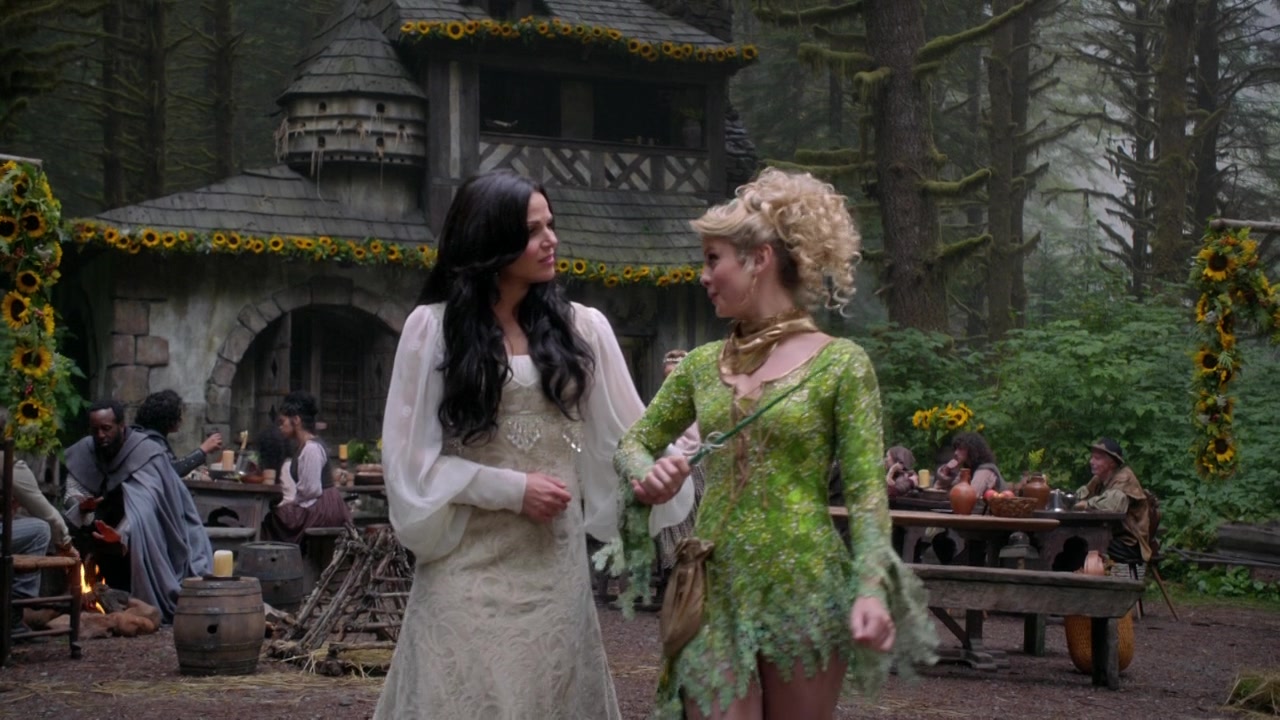
The events of this weeks flashback take place after season two's "We Are Both" when Regina first experienced power and magic but before the events of "The Doctor" in which Regina went fully dark side and crushed a heart for the first time. It's nice to see Regina with a friend--she has never had them. We can speculate that Regina grew up friendless and alone, emotionally tortured and abused by her mother Cora. After Regina is forced to marry the King and become a stepmother to the little girl she blames for her fiancee's death, her life becomes one of intense rage and seething hatred. As she says to Tink, "my happy ending looks like Snow's head on a plate." Having a confidant like Tink, someone who is a proponent of all that is good and pure and hopeful, would have been an interesting turn for Regina. And then--like she does--Regina blew it.

Tinkerbell of the past seems to be a very good fairy--despite what Blue says, but oh...we shall get to Sneaky Blue Fairy. She believes in second chances and that you can turn away from darkness. All things a fairy should believe in. She even goes so far as to steal pixie dust from Blue in order to help Regina find love again. Regina's true love, her next shot at happiness, is just around the corner and Tink is determined to help her find it.

Using her magic (and ill gotten) pixie dust, Tink casts a spell that allows Regina to see to whom her heart truly belongs. And in a surprise to absolutely no one who has been paying attention, it's revealed to be Robin Hood. But this is before he met, courted, wed and had a child with Maid Marian. Oh what could have been! Had Regina chosen hope and love over her rage, would any of what we've seen so far in three seasons have come to pass. Roads diverged in a yellow wood and Regina (and pretty much all of our characters) take the WRONG one. Regina, in a pure Regina move, bolts before meeting Robin. As she tells Tinkerbell later, her rage was all she had. If she let go of it, she felt as though she might fly away. The final scene between Tink and Regina in the Enchanted Forest was really sad--so close to friendship and Regina thrusts it away. And poor Tink! She is in so much trouble...speaking of which....

If you are still of the opinion that the Blue Fairy is not an evil puppet master, toying with fate and destiny and behind basically everything, please go rewatch this episode (along with season one's "Dreamy" and "The Return"). Oh Sneaky Fairy! Why why why does the Blue Fairy think Regina doesn't deserve a second chance? She is the judge of what is fairy like and apparently that doesn't include forgiveness or compassion or second chances. Her hard lined opinion that Regina's fate is as dark and evil is almost beyond comprehension. She sends Young Bae to a land without magic because there is darkness in his life and she wants to "help" (yeah, right) him but yet with Regina her fate has been sealed and Tink needs to stay away? Oh Sneaky Fairy I am on to you! This has been my theory for a very long time but I believe that Blue is in league with Peter Pan and has helped engineer events that led to Henry getting captured and taken to Neverland. This is a giant chess game and certain pieces had to be in place. Rumple had to become the Dark One; Bae had to leave home and eventually land in Neverland in order to be young for a very long time in order to meet Emma and produce Henry; Emma had to be emotionally closed up when she met Henry for the first time so his "death" would really hit her. If Tink had been successful in her rehabilitation of Regina, none of what needed to happen would have happened. So what does Blue do?
She stops believing in Tinkerbell, causing the poor fairy to lose her wings and become human.There are still quite a few questions, such as "how did Tink get to Neverland?" and "why was Tink's casting call for someone who likes to party?" when we saw none of that this episode. Me thinks we will have some more Tink backstory before this season is done. But I suspect Blue banished her to Neverland for giving fairies a bad name. Oh Sneaky Fairy is Sneaky.

Does This Island Make Me Look Homicidal? 

 And then we meet Tinkerbell in present day Neverland and she's a wee bit...different. Her once bright green costume is sad and in tatters. Her once perfectly coiffed hair is a mess. She looks older and more likely to kill you (or knock you out with poppy powder) than to help you find true love. Her resentment toward Regina is powerful. She wants revenge and Regina is even willing to let her have it. But, Regina knows a thing or two about revenge. She knows that all it does is blacken your heart; it is the first step down a long path that changes your fundamental being. You can never come back from crushing your first heart. It was really wonderful to see Regina open up about knowing that the path she chose was the wrong one. You can tell that being in Neverland means confronting your past and Regina's past isn't so noble and heroic. Just take a look at her unbelievably black heart.
Can these two help each other recover from the ills they inflicted on others, and indeed, on the ills that were inflicted upon them? In a show that is all about hope, I'd say so. Regina now more than ever wants that second chance. She is tired of being the Evil Queen and wants to be Regina again and that means opening up to the possibility of her happy ending not involving Snow's head on a platter. She has quite a ways to go but with Tinkerbell there is someone to help guide her. So long as Tink doesn't try to kill her again.
And speaking of homicidal Neverland-ers: "I call it target practice." Peter Pan is basically trying to butter Henry up. I think he needs Henry to hand over his heart willingly, and in order to do that, Peter Pan has to show Henry that can have a family right here in Neverland: a place where you're never told no. Henry's psychological profile is a pretty simplistic one; he believes in good and evil and often times has difficulty seeing the gray areas. But what Henry wants more than anything is to be a hero. This is why in season one, he ate what he knew was a poisoned apple turnover in order to prove to Emma that the Curse was real. He wants sword fights, magic spells, and princes in disguise. Peter's greatest strength is recognizing people's weaknesses. Last week he played on Emma's abandonment issues, this week he played on Henry's desire to be a hero. According to Peter, magic is dying (victory dance, I was right) not just in Neverland, but in all realms. It will take the heart of the truest believer to restore magic to the worlds. By offering up his heart, Henry will be saving countless others and that is Henry's ultimate dream. So now that Henry knows why Peter Pan wants him, what's next? Well I think we're going to see Henry get closer to Peter, becoming part of the family. When Regina and Emma come for him, he may not want to go.

Shadow Play

That Shadow is the stuff of nightmares. Remind me never to declare my belief in anything near a window. So before I discuss this portion of the episode, I really wanna talk about Neal's character and who he is and why what happened last night is both acceptable and unacceptable. Nealfire is the name we use in order to remind ourselves that Neal is also Baelfire who was strong and brave and heroic and made huge sacrifices. A lot of the vitriol aimed at Neal from the fandom is that he is no longer like Bae, instead of being heroic and brave he is a coward who runs away at every opportunity. To some extent this is true, though this really depends on what goggles you are currently wearing. To me, in my very subjective viewpoint, Neal letting Emma go back in the "Tallahassee" episode was maybe one of the bravest things I've ever seen. He gave up his happy ending for the fates of thousands who were cursed and depending on Emma to save them someday. There are many who disagree with me and that's ok. But last night's plan on how to get to Neverland was very hard for me to rationalize. The Neal I know and love would never put a little child in harm's way knowing what awaited that child should the Shadow succeed in taking him to Neverland. So why did he do it? Well, one of the running themes of this show is that desperate souls do desperate things. Rumple was desperate to save his son so he became the Dark One and then, after still losing him, manipulated people and events for close to 300 years. Regina was so desperate to hold on to her rage and hatred toward Snow that she cursed an entire land full of people to lose their happy endings. We can ever talk about Snow and Charming being so desperate to always believe in goodness that they are often naivee and foolish. How many times have they forgiven or tried to forgive Regina? They are, as Emma said, "infuriatingly optimistic" and it grates on people's nerves.
So last night, Nealfire using Robin's four year old son to lure the Shadow in was another example of a desperate soul doing something wrong but for maybe right reasons. What wouldn't a parent to do to save their child? Look at Rumple. I think this is the beginning's of Neal coming to understand his Papa in way he couldn't until he knew he had a son. Until Neal learned what having a child meant and the lengths people will go to to protect their child, all Neal could see was that Rumple wasn't a good man. Now, though? I full expect that Neal and Rumple will bond over the desperate things they've done. Roland is safe; Mulan, Robin, and Little John were all there. Was Roland in any danger? I'm not sure. But I can tell you that there are a great many happy SwanFire shippers today. And I am one of them. I am so happy that Neal is in Neverland and one step closer to Emma I can barely breathe. When Neal jumped out of that window--just like Emma jumped off the Jolly Roger in 301--I screamed and danced. It won't be long now until they are reunited! However, I am slightly worried that the first person Neal ran into is Felix who is almost as scary as Peter Pan.


Miscellaneous Notes on Quite a Common Fairy 

--Speaking of happy Shippers: SleepingWarrior is both dancing in the aisles and crying into a pillow this morning. I've always suspected that Mulan fell in love with Aurora, but I did not see this one coming. Poor Mulan. I truly hope she finds happiness somewhere else. I fear we won't see it as I think Mulan, Aurora and Philip are done for this season but I'm glad they've opened the door for the idea of a homosexual pairing.

--Spot on casting for Tinkerbell. And brilliant costume design. So glad they put her in something very traditional instead of those horrid jelly fish outfits.

--"I don't like apples"
"Who doesn't like apples?"
"It's a family thing."
Henry is getting quite sassy, isn't he?

--Roast Swan. HA! Traditionally, the third episode of the season is Rumple-less, so I'll take what I can get.

--Hook knows Charming is injured but doesn't tell Emma or Snow. Morally acceptable or unacceptable? Hmm. It's for you to decide, just like with Neal and Roland.

--Hook and Tink's history needs to be explored. Couldn't help noticing that he called her "Lady Bell" and "Tink." Even Regina called her Tinkerbell all night. (Also, here come the CaptainFairy shippers. Thus far it's not enough for me to abandon Hookriel, but oh boy does this one have potential)

--Emma's rebuff and incredulity over Hook being her boyfriend. I cheer and have happy shipper heart. Also, protective Mama Snow, "She JUST lost Neal." Perfect.


Friday, October 11, 2013

In Which I Review Once Upon A Time in Wonderland (1x1)

Television spin offs are either wins or losses. Very seldom are they in between. Fraiser is an example of a win (having followed in the wake of Cheers); Joey is an example of a loss (trying to cling to the popularity of Friends). There is neither rhyme nor reason--it all depends on the audience. One Upon a Time was one of the golden children of ABC in the past few years. Its ratings were high and its fandom loud. The second season took a bit of fall but the fandom remained just as loud and loving. So ABC decided to try for a spin-off. Introducing, Once Upon a Time in Wonderland which tells the story of an all grown up Alice, the love of her life the genie Cyrus, sarcastic curmudgeon The Knave of Hearts, the evil Red Queen and her partner in crime, Jafar. There is also a rabbit in a hat which is my very favorite thing about this show so far. Alice in Wonderland (and through the Looking Glass, which a good portion of OUATinWL is based off) is a bit of a bizarre book, and made for a very interesting Disney animation. Young Alice falls down a rabbit hole (or goes through a mirror) into Wonderland (or the mirror world, which is not Wonderland) and has all sorts of adventures involving creatures that defy imagination--a cat that grins, a rabbit in a waistcoat, a mad Queen, talking chess pieces, and puzzles and games. Hollywood has been good to the book, churning out both big and small screen adaptations. OUATinWL is an 11 episode mini series that will tell the story of what happened to Alice after she left Wonderland (twice). Let's break it down. 

Alice 

The show opens with a very familiar sight: 10 year old Alice exploding (literally) out of rabbit hole in her blue dress and white apron, running home to tell her father all about her adventures in Wonderland. But Alice has been gone for so long that her father thought her dead, and when she turns up on the porch telling stories about a smiling cat and a smoking caterpillar, he deduces that Alice is insane. Alice longs to prove her father wrong and thus spends the next 10 years of her life traveling back and forth trying to bring back proof that she is not crazy. On her last visit to Wonderland, about a year ago (actually it's 28 years but we will get to the timeline headache in a second) Alice met and fell in love with Cyrus, a somewhat exotic gene in a bottle (you gotta rub him the right way) from Agrabah.
They traveled to far off lands, had adventures, and fell in love. Cyrus proposed to Alice on the cliffs near the boiling sea and then disaster struck. The Red Queen stole Cyrus from Alice after a sword fight and Alice believed him dead, returning home to London where her depression finally forced her father to lock her up in an Asylum. After a year (28) in the Asylum, the doctors approach Alice with a procedure that will rid her of her pain and Alice consents. But the morning she is scheduled to go under the drill, her old friend the Knave of Hearts (Will) and the White Rabbit break her out with the news that Cyrus is alive. And it's off to Wonderland we shall go!

Cyrus

We know very little about Cyrus at this point. He is not a traditional fairy tale character--creators Adam Horowitz and Eddy Kitsiss has stated that he is NOT Aladdin and NOT the Genie of the Lamp from said story. In fact Cyrus lives in a bottle. Somehow he is able to leave that bottle and go with Alice on amazing adventures. Before falling to his "death" he shows Alice how their hearts are entwined on his magic necklace so that whenever they are near, it will glow. Cyrus, as you may have already guessed, is not dead. He is being held captive by Jafar in a gilded cage, dreaming of Alice--while she dreams of him. Ah, true love. Before they were separated, Cyrus gave Alice three jewels that represent the three wishes he is allowed to grant. Those are important. Remember them.


 The Knave of Hearts (Will)

His name his Will, he has a history with women who dress in scar--red, and Robin Hood will be coming onto the scene. I want you to think about that and then report back to me who Will really is.
The Knave doesn't like Wonderland and it turns out, Wonderland doesn't like him! He has been on the run for some time, though we aren't sure of his crimes. In the books, the Knave was put on trial for stealing the Queen of Heart's "tarts." Wanna bet he was caught stealing Cora's hearts instead of tarts? He is a very relcutant companion of Alice. The Knave doesn't want to be in Wonderland or think about Wonderland. He wants to go live his life but Alice blackmails him: "long ago, I helped you get back your heart. Now you you've got to help me get back mine." The Knave is also hysterical--really, he's obviously the comic relief in the show. There are wanted posters for the Knave in Wonderland so he's obviously in deep trouble--the posters don't even care if he has his head or not. 

The Red Queen

The Red Queen was one of the characters I was most excited for. In the book, she is a chess piece and I was intrigued to see how that could translate on screen. For one, she lives in a giant chess palace and talks about setting the board and the game that must be played. She is also cold, clinical, calculating, and detached. All things a chess player should be. She doesn't come across as ruthless however and she is certainly nothing like Regina on ONCE. Regina is fireballs and spitfire; the Red Queen has ice in her veins. I also strongly suspect she is Alice's sister and the wife of Jefferson the Mad Hatter. For some unknown reason, the Red Queen has struck a bargain with Jafar but we don't know what she wants out of it. A fair bit of warning, the voice Emma Rigby has chosen for her character is a wee bit grating. I'm used to Lana Parillia's low evil voice but Rigby has chosen a higher almost nasal one (again trying very hard to be the anti-Regina). While it seems that Jafar is the more powerful, I doubt it. This is the Wonderland story so I bet the Red Queen has more to do with Alice's story than Jafar. Chess is going to be important--or at least the idea of chess. Taking pieces, getting as close to the queen as possible in order to knock out the King, all integral in chess. She has also got some interesting outfits.

Jafar 

Here's my theory: when Sayid sacrificed himself by taking the bomb in the sixth season of LOST, it actually magically transported him to Agrabah where he grew out his hair to a magnificent perm and then he declared himself ruler and wizard. He has magic because of the island.

No? Ok then. It's VERY nice to see Sayid back on my screen, even if he's not Sayid. As a devotee of LOST, I have missed him. And oh boy he is creepy. Unlike with the Red Queen, we do know what Jafar wants. He wants the wishes Cyrus granted to Alice (see, told you there were important). Just based on the final scene, I would wager that Jafar and Cyrus have a history--a long complicated rough history. And that's just from one look between the two of them.

The Plot

Find Cyrus.

What? Too vague?

Oh very well. Here's the thing I am very worried about: if you haven't watched ONCE or if you're not a crazy person who can literally recite the episodes and eat spoilers for breakfast (*ahem* me) then you might be a wee bit lost. There are so many things about this week's episode, "Down the Rabbit Hole" that some people are going to be confused about. First off, Alice lives in Fictional London, not real Victorian London. Second, the Knave walking through Storybrooke in the beginning was right after the Curse was broken by Emma and Rumple set the Wraith after Regina. The Mad Hatter is a guy named Jefferson who is currently living in Stroybrooke (when he's not running around with Captain America). And Alice was in the Asylum for 28 years. How, you ask, when she's only 20? Oh fine. *cough* The Evil Queen Regina cursed all the people of the Enchanted Forest (and apparently other lands) to our world where their happy endings were taken away. They were "asleep" for 28 years (frozen and with amnesia) until the daughter of Snow White and Prince Charming broke the Curse with True Love's Kiss (please see: season one of Once Upon a Time). Alice was frozen in the Asylum for 28 years but awoke when Emma arrived into Stroybrooke and time began to move. Thus, to her, she's only been in the Asylum a year. (It took 3 pages of forum writers who literally spend hours and hours and hours talking about ONCE to figure this out).

Another thing to be mindful of: this show loves flashbacks. When Alice is in her purple dress or in general when she is with Cyrus, it is a flashback--28 years ago, the last time she visited Wonderland. The Knave, Cyrus, The Red Queen, and Jafar will also have flashbacks over the course of the series. But the main thrust of the series is to find Cyrus and defeat Jafar/The Red Queen. Along the way, we'll see characters from Wonderland and other worlds that should be recognizable.

Miscellaneous Notes from Down the Rabbit Hole 

--This show is in what we call "the death slot." Nothing--and I do mean nothing--is going to take down The Big Bang Theory. We have to fight for every viewer.

--ABC, if you want this show to be a success, you need to funnel in some money for the CGI. The animal CGI's were great but the rest of it needs a lot of work.

--The White Rabbit (who works for the Red Queen, relcutanly) is adorable and I love him and he has a hat. I am obsessed with this rabbit and his hat.

--Cheshire Cat! Slightly demonic.

--"We don't do damsels in distress."--Adam and Eddy. Clearly. Alice is totally kick-ass.

--Mallow Marsh. Excellent

--I'm already annoyed by the overly plot device-y love necklace. Expect it to be brandished about like a sword.

Overall Verdict: Check it out. I will always encourage people to watch ANY iteration of ONCE.

Thursday, October 10, 2013

In Which I Talk About Social Media and Fandom


If you’re old enough to remember life without Twitter, then chances are you are old enough to find the concept of fandom and its relationship with social media a bit perplexing. Without going too grumpy-old-man, fans of the older generation can be heard bewailing the new young innovations with cries of, “In my day, fans had nothing but conventions and snail mail! You were lucky if you got a package in the mail every other month with a magazine and a trinket.” To put it another way, in the years following the birth of Twitter, fandom has moved out of its parents basement and, blinking somewhat owlishly, stepped into the sun. Gone is the stereotypical "fan" as a white male with his comic book collection and ability to recite entire episodes of Star Trek; here to stay is the self absorbed adult, somewhere between the ages of 13-39, who clutches greedily at their smart phone and/or tablet, who speaks only in LOLz and hashtags and who will go down with their ships. However, when we look at the inner workings of fandom and social media a question does spring to mind: what is the overall relationship of the two?

Let’s clarify something first: fandom is nothing new. So long as there have products to be excited over, there have been fans. Trekkies, for example, have been around since the show began in 1966. Cult television has always produced legions of dedicated followers who stubbornly and passionately stick with the show, even after it goes off the air. But with advent of social media (and for my blog here I’m really only going to focus on Twitter even though Tumblr works in a like manner) the shift has been in power relationships. Suddenly the fandom feels that they can directly affect their product; through hashtags, tweets, retweets, and social campaigns, fans have a larger voice in the inner workings of their favorite TV show—or at least their perception is that they do.

Let’s talk Twitter. Network TV seems to have finally caught up to the 21st century in 2013 when Nielsen, the TV ratings gurus, announced that they would be incorporating tweets into their overall ratings system. Fans chuckeld ruefully, delighted that Nielsen had finally figured out what most fandoms have known for quite some time now: TV is no longer a passive event. In the days of yore, families gathered around their set and simply watched TV. Maybe the next day you discussed it around the proverbial water cooler, but that was in passing. Can you image the reaction to Ross and Rachel’s “break” if Twitter had existed? It would have trended for days. Watching TV is now—for fandoms—an acitivity. Laptops and phones in hand, getting your show to trend is almost as vital as the actual plot. And the networks are finally clued in. 
Take for example ABCFamily’s golden child, Pretty Little Liars. Now there is a show that knows how to make itself heard! Partly due to the fact that its key demographic is adolescent to teenage girls, most of whom are on Twitter during the airing of the show, PLL has become an expert at hashtag usage. In its summer finale, fan favorite “liar” Aria attends a hoe-down and ends up line dancing. It’s ludicrous and has little to do with the plot, but a hashtag down in the corner of the screen prompted fans to tweet using #MovesLikeAria and within minuets it was trending in the United States. Through various key moments of development, new hashtags pop up on screen—some with wild success and others fizzing out after a few minuets of tweeting. The big three networks—ABC, NBC, and CBS—have also picked up this trend, promoting special hashtags for individual episodes (such as #Tinkerbell for the third episode of ABC’s fantasy Once Upon A Time) and hashtags that are meant to carry the fandom through long TV arcs (again, from Once, the #SaveHenry campaign that began in the summer of 2013 and thus far has trended every episode of the third season). The amount of tweets for an episode has become a point of pride—ABC's Scandal putting out a promo where it not only speaks of its 10 million live views but its close to 200K tweets on its premiere night, thereby validating it as “the most talked about show on network TV.” Fans become excited when they realize something from their show is trending and often snap pictures of it to send to the actors as proof of love and loyalty and their own power and prowess. And in return, the networks play into the fans love by offering special rewards: 2,000 retweets will get you a script tease for the next episode; 3 million likes on Facebook and you’ll get a special scene from a new episode. And like Pavlovian dogs, we hear our bell and expect our treat.
 
But how much can a fan really affect their fandom? Can they, for instance, cause the writers and show runners to change storylines to suit fan agenda? Some think so. The Supernatural Family—fans of the CW’s Supernatural—constantly try and make their favorite ship, Destiel (Dean and the angel Castiel) canonized by participating in internet shipping polls. Nine seasons in and it doesn’t look like the fans are any closer to making Destiel real. However this doesn’t mean that fandoms don’t have power. Sometimes a powerful fandom can save a show. Fox’s Fringe only got to have a fifth season because fans of the show lobbied for it, to have a real close to the show they loved so dearly. It didn’t hurt that the Fringe fandom had a habit of smart trending on Twitter and knowing how to get attention (using specialized hashtags, for example and thereby appealing to the advertisers who fund programing), despite pulling in low numbers. So while there is power in fandom nevertheless it is often aggrandized in the eyes of the fans.

There is something to be said about how far fandoms can reach. Often times TV shows are localized to a certain geographic region. Take Doctor Who, undoubtedly one of the reigning kings of internet fandom. It’s a small, 50 yr old British show that somehow has become an American sensation. When it was announced that current Doctor, Matt Smith, would be leaving, the BBC held a 30min special in order to announce the new Doctor. By less than (ahem) legal methods, somehow, American fans managed to tune in with the Brits, making Matt Smith, Peter Capalldi, and Doctor Who all trend—in America—for long after the special. Doctor Who now has a special place in American popular culture, from the convention halls to the shopping malls and the proof is in the Twitter pudding.

The final point I want to make here about social media and fandom is the concept of identity. Fandoms come up with unique names for themselves that serve as identity markers: Oncers, Whovians, SleepyHeads, SPNFamily, Gladiators, ect. What’s interesting is that on Twitter people self identify in their profiles. Instead of having information about your actual self (age, location, job, ect) it has become a place to identity by fandom. Take my Twitter for instance; there is nothing there about my educational background or where I am from, but rather what fandoms I consider myself apart of: MCRmy (My Chemical Romance), Whovian (Doctor Who), Oncer (Once Upon A Time) and Nerdfighter (followers of John and Hank Green). These identity markers serve as unifying forces. “I belong with them,” they say.
So who is affecting whom? To be sure fandom affects social media—they are what causes trending and conversation. To a lesser extent social meida affects fandom, occasionally offering up tidbits and special prizes for those who are apart of the social media phenomenon. Overall, social media has made fandom more accessible for everyone and fandom in return promotes the product better than the network or creators ever could. These two are uniquely tied from here on out.

Wednesday, October 9, 2013

In Which I Review Agents of S.H.I.E.L.D (1x3)

Moralistic television can be annoying. This is not to say there exists TV that doesn't have a moral message--all TV does. But if the program in question beats you over head with its sugary sweet message of goodness and righteousness, it can get old fast. I don't want to say that Agents of SHIELD is going down that road--because it's a Whedon show and he knows what he is doing--but this is the third episode in a row that sets up a moral quandary and then focuses on how the characters do their best to uphold that moral in the face of adversary. It can feel a little pretentious and precious. The first week it was the idea of the everyday hero; the second episode focused on teamwork and unique individuals forming a collective whole; in this weeks episode, "The Asset," the so-called "defining moment" took center stage. A defining moment is when a person is confronted with a choice: stay and fight or run. This week we saw Skye have her own defining moment, we heard about Ward's moment and to a lesser extent May made her own choice. 
One final word before the review: Whedon's season one of television. There is a reason why I'm sticking with SHIELD for now and it's because I know what typically comes after a lukewarm season one: epicness. I grew up on Buffy and Angel and love them dearly but when you go back and watch season one of both, they are slightly cringe worthy. It takes time for the show to find its niche. Season one of Buffy, while good enough, is nothing compared to season two, and certainly nothing compared to seasons 4-6. The same with Angel, it took until the second season for it to hit its stride. I think if SHIELD can find a better mix of morality and action/adventure, it can be really good. 

 The titular "asset" this week refers to one Dr. Franklin Hall, super science genius. The episode opens with a truck driver (and SHIELD agent) assuring his handlers that "the cargo is secure." This is, in TV land, cue for the cargo to become decidedly un-secure. And lo, two black unmarked (they are always unmarked) vehicles approach the truck and it's battle of the heavy armored cars! Until the truck starts to fly, which I admit was pretty wondrous--I actually put down my pen and just watched--until it crashed. The people in the black cars break into the now crashed truck and take Dr. Hall. We then cut to the other asset of this episode--Skye, our hacktivist who is being pushed and trained by Ward. Skye, because she's a bit of a child and very unappreciative, complains the entire time about how she doesn't want to train or condition her body because it "doesn't come easy to her" like computer science. Whine whine whine. She reminds me a bit of Cordelia Chase from Buffy, has one skill and one ability and doesn't see the need to improve in other areas. Of course, once Cordy got off of Buffy  and went to Angel, she really grew on me, so Skye will probably receive close to the same treatment.

As Skye whines, Ward treats her to our moral message of the week: everyone has a defining moment in which you decide to stay or you run. Most of us know this as the natural "fight or flight" response, but it sounds more superhero if we call it a "defining moment." Skye tries to pry into Ward's background and figure out his defining moment but they are interrupted by Hall's disappearance. This is when we get a lot of science mumbo-jumbo. Ready? Hall is an expert on something called Graviton, which is a theoretical material which, if put into a theoretical machine, can change the rules of gravity and make everything topsy-turvy. Hall has been kidnapped by Ian Quinn, billionaire philanthropist advocate who continually steals Hall's work. He has brought Hall to his villa in Malta, outside of international law, to force him to power his machine in order to bring down the USA, EU, and SHIELD because they are hindering technological progress. With the help of an insider at SHIELD (dun-dun-duuuuun) Quinn was able to kidnap Hall.

So what is SHIELD to do? They can't go after Hall because of extradition laws and their hands must be clean. Cue Skye. She has no association with SHIELD because she is just a consultant and not an official agent. After some fancy hackery, Skye finds herself invited to Quinn's villa where her mission is to get Ward and Coulson in. Naturally, this does not go as planned and Quinn figures her out and Skye proceeds to dance and lie and sell out SHIELD--on the surface. Quinn has a rather enticing offer for Skye--come join my freedom fighting team and put your skills to use. For awhile it seems like Skye may actually be considering this offer, but just prior to this Skye and Ward had a little heart to heart where Ward reveals his own defining moment. Ward was the middle child and his older brother was a bully who would beat Ward and his younger brother for simple things, like eating his cake. So it should come as no surprise that when Skye is found out and Quinn questions why someone of Rising Tide would betray her principles for SHIELD, Skye defends SHIELD, that it is the brother who protects the little guy because of cake. Skye and Ward are so obviously the romance of this story, it's not even subtle.

Meanwhile, Ward and Coulson have landed on the beach, ready to invade the villa and take back Hall. But Hall doesn't want to go. He has a mission and he wants to complete it. Turns out, Hall was the insider mole who sold himself out to Quinn. Coulson, being Coulson, tries his hardest to convince Hall to come with him and be part of the good guys, but in the end he is forced to sacrifice Hall (make the hard decision) for the greater good. Hall falls into the graviton machine and is sucked into the metallic void. The episode ends with reflections of these defining moments. Melinda May, who again was relegated to doing next to nothing, finally steps up and says that she wants to be more active, she wants to be "in." She's tired of running and has decided to stay. Thank goodness; I was getting really tired of her just flying the plane. And then there is Skye who was given an out this week and did not take it. She reciprocates Ward opening up to her with her own tragic story: foster child, unloved, unwanted, so she runs. But this time, "I made my choice. I want this. Bad." She's here to stay for SHIELD! (Until they do something questionable that offends her principles and she goes back to Rising Tide, breaking Ward's heart. It's TV people. It's how it works).

Oh and Hall is alive inside the graviton.

Miscellaneous Notes on The Asset 

--This episode was much better than last week, despite my rather sarcastic review.

--Coulson is the man. Can we please talk about how he shows up in Malta wearing an expensive suit while Ward in head to toe in his black ops gear, but somehow Coulson looks more epic.

--Great visual effects this week. This really is a high budget show.

--I think one thing that would really help SHIELD right now would be a beginning to flesh out a bad guy. You need to have a Big Bad, and while we have the Centipede people, we need more than just an organization. We need an actual human to root against--we live in a world of Loki's and Red Face's. I hope we see this by episode 5.(afterthought: someone getting caught in a theoretical substance of Graviton is the perfect set up for a villain arc)

--What are we calling Skye and Ward? Sward? Waye? (The shipping name is almost more important than the actual ship).