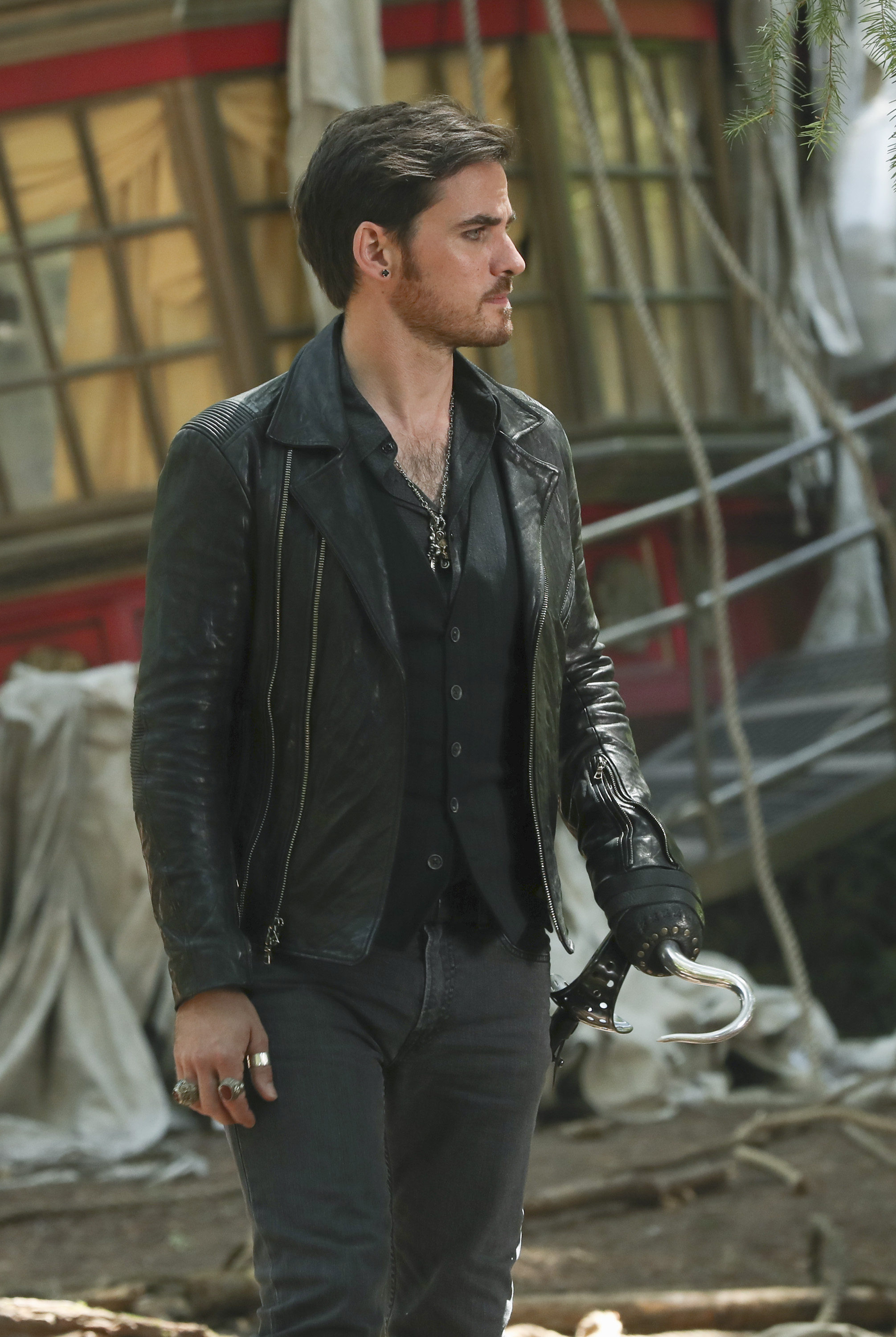
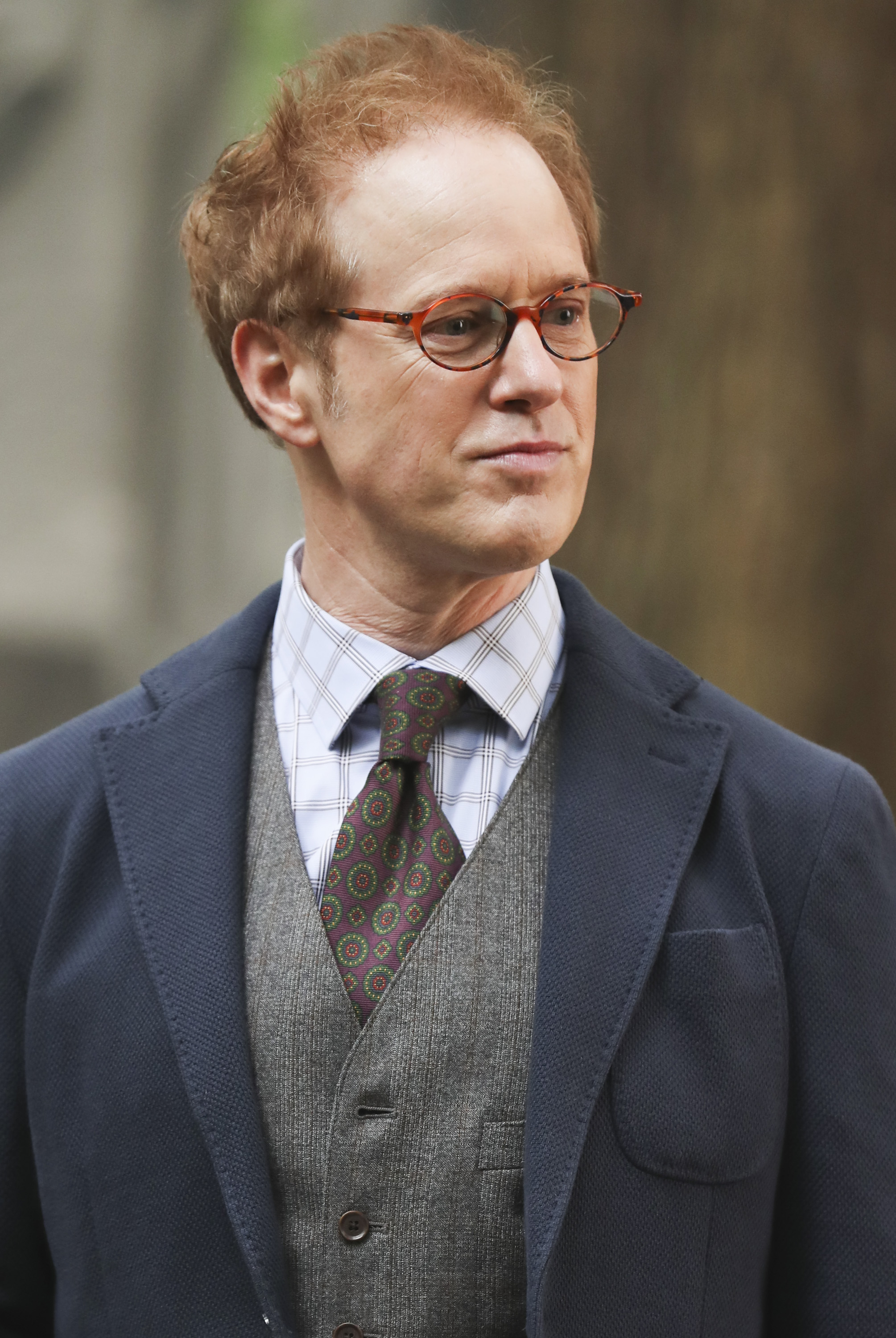
What makes a man a man? Or, perhaps even more on the nose after this week's episode, "Strange Case," what makes a man real? If you read my review of Westworld, published last week, then you know that show is also currently grappling with the notion of real and identity. There were a few markers I set forth as dictating "real." Memory, senses, biological responses, emotional responses, cognitive ability; all of these make up part of our identity and let us know that we are real. We have conscience thought, have the ability to reason and make decisions; likewise, we fear the end of this moral coil and thus count ourselves as part of the "real" and not part of the imaginary or "fake." Is Hyde any less real than Jekyll? Is his being hinged only on the existence of Jekyll? If Jekyll would cease to be, to evaporate into nothing more than ephemera, would Hyde cease to exist? The answer is yes, but the reverse should also be true. If Hyde were to die or be destroyed by any sort of force, Jekyll likewise should die. Why? Because they are two sides of the same coin. Jekyll is Hyde and Hyde is Jekyll. This, obviously, causes a bit of problem when we look at how certain plot points play out this week. Oh, and just for kicks, women are wanton whores! Fun, right? Grab yours tails and your top hat and let's go!
Not Truly One But Truly Two?
One of the cruxes of Robert Louis Stevenson's novella, Strange Case of Jekyll and Hyde, is Dr. Jekyll's revelation that man is not truly one being but rather truly two diametrically opposed foes (Hamilton lyric? Yes; yes it is). Lurking inside the heart of every good, upright, noble, and generous man is a beast; an evil, shady, self absorbed, and selfish animal who has more in common with the ancestors of the past than with the enlightened and forward thinking gentleman of today. In OUAT, Jekyll's own desire to squash his inner Hyde (as Rumple clumsily names him) is his haphazard attempt to quell his own self-loathing and the fact that Hyde represents a side to Jekyll he'd rather not share with the world for fear of being ostracized, laughed at, or maligned. His solution, however is fairly problematic. Hyde is Jekyll, never forget. They share the same memories, the same biological responses. They even love the same woman. They are both equally real--in the way that we define real--but they are opposite sides of a coin. Jekyll is all poise and propriety. Hyde gives the appearance of elegance but under his fancy dress lies a cunning, passionate, and resourceful heart. Super-ego and Id. The issue comes not in the show's depiction of each individual half---Jekyll is staunchly repressed, going so far as to harangue his fiancee for not conforming to societies expectations about proper femininity (oh, more on that in a bit...) and refusing to indulge or give in to his own desires; Hyde is all lust and power and potency. No, the issue comes with the notion that because Jekyll is the original, he is more real than his inner "beast." This rings as wholly antithetical to what the show has been setting up if not just this season then all series long. You cannot escape who you are. You are both proper and not; you are strong and weak; you are potent and impotent. Jekyll isn't the original anything; he's the face presented to the world because his world and its views dictate that a man must be a certain thing; you cannot be both, even though we have ample evidence that men in his world are leading double lives, hence the little tangent about Dr. Lydgate and the pretty assistant. Men (and women as with Mary, torn between her desire to be a good daughter in a Victorian society and her desire to be a sexually fulfilled being) are both; neither is original, neither is more real and neither has claim to being over the other.
When, in Storybrooke, Jekyll is impaled and Hyde also dies as a result, it's hard not to feel like the show is missing its own themes in favor of drumming up some manufactured drama and tension for the much beloved Mayor Regina Mills. In order to kill the Evil Queen, Regina must die! But, like with Jekyll and Hyde, that fails to take into consideration the fact that Regina is the Evil Queen, will always be the Evil Queen, and she--the person she is now--does not have primacy on identity. This is doubly true when you consider that the Regina we know now isn't even really "original Regina" who was a stable princess, scared of her mother, a passive agent under a tyrant who simply wanted to be free. The Regina we see now, the one claiming she has to die, has been through a life time's worth of heartache, drama, and conflict--most of which happened during her tenure as the Evil Queen! Sticking with Regina, she's a multi-facited, multi-personality person. She is a mother and a queen and a step mother and a witch and a mayor and a daughter and a sister. Regina is all of these things and neither of them take the lead over the other. For example: if Henry were in danger and Regina had to use magic to save him, is that her mother side or her witch side? Or is she both while being all the other aspects in my list? The real solution to Jekyll and Hyde, and likewise to Regina and the Evil Queen, is not that one is more real and thus capable of destruction; it's integration. It's about temperament and finding the courage within yourself to be all your aspects, not just one over the other. I have no doubt that the writers will find some not-so-clever way to save Regina from death but by going this route they are really missing out on the opportunity to delve into the inner psyche of their characters while they learn to accept who they all, warts (and occasional murders) and all!
Whores, The Lot Of Ya!
This show has a problem with women. My saying this likely comes as no shock given how I've discussed Emma Swan in the recent past but this week's excursion to (Fictional) Victorian England and Mary's plight of whore vs Madonna makes it all the more apparent that there are some truly old school thoughts about the "fairer sex" going on here. If you were to take pause and consider evil women on OUAT--whether through a curse or through their own making--what sort of characteristics and deeds come to mind? Regina, when she was in full Evil Queen mode, raped Graham both in the Enchanted Forest and for 28 years in Storybrooke under the guise of cursed feelings inflicted on an unwilling participant. Lacey (Belle) wore even shorter skirts, drank, swore and lusted after the dark side of Mr. Gold; Zelena raped Robin; Alternate Universe Snow was heavily sexualized in the same manner as Regina; Dark One Emma Swan all but jumped Hook's bones the first chance she got. Do you see a common theme here? Fallen women are loose women. When women go "bad" their villainy or evil is seen in their aggressive sexual desires and open displays of sexual conquering. Now this isn't to say that those acts weren't evil and they didn't do their job of demonstrating villainy; of course they did. The issue is that when the writers need to demonstrate women as villains or, in Mary's case, give the woman a reason to be turned upon and die, they turn to the old trick of making them aggressively sexual beings. Let's look at Mary, who is not a villain but who's actions are in the same vein and, because of which, meets much the same fate as the villain personalities of our core characters (ie: they all get resolved in favor of a more passive, less sexual type). The basic sum is that Mary wanted a man who would show her passion and desire and overthrow societies conventions. For these thoughts and her acting upon them, Mary died. She was, essentially, punished for her sexual feelings; Hyde even makes pretty clear that he is displeased to have discovered that Mary is a creature of desire. While it's equally clear that Jekyll hates this aspect in Mary because he also hates it in himself, and while I guess you can argue that Jekyll (and Hyde) were punished in the long run, it was not for expressing their sexual feelings–Hyde is basically a walking talking id–but instead punished for Jekyll repressing these same desires. Double standards, anyone? There were a lot of sexual overtones this episode with a binary that men should be virile and women passive. Jekyll is the real villain because he’s weak and, basically, impotent. Hyde isn't exactly a hero but his take change, lust driven mindset is presented as far more sympathetic than Jekyll's impotent weakness. After the past two weeks in America and the current alarming election cycle, these sorts of backwards old school gender dynamics really rubbed me the wrong way. You can say I am biased and skewed because I've always been heavily bent toward reading texts through a feminist and rape culture lens, but there is something so squicky about the fact that as soon as Mary takes agency and, more importantly, sexual agency, she dies. Food for thought, as always.
Miscellaneous Notes on Strange Case
--If ever there was any doubt that I was done with Rumbelle and Rumple, this episode sealed the deal. This was the first time where the two felt like they loathed each other, not just that were having a marital spat. It was hard to watch, especially as Rumple is devolving into an emotionally abusive spouse.
--I enjoyed Snow teaching this episode. These lighter, character moments are a welcome relief from some of the darker, more confusing plot driven aspects. With that said, did she go from Newtonian Physics to Algebra with one breath?
--"All science needs is a little magic."
--Oh hey look. It's Princess Jasmine. More on her next week, I guess.
--Violet showed up to give Henry a smooch and then vanished into the nothingness! Character development, it needs work.
--Goodbye to Jekyll and Hyde. It turns out that they were a little more entertaining than I originally envisioned, especially Mr. Hyde. On to the next part of this arc. Aladdin and Jasmine...that's your cue.
Monday, October 17, 2016
Tuesday, October 11, 2016
In Which I Review Westworld (1x1 and 1x2)
Are you real? How do you know? That seems like a fairly rhetorical question, doesn't it. You are real because you are sitting at your computer or on your phone reading these words, understanding these words and having some sort of emotional and intellectual response to them. Maybe you're rolling your eyes; maybe you're intrigued and maybe you're arguing back at me already. You can also define your individual realness by virtue of your anatomy and biological responses. You are breathing (I hope) and blinking. Your eyes are moving and your synapses are firing. You can define your realness in terms of the present (you are reading this review), your past (maybe you've read my reviews in the past) and your future (you will continue to read my reviews. Thanks, by the way). In other words, your memories, your biology, your emotions, your intelligence, and your general understanding of what life is all indicate to you that you are a real person. Congratulations. Now what if I told you that you were a highly developed machine capable of near perfect human imitation with no idea that you were an artificial intelligence. Would you still be able to tell if you were real if you, the AI, had a set of memories, had biological responses to stimuli, had emotions and intelligent thought? Would you now fear for the end of you life? And if you're not real to begin with, can your existence actually end? Welcome to Westworld, a place where biological humans with enough cash and gumption can strap on a pair of spurs, a cowboy hat and mingle with robotic hosts unaware of their robotness. Here you can kill, fuck, and play to your hearts content because the objects of your desire are just that--objects not subjects. Grab a tall hat and a gun and let's go!
I had no intentions of reviewing another show this fall but that human spark inside me that wants to analyze and talk and discuss interesting aspects of media and its intersection with culture just won't let me pass this one by. I want to say up front that if you haven't caught the first two episodes of HBO's new Westworld, you absolutely should. Like the Matrix series, I suspect you'll end up questioning your entire existence and reality by the time the credits roll at the end of episode two. Because this is a two-in-one episode review, I'm going to dive right in with the analysis of both episodes, "The Original" and "Chestnut" and skip over any sort of plot set up. That's boring anyways, right? I thought the second episode was actually better than the first. The series premiere was a nice wide look at the entire structure of the show, from the theme park of Westworld and its rules, to the behind the scenes corporation and players who build said amusement park. Width is great because the entire episode could have really been cliche by pretending to be a “cowboy” show and then only panned back to let the audience in on the secret at the very end, but since this is a remake and the conceit is already heavily known, the show did the smart thing and looked at the whole picture right off the bat. What that didn’t allow for, however, was much depth at any one character or story. You get a general idea of who some people are. And who they are common science-fiction archetypes : Dolores is the girl next door and by episode end seems to be glitching; Teddy is the romantic lead who flits in and out of the heroine's life but appears to have a heart of gold; there’s a literal man in black who not only spends his days raping, murdering, and trying to “beat” the game (maybe?) but is also the most self-aware being in the fictional universe, knowing the rules and gamebook before the rest of the players even realize there's a game to be played. Behind the scenes, there’s the aging and maybe eccentric director, the programmer who is more interested in consciousness of machines than he ought to be, the temperamental writer/artist, and the cold and collected head of security. Lot of cliches, but again that’s fine for a season premiere where width is more important than depth.
Episode two did a lot to begin exploring the depth aspect, especially given that episode one ends by peeling away Dolores’s good girl shtick and exploring her realness, if such a term can be applied to an AI. And that’s the point of the show, right? Episode two nicely lays out the entire thesis statement in a pretty blatantly textual way: “Are you real?” “Well if you can’t tell, does it matter?” This isn’t exactly fresh in the sci-fi world and the show seemingly has little interest in being original. And that’s not a criticism! There is so much to explore right now with robotics, the idea of reality/realities, what exactly makes a person a person and how “real” human beings are using “non real” surrogates to play out their deepest darkest fantasies. The nihilism exhibited by the Man in Black is both a cautionary tale for the audience and a red flag to a reality we're already living in. The corollary to the above mentioned thesis statement is that “suffering is when you’re most real” which I think holds up nicely for our current political, economic, cultural, and social climate and out attempts at escapism with any sort of numbing agent, even if we don't have a fully furnished theme park like Westworld (yet). It also holds up with the main character of Dolores. Her introduction sees her as almost bland–she’s the good girl next door who is prime for a big sweeping romance. Her life is the same day to day, a series of moves that have been programmed into her, along with her defining characteristics: a good daughter, a good lover, and a future good wife. Bland, flat and boring. Where she really comes alive (and major–MAJOR–props to the actress Evan Rachel Wood for her incredibly layered and nuanced portrayal during this scene) is in a scene that comes across as psychological torture–the question and answer session of episode one. She admits to being terrified and still she’s asked extremely hard questions about the nature of her world, her life, and her own identity without her AI self having any real understanding, at least yet, of what those heavy words (identity, selfhood, life, reality) even mean! Artificial intelligence and the exploration of its consciousness is certainly not revolutionary but it is interesting as hell.
Possibly the most fascinating two characters at present are the highly self aware creator, Director Ford, and the gunslinger known only as the Man in Black who has been given free reign of the park, a privilege he puts to good use by way of gruesome murders and stomach-dropping rapes. These two are playing off each other; one the creator and god, the other the destroyer and devil, at least on the surface. With regards to Director Ford, it’s interesting that he presents himself both in the park and in his business as…god-like for wont of a better word. He mentions to Bernard something about the perils of playing god and in the park with the young Host he says that everything is magic, except to the magician while, quite literally, controlling the creation around him to suit his own ends. I don’t know if this makes him a “bad” guy (whatever that might mean on this show) or not. It’s worth pointing out that the manifestation of his plans have a religious bent, the show focusing on the structure with the cross. If I had to guess, I’d he’s become disillusioned with “real” people–why else would anyone go to that amount of effort and trouble to create such realistic AI’s if not because they find the real world and its people so repugnant? Ford’s the one who has given all the updates to make the Hosts more realistic; the little human touches like caressing one’s lips that appear to cause the initial breakdown. Is he trying to set up his own human race and declare himself its god? I suspect there’s more nuance to it than that, but that’s all I got so far. As for our Randall Flagg, our very own Man in Black, he claims to have been coming to the park for 30 years so is his carte blanche simply a reward for such loyal services or does he know something that gives him all access? Why is he so bent on finding the “maze”? Has he grown bored with what Westworld can offer? He seems to know every single story; how it plays out, the characters and all the twists in the stories. Is this the ultimate thrill for him, the untold story (lord help me) that he’s never been able to crack? Also, what do we make of his behavior in regards to what it means to be alive and be human? He is obviously real in the sense that he has blood and DNA from two biological humans but is he really “human” in the non literal and abstract sense? He's more of the monster in a nightmare; he’s the dark mirror that is held up to humanity–here be dragons sort of metaphor for what happens when humans are allowed to give into their darkest and deepest desires. Is he what happens when humans can have it all and develop a pressing ennui to their good fortune? God help us all then.
Miscellaneous Notes on The Original and Chestnut
--Visitors to Westworld are asked to choose either a white hat or a black hat which is just a bit too on the nose.
--"These violent delights have violent ends." So in other words, things are going to get worse?
--Every Host has had multiple lives which are resurfacing. These memories range from violence to love.
--Evan Rachel Wood is knocking it out of the park as Dolores, especially when she is questioned by her makers. The way her eyes un-focus and somehow manage to look beyond the camera and even beyond you is chilling.
--So how do we define life?
--I might do this every week or every other week. But I look forward to reviewing this really complex and thought provoking show!
Monday, October 10, 2016
In Which I Review Once Upon a Time (6x3)
The Latin poet Horace once urged his readers to carpe diem and since then, the idea of seizing the day and living life to its fullest has been an important part of many people's lives. I might get hit by a bus tomorrow so I should try to live the life I wish to live; love over life, whatever the quotable sound bite means to you, subjectively. This theme was put forward in this week's episode "The Other Shoe" and to say I was conflicted by it would be an understatement. It's hard to live without love, no doubt. But do you know what it's also hard to live without? Life. By its very definition, life means living and I find it hard to believe that one must choose either love and living life to its fullest--and here fullest implying a romantic end for certain characters--and simply living day to day with all that implies by simple virtue of humaness. In other words, Emma you could still get hit by that bus tomorrow after asking Hook to move in; did you die happier and more fulfilled having asked Hook to live with you than you would have if you didn't ask? You won't be able to answer, Ms Swan, you'll be dead. It's a quieter episode this week, so grab a shoe and let's go!
If The Shoe Fits...
While this episode mainly focused on Cinderella/Ashley, I find I want to talk more about Emma. It might be nice to see an old familiar face like Cinderella, this week complete with a straight-outta-Disney backstory, but she's a character we see once in blue moon and therefore it's hard to really care about her. I have little investment in her life and happiness because she's never been given room, space, and narrative to breathe and flesh out. Frankly, the sudden reversal that Ella considered herself the wicked stepsister and her step sibling was equally down trodden was pretty eye-roll worthy. Sorry, Ashley. You're iconic but rather flat. However, we should talk about Emma Swan. I'll leave aside her rather egotistical and pretty appalling intrusion into Archie's office, thereby kicking Leroy out of his paid for session as if Emma's problems are more pressing and more vital than Grumpy's, and instead focus on Emma's "problem of the week." If last week was her identity crisis, then this week is all about how her identity feeds into her happily ever after, specifically whether or not Emma gets one. I want to start off by saying that at the outset this is a good line of thought. Emma's life is in constant danger; Snow's on point commentary about "defeat and repeat" rings doubly true for Emma and it can be hard for a woman like Emma, who is constantly facing down an evil witch, a impish man-child, or even the Lord of the Underworld, to negotiate her own identity and her own happiness with so much evil and misery around. How can Emma ever be comfortable in her skin, be self aware, and achieve a modicum of peace (let alone a happily ever after) when she's constantly in danger of losing her own life. In other words, if the ending thesis for this episode is that you should choose love over life, Emma is currently wrestling with the fact that the life part is likely short and therefore unable to choose love. If I were Emma at the end of this episode, my choice of love would center on choosing self love; choosing that I am important, that my happiness means something, that I am important enough to be happy as a self aware person for however long my life might be; an hour, a day, twenty years, I deserve to be a full actualized person in charge of my own destiny and narrative.
Here's where this falls a little bit off the wagon for me. While you can argue that Emma is choosing her own destiny and choosing to be happy for however long she has, she's doing it, not solely out of consideration for herself and not even for everyone in her life and family much like Snow tried to impart to Charming by reminding him of all that his life has to offer without going down the oft trod revenge road. I bet a lot of you know where this is going, don't you? For the most part, Emma's own consideration for whether or not she should try to be happy for as long as possible is for Hook. Emma's not upset that her happiness is fleeting for herself or even for her collective community--which would include her parents, her child, her lover, her friends, the entire town of Storybrooke and even the universe she, as the Savior, inhabits--but for one single individual: Hook. There's no denying that Hook is part of her equation; I may not like it, but there's no denying that he's a part of her life. However, I have serious reservations about the fact that Emma's negotiates her own happiness and how she should live life vis a vis Hook's own future and happy ending. If Emma dies, Hook won't have a happily ever after and that's what bothers her. Not the fact that she is going to die and leave behind a thirteen (going on twenty?) year old, a brother she barely knows, parents she's making up lost time with, a community of well-wishers and admirers--just her boyfriend of roughly four months. These considerations are not about Emma's life and her own self worth but about someone else's expectations, namely her romantic partner's. Whether she's the Dark Swan or whether she's Savior Swan, Emma's identity and her own sense of self keep getting relegated to her romantic entanglements, which I find troubling when we're supposed to believe that she's the embodiment of strong females on the show. Yes, Emma. Seize the day, carpe diem. But do it for yourself, not because you want your boyfriend to get his happy ending. That's...rather missing the point, don't you think?
Miscellaneous Notes on The Other Shoe
--I'm sorry I don't have much to say this week. Honestly, it was a perfectly fine episode. More entertaining than some, but there's not much to unpack here.
--This is the first time in a long time that the flashbacks felt relevant and needed.
--I really enjoyed Snowing this episode; they finally felt like real people and not idiotic simpletons.
--Mouse!Gus Gus was the star of this episode.
--"Some scars don't heal." This is a pretty great line from Prince Thomas to Emma and it would behoove Emma to examine her own scars and try to deal with them instead of spending her time being worried about Hook's happy ending.
--Dopey is un-treed and off getting his Masters. In no universe does that make sense.
--Anastasia from Once:Wonderland is not Cinderella's stepsister. Look, writers, OUATinWL happened whether you choose to believe it or not.
--God bless Bobby Carlyle and his Scottish accent.
--Dr. Frankenstein and Dr. Jekyll are working together. "Penny Dreadful" called and they want their idea back.
--"You look like a trash can and you have the education of my cat."
Monday, October 3, 2016
In Which I Review Once Upon a Time (6x2)
Everyone has a truth that they find hard to swallow. There are things we tell ourselves in order to live with certain personal revelations, to avoid facing that which we find stomach turning. It's part of human nature; flight has always been easier than fight. But, sometimes, your problems are standing before you in a leather dominatrix outfit with hair so high it might reach the good lord Jesus and then you really have no choice but to turn and face them head on. Fireballs ablaze. In this week's episode "A Bitter Draught" several of our heroes must deal with hard truths about themselves; they must swallow the bitter pill that their problems--be it their pasts or even their futures--aren't so easily fixed or solved or gotten rid of through revenge and plotting. So many times our characters are asked to face the firing squad of a new big bad and they manage to do it with aplomb; but when it comes to the internal--to those intangible and invisible problems, including the most basic one of all, the question of "who am I?"--the brave characters who stand up to such much strife find it more than a little difficult to make any headway. Like last week, we're still trying to explore if the characters can ever really come home again, happy, healthy and hale. Grab some poisoned wine or a long lost coin and let's go!
Who Are You? Who Who? Who Who?
Have you ever had an identity crisis? I haven't but I'm sure it's the pits. The real focus this week is on Emma and Regina's separate but parallel identity challenges. For the former, these issues stem from her uncertain future in light of her more than a little troubled past. For the latter, it's all about the past from which she can never fully escape. Let's start with Regina and leave Emma to stew in her own troubled juices for awhile. Regina's story this week picks up where the finale left off; the Evil Queen cannot be killed because as nice a notion as killing your worse half is, it's not exactly practical or really even possible (magical serum notwithstanding). We are large and we contain multitude, to quote Walt Whitman, and to deny a part of yourself is to deny your whole wonderful, nuanced and highly complicated self. Regina, bless her, cannot actually escape the Evil Queen because while she might have split from her more malicious and nefarious persona, those feelings of anger, rage, and revenge--which can be best summed up in "passion overflowing," the main drive of the Evil Queen--still lurk inside her now mellowed out form. All it took was a simple manipulation and a test to see how far Regina would go--granted this time to protect Snow and Charming instead of doing them ill--for our Mayor to realize that she is just as capable of murder and other crimes of passion, even without her leather clad Queen inside her, egging her on. This is Regina's bitter draught (roll credits!) to swallow; she may never actually be free of the Evil Queen because she is the Evil Queen. But she's also Regina, the lonely and scared stable princess; she's Henry's mother who changed every diaper and soothed every tantrum; she's Emma's friend and Snow's confidant and Zelena's sister. Regina can be all these things and not give in to the evil inside; it's about temperament and restraint and knowing when to act and when not to. Regina as the Evil Queen was always tempestuous and hot headed, flying off the handle even if she had no plan. Regina, in control of her inner rageaholic, can make plans and discuss options calmly and rationally. Snow and Charming are not in danger from Regina anymore, and neither is anyone else. She's managed to worm herself into the Storybrooke fold. No one is going to ignore her when they have family dinners. Like Hook's own personal revelation this week, Regina has to learn to forgive herself, to accept the bad things she did in the past and continue to make amends, realizing that she'll always have the Evil Queen as a part of her, but it need not be the dominant part of her.
And then there is Emma Swan. First, let's take a moment to appreciate that Emma is finally going to therapy; girlfriend has needed it for about 4 years (probably closer to 20+ years given her abandonment feelings since childhood that were compounded by Ingrid and Neal). Let's also applaud the fact that while it's hard for Emma to admit, out loud, that she's going to see Archie, she's getting support (from Hook of all people!) for seeking someone to talk to. The stigma of mental health in America is pretty poor--the idea that going to a psychologist is a sign of weakness because we should be able to "pull ourselves up by our bootstraps and fix our own problems;" for the show to have Emma not receive any grief from her loved one(s) about this is a lovely thing to see. Asking for help and admitting that you're not okay takes a sort of human strength that even Saviors struggle with. But, of course, because it's Emma, asking for help comes with some barriers, mainly that she wants a quick fix to her problems, not to actually face them. Emma gives the highly telling character line "I'm the Savior--if I can't help people then who am I?" Henry revealing to Emma that she's the Savior has been both a blessing and a curse. On the one hand, it gave Emma her family and a place to belong. On the other, it has put more responsibility and life or death situations squarely on her shoulders, a burden no one would want. Even Jesus, in the Garden, asked for this cup to be taken from Him. Saviors..they get weak, guys. But for Emma the idea that these visions and the "Savior Curse" go hand in hand with being unable to do her cosmic job has caused her to question everything, including her identity. Like Regina, Emma is seeing herself as only one part of her identity: the Savior; take that away and you're left with just Emma, the orphan who runs from her problems, never settles down, and belongs nowhere and with no one. But both of those "people" are Emma and Emma is both of those "people." I complain about Emma and her never ending Walls (and her seasonal reset) but knocking down those walls doesn't mean that Emma isn't still a scared little girl behind her Savior bravado. Regina's easy solution--that didn't work--was to remove the darker parts of herself. Emma's solution is to bury her head in the sand and figure out a work around that proves her Saviorhood instead of going to those whom she loves, and who love her, and ask them to help her thus denying her Saviorhood agency. Maybe the Savior doesn't get a day off but Emma needs to learn that they can ask the cavalry to ride in and assist. Emma's bitter pill to swallow is that she must burden other people with a task she finds too difficult to comprehend; but what Emma fails to see, so far, is that this does not undo her Saviorhood. It fact, it heightens it. I'll go ahead and predict this here and now: neither Regina nor the Evil Queen are under the hood, but it's Emma herself. It's the scared orphan who shuts people out and refused to stick around in one place. Can Emma kill her? And really, should she kill that version of herself? Take a page out of what Regina is going through, Emma: it doesn't work. Accept your Saviorhood and accept your non-Saviorhood self. You are both.
Miscellaneous Notes on A Bitter Draught
--I said nothing about the flashback this week but that's because it was super underwhelming. No one really wants to see yet another time when the Evil Queen tried to kill Snow and Charming and the Count of Monte Cristo fell flat. However, the flashbacks did feel like a classic episode of OUAT, so I'll let the dull nature slide.
--What I won't let slide is the fact that we've never seen nor heard of Charlotte ever before and her random insertion felt really off. Especially when the Charmings went and threw her a party.
--I normally give Hook next to no credit for anything, but his level headed, remorseful and non-egotistical apology to Belle for beating her, shooting her, and trying to kill her several times was a pleasant surprise and I genuinely appreciate the sentiment. I also appreciate that his only role tonight was in supporting females (Emma and Belle) and not dominating the scene.
--I need to erase all memories of the Evil Queen trying to all but hump Rumple against his curio-cabinets.
--Rumple has a key to the Land of Untold Stories? How did he come upon that?
--Who killed DaddyCharming? And does anyone really care?
--I don't care for eggy bread either, Granny.
Monday, September 26, 2016
In Which I Review Once Upon a Time (6x1)
Let's go back to the beginning. Once upon a time (pun!), a little girl named Emma, newly born to Snow White and Prince Charming in an enchanted kingdom overrun with villains and evildoers, was sent away to a land without magic, to grow up until such time that her people needed her magic and abilities as a Savior to break an evil curse. Since then, lives and loves have been lost. Children have been born and parents have died. The show has also become a shadow of its former glory; the plot has become convoluted and contrived, and the characters act unlike their once vibrant selves. Can you really go back to the beginning? Can you recapture the magic? Can you refocus your plot and narrative and themes to bring us all home again to the quiet, quaint town of Storybrooke, populated by your favorite fairy tale characters, where family and community are at the forefront of everyone's personal stories? Can Once Upon a Time be...Once Upon a Time again? That appears to be the main meta textual question at the heart of season six's opener, "The Savior." While the characters might be grappling with the darker sides coming to life, while everyone is focused on defeating another bad guy, and while we ponder if Savior's get happily ever after's, the writers, sitting back in their room, are dealing with the questions of their legacy and what made their show such a dynamic hit in its first few seasons. Can they bring us back to the beginning in what seems (likely) to be the final season? Can you ever truly go home again? Who knows. But we've got another 22 episodes to figure it out. Grab a flying carpet and let's go!
So You Wanna Be A Savior? Well, Whoop-De-Doo
As Mr. Hyde sits in an oft-used padded cell, taunting our Savior-In-Residence, Ms Swan, he utters the underlying problem of this new season: it is the destiny of all Saviors to die at the hands of their villain. It doesn't matter what the Savior does to avoid it, or how they try to fight it, the Savior falls while doing their Savior-thing. As someone who loves classic literature, tropes, archetypes, and all those cliches, I must politely disagree with Mr. Hyde and ask which heroic tales he's been reading. This isn't to say that the hero (or heroine) doesn't often die; of course they do, especially if they are undergoing a literal katabasis in their heroes journey. What's usually important to remember is that the Savior defeats Death or its bodily representation--rising like a proverbial phoenix-- and comes back from their own underworld; should they die for real, forever, it is done in service of their quest, their friends, their family, their country, their god, and/or their purpose. It's not a vain sacrifice, but one that brings the Savior to the end of their story, coming full circle and accepting that this is their ultimate destiny, a self actualized individual who understands their role in the cosmos. Would Emma die for her family? Sure, it's a feat she's been seen to undertake in several situations already. However, I cannot stress enough, that for every Savior or hero that does die at the end of their journey, more often than not they live. Buffy, Luke, Harry, Frodo, Aragorn, Odysseus, all come back home at the end of their tale. They return with a greater sense of understanding not only of themselves but of their roles in the universe. I honestly expect Emma Swan to be no different. The season premiere opens up questions, some of which I touched on above in the introduction; it ponders not only can you come home again, but can the Savior--who's life so far has been one villain, one problem, one death march after the next--really find any sort of happily ever after when evil never takes a holiday? Is Emma Swan destined to die? Even with all things being equal and probability weighing the odds, the title that follows Emma around like a bad smell would protect her. At least on this show; a show in which the writers time after time have Emma absolved of all her sins, forgiven all her wrongdoings, and have her escape almost impossible situations; a show that harps on hope and happiness and family. They've put Emma through her paces, had her go through her katabasis and to add this unforseen, unforeshadowed death threat is anti-climatic. Are there really stakes here? Does anyone really and truly believe that Emma Swan will die in a sword fight with a hooded figure when she's faced down the darkness in herself and the Lord of the Underworld? The narrative stakes need to be present in a story for it to be worth telling and this year, I just don't feel those stakes yet. Emma might be in danger but no more so than normal.
However, what bothers me more than this new low stakes threat is the way Emma reacted to it. How many times have I asked this question over the past few years but has Emma Swan really developed at all? Every year we hear about her Emma-sized walls and how when she gets scared her walls go up and walls, walls, walls. I am so sick of Emma's walls. But, also, every year we hear about how there is one character who manages to knock down her walls--Henry, Neal, Regina, Hook, Elsa, Snow and Charming. But, yet, here we are again: Emma and her walls. Upon seeing her shaking, uncontrollable hands Emma goes into defense mode. Maybe this is normal for people; we get scared and we close ourselves off. I do actually sympathize with that reaction as someone who does it as well, except that this is par for the course for the writers when they approach a new season with Emma. It's like they don't know how to write Emma beyond "walls." They have a basic idea of who Emma is as a person--an orphan, scared, alone, but ultimately hopeful that things can get better once she starts to let people in--and then the writers get to the next stage of her evolution (like a Pokemon!) in which Emma admits that person X broke down her walls; then the writers, just in time for a new season, retreat back to their safe space of Emma and her walls because I honestly don't think they know what happens past that. If this were the first time they had taken Emma back to square one, I'd be more forgiving because for Emma this is a scary situation and it's natural to retreat both from it and from the people who want to assist you through it, but because this isn't even close to being the first time the writers have moved Emma's character back, I can't muster any understanding or sympathy for the way Emma is acting except to say "writers prerogative" and then chastise them for it. Y'all expect nothing less from me, I'm sure.
Fetal Impersonations
Sometimes, this show is painfully silly; I have nothing against visions of the future, time travel, ghosts of future past or what have you, but to have a fetus (who is really no more than a few cells right now, given the time constraints of this show) impersonate a god in order to wake its mother from a sleeping curse while trying to outwit its father is all bit too much for me. I was rather confused by a lot of the Rumbelle plot this week, but it seems that Belle's baby, still inside its mother's womb and said mother still being inside Pandora's Box, managed to overhear Hyde tell Rumple to travel to Morpheus's temple to enter Belle's dream world; this not-yet-a-fetus decided that in order to save his mother from falling for his father's lies and manipulations again, Sperm-And-Egg-Baby would set up a test to remind Belle that Rumple has hurt her over and over again and falling for his pretty words will neither benefit her nor the unborn babe. My god, that baby should be president of Mensa. This is silly, right? But what is maybe even sillier is Belle's dream world--in which she envisions her life at Rumple's castle as one of terror and fear, that the Beast she lived with was lurking around the corner, ready to pray on her vulnerability at any given moment. This is not how I remember the story of Rumple and Belle. Was Belle really terrified of the castle? And her life there? She saw through Rumple’s Beast persona in the beginning. She saw that he wasn’t as dark as he tried to make her believe–that was sort of the point of Belle. On one of their first outings, to retake Robin Hood (who was not yet Lucifer!), she refuses to believe that Rumple is as dark as the mask he wears to the world; she has faith in him, she stands up to him and even challenges him. And even when Belle does see the Beast, she loves those parts of him too. Belle isn't scared of Rumple or the life she chose. Belle sees herself as the hero who sacrificed her own desires in order to rescue her people, and while she had to give up her opportunities to see other lands or to travel, she found Rumple fascinating and intriguing and worthy of her attentions. The retconning of their love story in order to cast Rumple in nothing but villainous shades, to present Belle as an unsympathetic shrew, and to delay any sort of happy ending for this pairing is frustrating and beyond wearing thin. Though, maybe not as frustrating as a baby that can apparently hear through a metal AND fleshy boxes.
Miscellaneous Notes on The Savior
--I mentioned neither Jafar nor Aladdin but as they are both total side characters right now, I'll wait and see what the show has planned for them. However, if the writers ignore Wonderland, I'll be quite unhappy.
--How did Zelena even know to move into Regina's house? When did this conversation take place?
--Regina doesn't blame Emma at all for Robin's death. I'm really tired of the writers letting Emma's misdeeds be absolved by those around her as if she can quite literally do no wrong. That's not how you write interesting characters.
--It's always good to see Archie and Pongo!
--The Red Bird is Iago, right?
--"For you I would be the best man I could be." You know, Rumple's being quite honest here. The best man he can be is still someone who loves the dagger and loves the darkness. But we've reached a crossroads with these two and I don't see how they can navigate it together.
--"The only story I heard was the one I kept telling myself."
--I need a fair amount of eye-bleach after that opening Storybrooke scene. #SorryNotSorry
Wednesday, August 31, 2016
In Which I Review Dead of Summer (1x10)
"You can be whoever you want at camp. Or...pretend to be," says evil, pathological, sadistic and sociopathic ax-wielding Amy in this season (series?) finale episode, "She Talks to Angels." Everyone came to Camp Stillwater pretending to be someone they really were not. These masks could be obvious (Jessie, Blair and Cricket) while some were opaque, needing to be exposed slowly through character exploration and flashbacks (Drew, Alex, and Amy). Whatever the case, Camp Stillwater was not just about the hot dogs and marshmallows; a summer at this camp, in reality, is about shedding those masks, showing the world your true face and letting those around you decide whether or not to stick around. We've got a long and dark run through the woods and while, hopefully, there's no homicidal maniac following, it's a dangerous trek. Grab a friend and let's go!
The season finale goes about how one would expect; there's a decent amount of bloodshed, an unfortunate amount of running hither and tither and one final look back in time to see how far all our various campers have come. The finale doesn't quite live up to last week's shocker of an episode, but it doesn't make any seriously egregious mistakes that erase some good will the show built up. The most grievous error the writers made is that the mythology was never fully fleshed out so that this world--this Camp Stillwater--and its dangers felt real and lived in. I need to be immersed in the world, to be drawn into it to the point of almost total erasure of my surroundings. That's what good narrative does--it takes you out of your present and launches you into the fictional, blurring those pesky lines. The demon, his followers, the magical powers of the lake and general region are left unclear and talked about in very loose, broad strokes. Trying to explain the ins and outs of what exactly happened this summer and why it happened causes tongue trips and knots, so it's better left in the shadows, though the intangible nature of the mythos of this show does speak volumes about its overall quality and the ability of the writers. This show was, at its root, a character show. During the course of a character-based show, the audience should see natural evolution, a change--either for good or for bad--from one stage to the next. These stages can be archetypical (from a Boy to a Man; from a Girl to a Woman; from a Nobody to a Hero; from a White Hat to a Black Hat) but the progress must be a reflection of the inner psyche and the outer environment, working in tandem to move the character. With that in mind, our real question is whether or not Dead of Summer achieved a character driven goal.
I know I've been harsh on the show this summer, and not undeservedly so. My criticisms have been warranted, but, at the same time, the character progression hasn't been as dreadful as I might have imagined once upon a time (like what I did there?) Amy went from the good girl to the evil monster, though this was less through character work and more through a surprise about-face; the monster was always there, hiding behind the gentle Amy-mask. Alex went from an uber selfish pseudo-American playboy to selfless, proud Russian willing to die instead of go off and live his so-called American dream. While Cricket's character was killed too soon to fully develop or progress, her one flashback episode did help illuminate why she acted the way she did, creating myths around her own selfhood. Drew and Blair are....oddities. The show (and I) struggled with what to do with them. They were clearly brought in to emphasize diversity and appease the LGBT community (which is fairly repugnant, though Drew's episode was incredibly solid) but beyond their "otherness" they contributed nothing to the plot line. Blair never even got a flashback outside of his friendship with Cricket and neither of them played any significant role in the finale events. With that said, though, Drew's character shines as unique, interesting, well-played and one that moved into a new space by series end--from a scared loner to a proud man, ready to take on the world (and rock out to David Bowie). The biggest surprise here is honestly Jessie, a character I loathed--and, to be perfectly honest, still don't like. She's the actual heroine of the series; her vapid and deplorable nature finally illuminated as a way to anger her equally vapid and deplorable mother. The real Jessie is selfless, kind, smart, and willing to stand up for the Light against the Darkness. I may not like her at the end of all this but there's no denying that her development was brought about because of her own psyche (which, in reality, lacked all the "mean girl" qualities she presented initially) and enduring her torturous environment. Joel was just plain useless as evidenced by his lack of dialogue and lack of flashback in this finale (no, really. Did he serve a point?). All of this taken together signifies that there were good elements of Dead of Summer. It had some interesting takes on friendship and nostalgia and at least a handful of worthwhile character development moments. Where it fell flat was in the mythology. But, honestly, my dear readers, are you surprised by this? I won't snark at OUAT just quite yet (3.5 weeks and counting...) but is it any wonder that the characters on this show are more solid and rewarding than any kind of mythology or story? No. I didn't think so.
Miscellaneous Notes on She Talks to Angels
--Drew and Blair probably got back to the camp via bus but how did they figure out that Amy was actually a murderer and not just possessed by a demon?
--So all the parents came and picked up their children but didn't bother to ask why their children were dropped off in a blood soaked van by two campers instead of licensed driver? Or, you know, why camp ended early?
--All the child acting in this show was pretty bad but nothing beats Anton turning around and telling Drew and Blair in a flat, monotone voice, "Go back..."
--"It's going to be me and you forever." Cricket and Blair really did have a special friendship. I'm sorry we didn't see more of it.
--Blotter's head swinging from a tether pole. That was a sight.
--So much for any kind of answers about Deb! I've heard rumors that should there be a second season, the show will become more of an anthology and move back to the 70s to visit Deb's stay at Camp Stillwater.
--RIP Garret and Alex. Oh, and Amy, I guess.
--Well, barring any movie reviews, that's it for the summer! The next time we talk, dear readers, we'll be staring down another 22 episodes of Once Upon a Time. See you then.
Wednesday, August 24, 2016
In Which I Review Dead of Summer (1x9)
Cages get a bit of a bad reputation. Here in the post (post?) modern 21st century era, we tend to romanticize the concept of freedom. Out there, beyond the confines of people, society, law, and order, we are free to be you and me. Here's the problem; what if this freer version of you is actually a homicidal maniac who delights in blood, mayhem, and dismembering your peers? Would you really want someone like that free and exposed? Probably not. In fact we built cages--euphemistically called prisons--to house and contain such peoples. But sometimes, oh but sometimes, they get out. In this week's episode, "Home Sweet Home," we are given good, sound reason for the advancement of cages and keeping doors locked. It's when we open those doors, when we unlock the bolts, when we free that which is contained within, that we are met with untold horrors and unspeakable bloodshed. Grab an ax, grab a mask, and grab some holy water---we're in for an exorcism!
Sweet little Amy Hughes, she of the soft smile and simpering demeanor, is a cold blooded thug and ruffian who would bathe in the blood of untold millions in a heartbeat. I have made my dislike for Amy and, running in tandem with that, the way Elizabeth Lail plays her, quite well known. Amy has consistently comes across, week after week, as having no discernible personality, no oomph in her performance, and no hook to her character. She was simply a haunted girl looking for a fresh start and hoped that it would come about at a idyllic lakeside camp full of friends and marshmallows. Unlike last week's lack luster reveal that Holyoake was a white hat and not a proverbial black hat (yes, in spite of him actually wearing a black hat...) the denouement that Amy is a murderous psychopath who welcomed the demon called Malphas as part of her being, was actually an eyebrow raiser and a stunner. You see, that's not quite how the cliche goes. Amy is the good girl who gets corrupted and then is saved by her own purity of soul, her friends, and--most often in these early pseudo-feminist pieces told through the male perspective--a boyfriend or love interest who battles the forces without to save his lady love. Amy, in the true nature of the trope, would awaken from her possessed demonic slumber a shinning virginal princess who can now cross safely through the world because she was tested, tried, and ultimately survived the wilderness. Usually there's a sunset involved--literal and metaphorical. But in this week's episode, Amy isn't our good girl gone bad and she's not the princess locked in a tower. Camp Stillwater is Amy's life, uncaged. There were a lot of clues--both visually any through dialogue--that we should be thinking about cages and their importance to the idea of safety and security. Amy/Malphas straining against the ropes; the bus driver opening the bus door, only to be feasted upon by bloody rain; the specter of Deb thanking the campers for "opening the door" before her eyes flashed black; young Amy locked away in the garage while her family died of carbon monoxide poisoning and young Amy insisting that freedom was the best thing for the gerbil, even if freedom meant the garbage disposal and a swift death for the rodent. The cage, in this episode, is equated to safety and security. As long as Amy/Malphas stays locked up in the tiny cabin, everyone is safe. It's as soon as those ropes are cast away, as soon as the door is unlocked, that Amy and her demon buddy can hack up camp counselors with an ax (side note--holy gory visuals, Batman!) What I think I like most, though, about this turn of events is that the hope for Amy and her recovery--back to the simpering girl we thought she was--is next to nothing. Amy isn't in danger; her soul hasn't been tarnished and is not being held hostage (in a cage!) by Malphas. Amy really is this deranged; she really is this dark. This is what freedom is for Amy; Malphas isn't the warden holding Amy in a cage; he's freed her to be her best (worst?) self. And Amy...well. She has no intention of going back into her conformist cage. Look out, left over campers. Something tells me you're in for a rough season finale.
Miscellaneous Notes on Home Sweet Home
--This was easily the best episode of the season and certainly the best since Drew's centric. Does this episode make up for the blah nature of those that came before? Not really, but it's a step in the right direction.
--RIP Deb? But I'm guessing we haven't seen the last of her yet. And I bet there's more to our camp leader than meets the eye.
--Really wonderful (and wonderfully cheesy) special effects with the bloody rain.
--Garrett's Latin needs some work.
--So do Drew and Blair play any part at all in the actual story or were they just there as part of some diversity quota?
--Final death predictions? I suspect one more camper will die (Alex) and I think Amy will bite the dust, both her dark soul and the demon Malphas going down to the watery depths of Camp Stillwater to wait for another opportunity to rise. Jessie and Garrett will marry, move on to the camp property and keep a watchful eye for anyone who might awake the demon.
Subscribe to:
Posts (Atom)