Showing posts with label Disney. Show all posts

Sunday, March 19, 2017

In Which I Review Beauty and the Beast (2017 Movie)

When I was five, my mom took me to see Disney's animated classic Beauty and the Beast. Being so young you'd expect that I have few memories of this experiences but it turns out I have quite a few. I remember loving "Be Our Guest;" I remember crying when I thought the Beast died at the end (side note: I still cry during this part whenever I rewatch) and I remember completely and utterly believing that I would someday grow up to be just like Belle. I know I'm not the only one; girls in my generation align themselves with Belle quite frequently. She's smart, ambitious, desperate for a life "out there" and more or less tells the patriarchy to stick it where the sun don't shine. Unlike the older Disney princesses whose hallmarks traits include being good, proper, pretty, but ultimately in need of rescue from a prince, Belle was my first real example of what a strong female could be, someone who drives their own story, makes their own choices, and is every bit as much of the hero as the male prince. Plus, you know, that gold dress is really awesome. In recent years, Disney has been working overtime to take their much beloved animated classics and turn them into real life; some are successful (Cinderella) and some, while visually arresting, fall flat in attempting to bring something new and different to a story that needs updated (The Jungle Book). When the Great Mouse announced that they would tackle Beauty and the Beast, and Harry Potter's Emma Watson would be playing my younger self's icon, it seemed like a recipe for greatness. But is the magic I experienced at the age of five present in this live action film? Grab your teapot, your candlestick, and your clock and let's go! 


General Thoughts

This is a tale as old as time (sorry, lame joke I know. It's low hanging fruit but totally within my reach) and all the classic moments are found embedded in this new version. Where the story differs, though, is in trying to provide more character motivation that isn't necessary in an animated Disney film largely aimed at an extremely young audience. In the animated movie, the Beast is understood to be beastly even from a young age but without any given reason. While it is true that the privileged and the rich can exhibit traits like vanity and arrogance, there is usually something lurking beneath the surface to explain those characteristics. Here, the Beast is given an appropriate backstory (unsurprisingly it involves a dead parent and a less than ideal other parent) which compares and contrasts nicely with Belle's own tragic backstory and rearing under a far more kindly father. In the animated movie the titular Beauty and Beast have little in common except their circumstances of being literally locked up together but here, in this live action movie, the two can bond over their own loneliness. Belle even remarks that her village is as lonely as the Beast's castle. The two are also outcasts and that further bonds them. While Belle, in both the animated and live version, is loudly (and in sing-song style!) told she's odd and out of place, the animated Beast is shown to have a good dose of friendliness with his servants through their own damnation and desire to see the curse broken. In the live version, though, in order to parallel with Belle, the Beast's relationship with Lumiere, Cogsworth and the like is awkward and stilted because the Beast does not know how to interact with these people he's condemned to a life of objecthood. What's even more interesting here is that the various servants feel that they are responsible for the Beast's situation given that they did not save the young prince from his wretched father. This overwhelming guilt fleshes out the servant characters who's only original purpose was to provide Belle a window into their enchanted life and help explain the Beast's internal thoughts when he's incapable of doing so; this in turn helps them to feel more human as opposed to just enchanted objects who sing to you over your dinner.

The other nice throughline in the film is a strong feminist statement about the capability of women in a man's world. This should not be unexpected given that Disney's Belle is one of the first modern princesses who takes action to run her own narrative and is not solely depended upon a man to be the actor in her story. It's not a secret that Belle longs for a life outside of her provincial one but here it's achingly apparent that the patriarchy is hindering Belle's happiness. Gaston has always been a brute but his overbearing personality is all the more seen in this film when he thinks Belle's resistance only makes the prize more worth having. There are moments from the Disney film that are recast to give Belle more agency; for example, in the original film it is Chip who breaks Belle and Maurice out of the cellar but here it is Belle using her hairpin to help pick the lock and aid in the escape. At another time, Belle actually tries to escape her imprisonment at the Beast's castle instead of accepting her fate, which is a departure from the animated film. Likewise, while Belle goes toe to toe and retort for retort with the Beast, she is moreover shown to be his intellectual equal; they may not agree on if Romeo and Juliet is the best Shakespeare play or not, but Belle does not suffer from lack of imagination, independent thought, and understanding found in a more prestigious and male oriented education. There are also smaller moments in which Belle does math, invents the washing machine, and tries to teach a little girl to read despite the schoolmaster disliking women reading immensely. The fact that Belle and the Beast bond over long walks, books, and poetry shows that the her beauty is found within, not just without. She's a fully formed character and not a set of values meant to change the Beast into a man.

What I Liked/Did Not Like

--I need to start with the biggest controversy surrounding the entire film: the character of LeFou. In the animated Disney film, LeFou is the comedic sidekick to Gaston and his only role is to prop up the villain's ego and not be disgruntled over the treatment he receives. It's not a great character but LeFou does serve to show how terrible Gaston truly is--a man who beats up and bullies his best friend isn't a man to write home about. In this new version, however, the movie decided it was time to give LeFou some extra flavoring and so they made him subtly gay. This is the first openly gay character in the Disney universe but it was also made a bigger deal by the producers than is depicted on screen. It wasn't really until the end scene when the film openly showed LeFou as homosexual; until then, however, while it was never explicit, Josh Gad and the writers depicted LeFou in what can only be called overtly cliche homosexual hallmarks. He's flamboyant though you can make the argument it's keeping with a cartoon character. I will say, however, that LeFou was not the spineless twerp he is in the animated film; in this modern version he has a strong conscious and is a voice of reason to Gaston's brutish neanderthal nature.

--This is a visually stunning film. The colors--either natural or garish--are rich and eye-popping and the graphic design is breathtaking. Pay close attention to the costumes in this film. A lot of color themes are worked throughout; in the early story the prince and palace are shown in harsh bright colors, almost unnatural and otherworldly. Belle is rendered in her hallmark blues and natural tones though she stands in contrast to the vulgar townspeople who are in shades not found in nature (though, tellingly, they are found in the Prince's castle before the enchantment). The Prince himself wears his normal blue coat but it slowly changes until he becomes more human and his blues are picked up in Belle's wardrobe.

--Speaking of, the Beasts's final powder blue outfit was delicious and I'd love to own it.

--However, whatever was going on with Belle's iconic blue dress was distracting. Was it tucked into her waist? Is that the design of the dress?

--"Hello. And what is your name?" "That...is a hairbrush."

--The incorporation of some of the original French fairy tale was a really nice touch.

--All the actors did a bang up job but Emma Watson and Dan Stevens did particularly well. However, while I love Emma Thompson generally her depiction of Mrs Potts was a bit too cliche. Mrs. Potts is supposed to be kind and motherly but I was overly distracted by Thompson's over the top cockney accent. Honestly, would it have killed them to get Angela Landsbury back?

--It does bother me that the library scene was not recreated exactly as it is in the animated film but the continuing motif of being intellectually compatible and bonding over the library books made up for it.

--Between his career defining work on Legion and this wonderfully nuanced and careful portrayal of the Beast, I sort of fell a little in love with Dan Stevens.

--All the classic songs are here and done with aplomb, though "Be Our Guest" was noticeably slowed down. This is perhaps made up by the soaring solo performance by the Beast as Belle leaves the castle; it gave me honest to goodness shivers.

Final Grade and Thoughts: A-

The changes made serve the story well but are not so frequent as to distract Disney fans who came to relive some early 1990s nostalgia. The themes that made the animated movie so strong are here aplenty ready for new young girls to grasp on to.

Saturday, April 23, 2016

In Which I Review The Jungle Book (2016 Disney Movie)

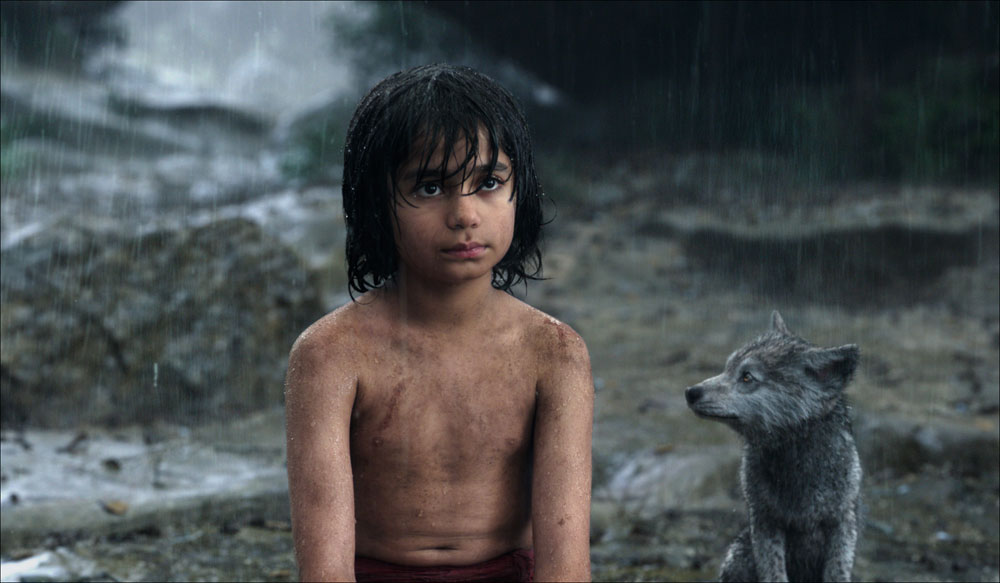
Well, Disney you did it again. And by "it" I mean you took a beloved classic, let some real humans take the well worn characters for a test drive, and profited an almost obscene amount of money by playing on people's nostalgia and fond remembrances of days gone by. It's what you're good at, poking the childhood feels with clever songs and beloved narratives and I tip my hat to you for being able to put forth a "new" product every year that isn't, strictly speaking, new, innovative, fresh, forward thinking, or any typically positive adjective movie makers aim for when casting their lens or pens at a new project. That sounded like a heavy criticism, but it wasn't, truth be told. These are the films I grew up with; these movies and stories are my childhood and I, sucker that I am, join the masses in indulging in some fond recollections. Like my Cinderella movie review from a little over a year ago (was it year? gosh, time doth fly) there's very little need to set up this review. The plot is so well known that it barely (pun?) needs remarked upon at all. But unlike the Cinderella rave review, this one gets only a tentative "good" from me. There's something lacking in this new Disney live action adaptation, as if the film couldn't push itself to try and say something new. It certainly wasn't bad, but I did not leave the theater believing in the power of fairy tales again. And maybe--just maybe--it's because the Jungle Book isn't a fairy tale (though many of the tropes are well embedded). There's something darker and more feral at the heart of the jungle and the movie really missed the chance to explore the heart of darkness in man and beast alike. The jungle isn't for kids (despite the sugary sweet ending this film gives) and by not delving into the savagery of both man and beast I am left with something wanting. Hopefully I can unpack that a bit below, eh? Grab a cowbell (because of course) and let's go! 


General Thoughts

There came a point during my viewing of this film when I wondered if I'm not just a wee bit too cynical at times. Don't worry, readers. You don't actually have to answer me; I know I am. I've been trying to think back to my childhood experiences of The Jungle Book, the original Disney animated movie. Did I enjoy it then? I think I did, but certainly not the extent of, say, The Little Mermaid or Beauty and the Beast. I liked the songs; I liked Baloo; and I know I loved Kaa (this, by the way, will come up again below so stay tuned). But for me, as a child, The Jungle Book felt too foreign. Talking animals were common in Disney films so I had no problem with that, but the lack of a real world made it too escapist. I've never been in a jungle nor witnessed any of its horrors (and the Disney film mostly makes the horrors of the jungle into jokes--it is, after all, a cartoon) and the cartoon landscapes felt too otherworldly to ever feel deadly. In the new live action film, the otherworldly feeling goes right out the window and becomes very real. But as I stated above, the realness feels flat, or at least unexplored, lacking in the depth of horror we know the jungle can offer. A jungle, in literature, can often represent as terrifying an ordeal as a haunted castle or a wild moor. More so, even, because the jungle in the actual Jungle Book is one of those wildly untapped ones; the kind that people go in to and never come out of (sort of like Mowgli). There are giant apes and ruinous temples and raging rivers and apparently elephants who are also expert landscapers. The jungle itself is supposed to feel like a living creature in this film, one that can be wild and deadly but also one that can nurture and endure. The film does a passingly good job at the latter, but it's the former where it falls down for me. We spend the last bit of the beginning of the movie moving from landscape to landscape with Mowgli and Bagheera--and yes the jungle is so vast and uncharted that it contains everything from rocky terrain, to dense forest, to yellowed Savannah, to something that looks akin to your local midwest state park. The jungle in this movie is the world, but it never feels truly like a threat (hint: it should!). It's not just Shere Khan who threatens Mowgli; the entire situation should be a threat. If Mowgli wants to chose the jungle (because that's where his multi-creatured pack is) that's fine, but the movie never shows the true horror of the jungle; but you better believe it shows the horrors of the man village. Bathed in fire--not just normal fire, mind you, but a fire that licks the sky and threatens to overtake the men standing around its warmth (tiny beings reduced to mere shadows before its red and yellow glow)--the man village is an unholy nightmare from which Mowgli runs.

And this is what I mean by my own jaded cynicism. It's a Disney film, for crying out loud. I shouldn't be rooting for something akin to Conrad's Heart of Darkness! But lessening the terror of the jungle felt out of place with the realism the movie brought in other terms, like the animation, voice acting of most of the cast, or, yes, the raw human emotions the animals invoke when they deal with the incredibly real problems of Shere Khan's threats, losing a loved one, or friend. This is topped off by what I feel is a very rough ending that makes everything too saccharine and too "happily ever after." Again, it's a Disney film so why am I being so harsh that the storybook closed and all's well that ends well? Well, I think it's actually because the animated Disney film--the one that should by virtue of medium be more Disney-esque than this new live action one--chose a very different path, one this new movie eschewed in a rather eyebrow raising manner. Mowgli doesn't leave the jungle; the closest he gets to the man village is the threshold, where he steals some fire and runs back to his jungle home. The animated film pushes Mowgli toward humanity. Like mythical Enkidu, Mowgli is tamed not by fire but by the lure of his own burgeoning manhood--in other words, he sees a pretty girl. Humanity is placed above the law of the jungle, the wild untamed forests, and even his two best friends Bagheera and Baloo in the animated film. It's definitely a bold statement for this 2016 film to cast humanity so dark and have Mowgli stay in the jungle--after all, humans are doing a pretty nice job of wrecking the planet as is, right (yes, the modern overtones of this movie are fairly heavy at times). But it cannot be that straightforward (jungle good, village bad), not when your plot has side moments like a blood thirsty tiger, a law in which peace between "tribes" of people only comes during great upset (like lack of water), and a 2,000 pound ape who wants to rule his empire with the help of the red flower (fire). All three of those "dangers," except Shere Khan, are given little room to truly become terrors and instead are either quickly resolved (the rainy season comes quickly) or are made into comic and iconic moments of song and dance. And once the imminent threat of Shere Khan is removed, the jungle returns to a paradise. My criticisms sound harsh but only because there is so much more this film could have done to emphasize that the jungle and the village are one and the same--packs of peoples or animals, seeking to dominate and protect their own. King Louie wants to bring the jungle under his control with fire? So do humans. Driving home this point--that there is little separation between the wild and the civilized--would go a long way in demonstrating that Mowgli would be at home in either place and is both beast and man.

What I Liked

--The animation of this film is gorgeous. The standout animation scene is probably Mowgli sitting on Baloo's belly, floating upstream.

--I especially loved the re-imagining of King Louie as a giant ape sitting on a throne of a long forgotten temple. Christopher Walken gives a very nice performance moving from stuttering kindly voice in the dark to oversized temple-destroyer in a matter of moments. Also, a round of applause to whoever thought up Mowgli finding a cowbell seconds before you first hear Louie speak.

--While I didn't like the actual plot ending, the ending-ending of the book closing whilst laying on a blue velvet cloth is so damn iconic I actually sniffled a bit.

--"You have never been in more danger of being extinct than you are right now." Baloo was on point.

--Even if their roles were smaller, most of the voice actors did a fantastic job bringing their talents to animal creatures. I say most because despite loving Idris Elba in everything he does, he was a bit too whisker twirling bad kitty this time around; the cartoon tiger was elegant in his villainy. He also missed the chance to showcase Shere Khan's trauma and (yup) humanity in light of his fears.

What I Disliked 

--Not nearly enough Kaa! The giant snake was masterfully rendered but her role was so small. And she didn't even get to sing "Trust In Me" until the end credits!

--Some clunky dialogue like right after Kaa tells Mowgli the story of the man and his cub who fought Shere Kahn in the distant past, she says, "and that man cub was you!" No kidding. You don't need to make this text. The young kid is wearing red pantaloons. It's clearly Mowgli.

--The actor playing Mowgli was a hit and a miss. One the one hand, he's incredibly young and his costars are tennis balls on sticks so it takes a certain amount of imagination to even make this work, but on the other hand, at no point did I forget that I was watching a kid "play" around. He never became Mowgli, in other words. Also, his annunciation could use some work at times.

--The constant "law of the jungle" refrain got wearisome.

--I'm glad Bear Necessities wasn't cut, but Baloo and Mowgli couldn't even sing it together in time?

Final Grade and Thoughts on The Jungle Book

--Final Grade: B

--Final Thought: This is a mostly acceptable version of a beloved Disney story and it strays little from the wheelhouse. But where it does stray is noticeable and without any real depth of exploration of what the film is really trying to say.