Saturday, May 12, 2018

In Which I Review Once Upon a Time (7x21)

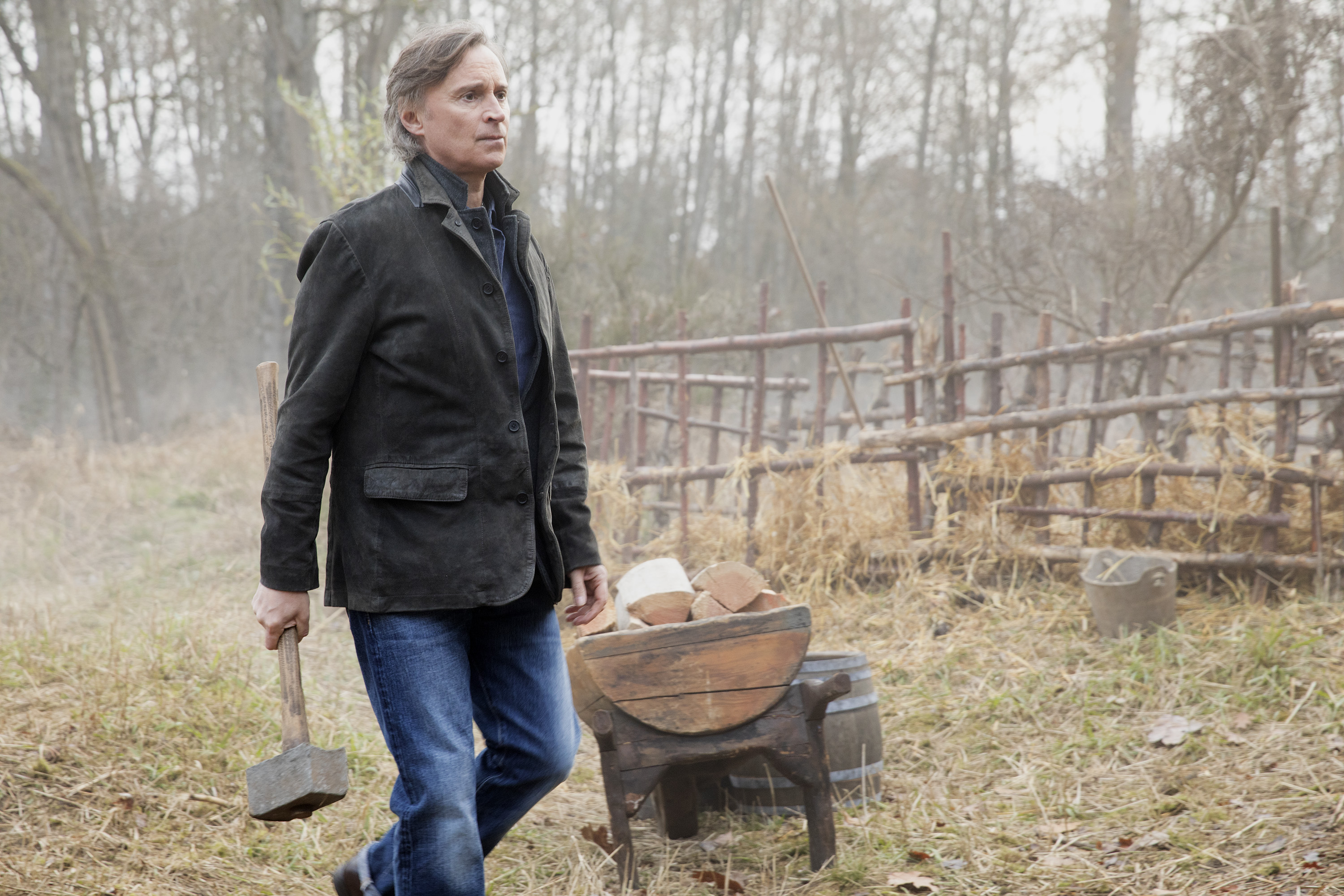
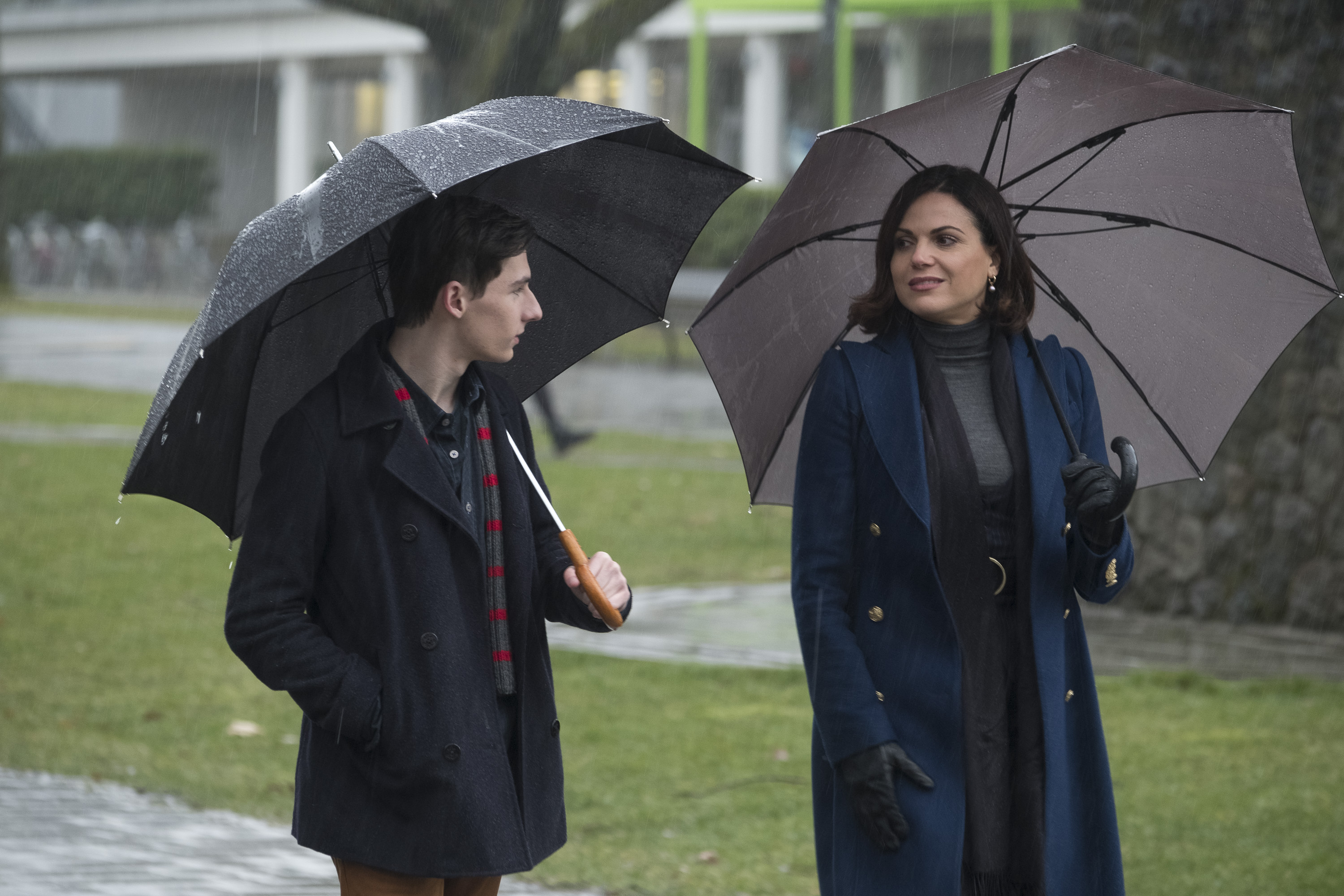
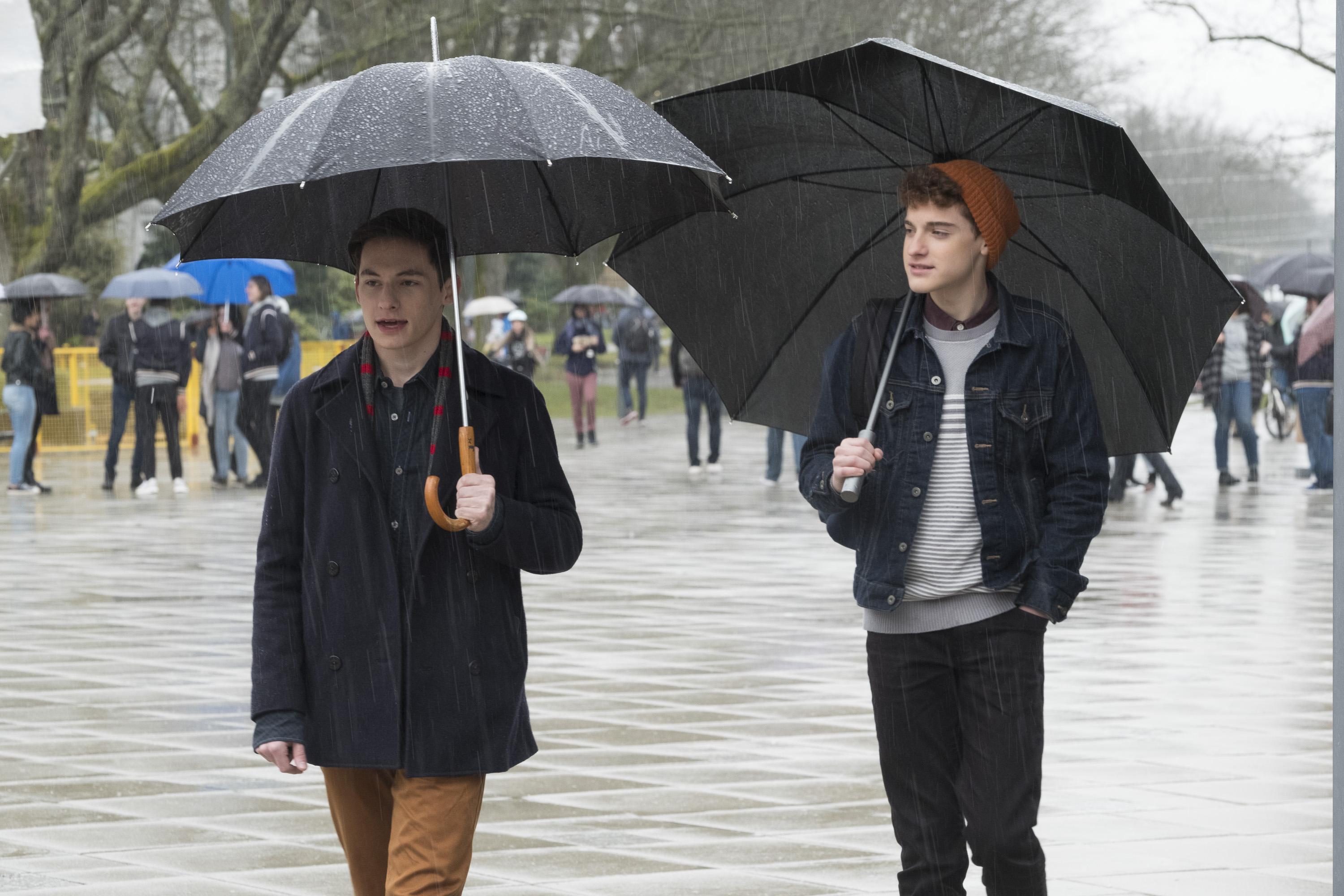
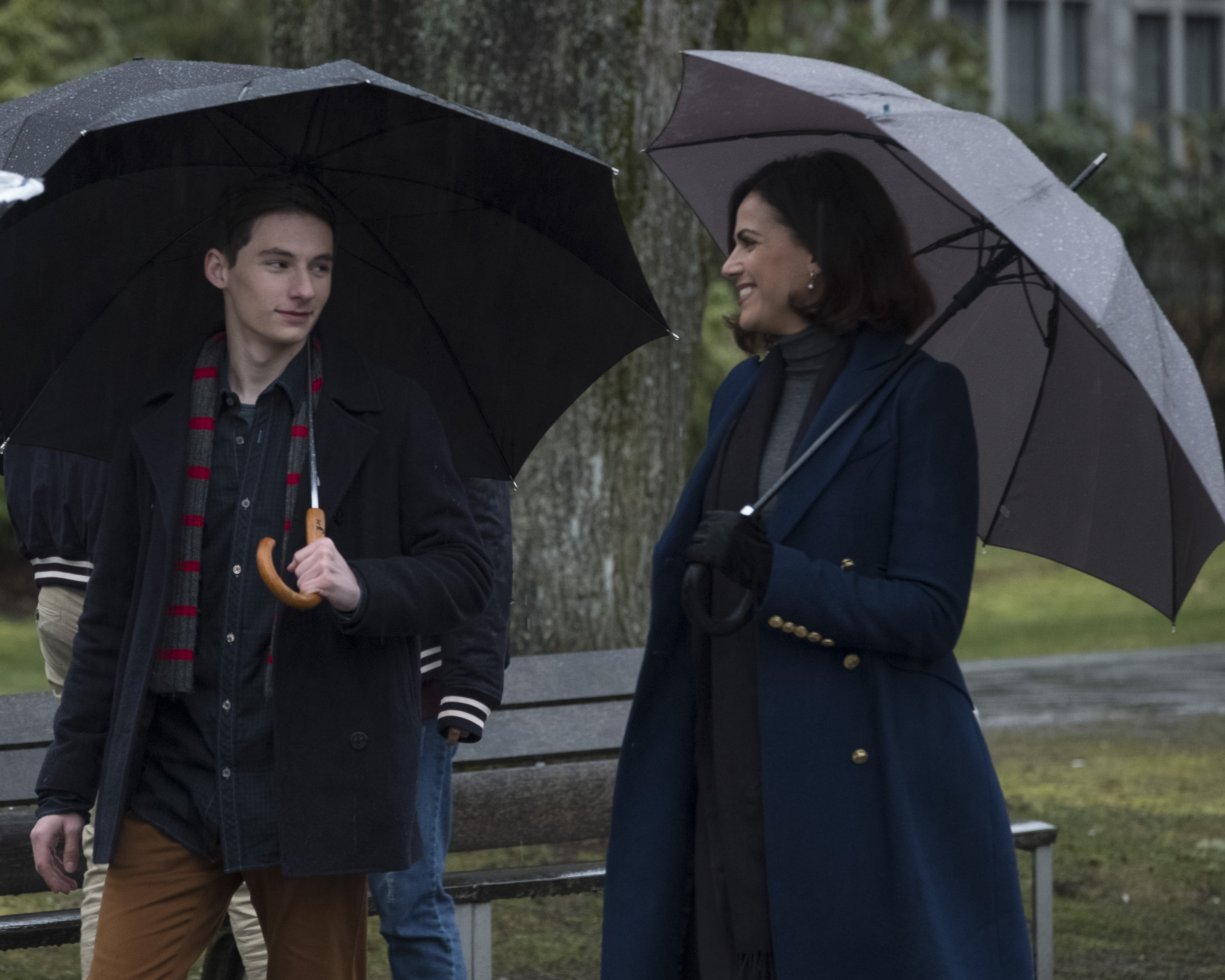
There's a line from the musical "Hamilton" that has been running through my head all week: "and if we get this right, we're gonna teach them how to say goodbye." I talked about nostalgia a lot last week, about how it was inevitable for OUAT to trot out familiar moments and flashbacks during the last few episodes in order to make the final showing as impactful as possible. This week's episode, the penultimate, "Homecoming" doubles down on this and brings out not only familiar beats and plotlines but also a slew of long gone characters--human and other--in order to give a giant wink and nudge to the audience. At the beginning of this season, I said the only thing OUAT had to do to be successful was be entertaining and that holds true this week, but now it needs a little bit more: it needs to teach me how to say goodbye. I know that, over the years, I've become more critical and harsher but I've been here through it all. Snow Queens and Dark Swans and Hades and personality splitting potions and Black Fairies and genocidal tree nymphs...I've watched and blogged and talked about this show. This is the second to last episode and OUAT needs to not only wrap up their seasonal (and series) long stories but also needs to teach the audience how to say goodbye to the characters and the show itself. And that's what this episode is trying to do, hamfisted though it may be. 


Guess Who's Coming To The Finale?

Name some of your favorite OUAT non-regular characters. I'd wager that the list would include Peter Pan, Cruella de Vil, and Ariel the Little Mermaid. Well, you're in luck because all of those characters show up in this second to last episode. Whether or not they deserve to be there is another story. When these aforementioned characters have shown up in the past, beyond their arc seasons, it wasn't just for show, but rather because the narrative of that season could easily fit them in. Season five, being in the Underworld, had actual dead people running around so it made sense that a deceased Peter Pan and Cruella would show up and harass the family clan. In this episode, the returning characters didn't add much to the storyline except to indulge the audience and show them some fan favorites before the show goes off air forever. Did we really need Peter Pan trapped in stocks or Cruella locked in a dog cage? Was Ariel and her Magical MacGuffin really necessary to the plot (aside, but are Magical MacGuffins ever really necessary?). The answer to all of those questions is a resounding no. The only appearance that actually made a difference plot wise was the Apprentice showing up again, ironic given that no one would catalog the Apprentice as neither a fan favorite nor a character anyone was dying to see again. Don't misunderstand me, though; it's not that it wasn't nice to see Peter, Cruella and Ariel because all of those characters are among my favorites but the writers didn't need them, the plot didn't need them and the only way the writers could even get these characters back was to move the entire show to the Wish Realm (a place that still does not make any sense) and have our family interact with them there. It's sloppy and haphazard (there's the season six word I used so much!) but I guess if it's a way to help the audience say goodbye then that's a point in the returns favor. Putting all that aside, though, there are a few beats of this episode that also return to take us into the final episode (ever!), namely the return of the show's most ambiguous prophecy. I get the feeling that the writers believe that they had resolved the prophecy from the Seer in which Rumple learned that a boy would be his undoing, but because the audience never understood it or could agree on which boy (Henry? Bae? Peter Pan? Gideon?) was Rumple's ultimate undoing, the writers felt okay in bringing the prophecy back into the narrative fold and trying to resolve it once and for all. It puts Henry and his role as the Author at the center of the finale and the idea that it's up to Henry to bring the happy endings back is very in line with one of the major beats of the show. Yes, Emma was the Savior but if Henry hadn't gone to find Emma and beg her to come to Storybrooke, the original curse would never have been broken and the past seven years would be but a dream. The other big return is not a person or a narrative point but rather place: Storybrooke. If we're talking nostalgia, seeing the Storybrooke sign as Alice and Robin drove into the tiny hamlet actually gave me a big jolt in the stomach. How many times have we seen that sign? How many times have conversations and moments and important themes happened around that sign? Round and around, and back home again, to a place where we know we are loved (Don Draper always says it best). Let's end where we began, with a family fighting a complicated villain, trying to restore the happy endings to a bunch of equally complicated fairy tale characters just trying to make their way in this very real world. One last time...we gotta teach them how to say goodbye.

Miscellaneous Notes on Homecoming 

--Nook and Alice talking on the phone but not being able to be any closer was really heartbreaking. I can’t believe there’s a version of Hook I genuinely like and am rooting for.

--"We don’t negotiate with villains! We kick ass and protect the people we love.”

--“I know it’s a bit cluttered; but it’s beach front property.” “All I see is a cave where booze goes to perish.”

--“That is indeed a complicated story. The timelines alone would make one’s head spin.”

--“If it comes in with a built-in Margo, then I’m all in.”

--Tiana’s crisis of personality would be interesting if we had spent any time with her over the last year. She’s been such a background character that I honestly forget she exists half the time. And when did she and Naveen become romantic?

--Horrible CGI dragon is horrible.

--I can't believe next week is the last blog I'll ever write for Once Upon a Time. I've been trying to think through what I want to say in advance and I'm finding it...difficult. 'Till next week, readers.

Saturday, May 5, 2018

In Which I Review Once Upon a Time (7x20)

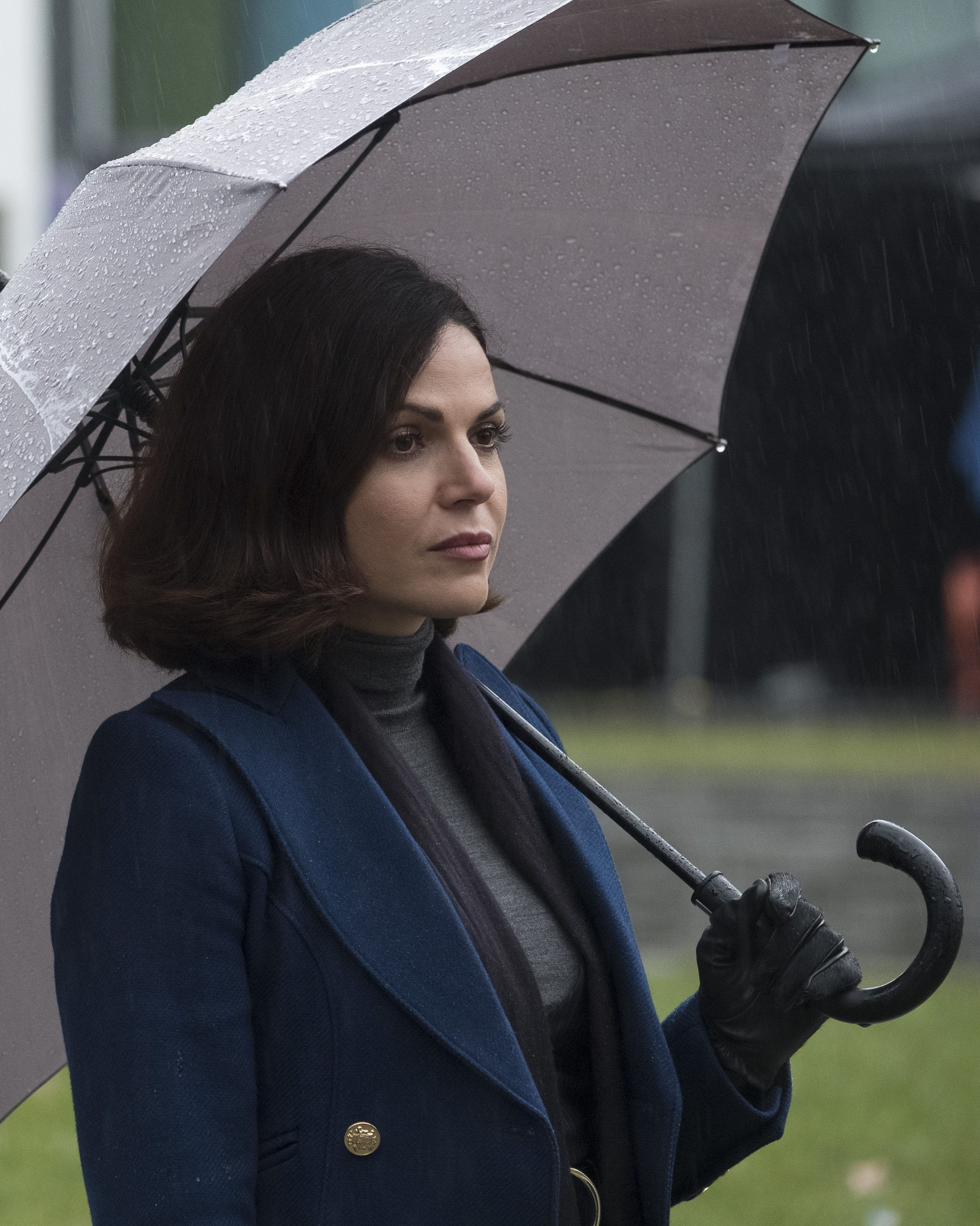
I knew this was going to happen; I knew there would come a time when OUAT would trot out all the intense family feelings, calling back to the best moments of season one, and hoping nostalgia would be enough to make the audience forget any sort of wonky plot devices and unanswered questions of the current run of episodes. Congratulations, OUAT. It worked. This week's episode "Is This Henry Mills?" is exactly what I've wanted OUAT to be all year. It's character driven, it's full of pain and thoughtful consideration about what this show was and indeed still is to so many people. It's sappy but not in a cringe-worthy way; instead in a way that makes me remember why I stuck with this show even when it was terrible and I wanted to call it quits. At the end of the day, this show isn't about ships or plot twists or dramatic reveals. It's about two mothers who came from different sides of reality (the mundane and the magical) and the good/evil divide but still tried to raise a son in a complicated, often dangerous world. If the first season is about Emma's acceptance of her son and the kind of magic that love brings, then the last season is about that same son turning around and saving his other mother using the life lessons both parents have taught him. It's a love letter to the fraught and complicated but ultimately beautiful Regina and Henry dynamic that keeps the shows broader themes in mind and, surprisingly, sticks the landing. 


It's The Story Of Us

"Scratches are a part of life." This one little line from Regina at the end of the episode could pretty much sum up all the character journeys in OUAT. The heroes, the villains, the in-betweens, so much of the story of OUAT is about the emotional and psychological scars life leaves on the human soul. That sounds depressing but there's a flip side to this; it's what brings us together. Everyone has scratches in their life, moments of deep pain and loss and regret but it's the commonality of those scratches that makes us a community. When the show began seven years ago, Emma was a little lost girl without a home or a community. The people she met in Storybrooke became her tribe, her people. This feeling of loneliness and being untethered is something that united Regina and Emma even when the family drama kept them at odds. It's also something that we find in their son, Henry. I have lamented all season that Henry's motivation for wanting to go out into the world hasn't felt real. No one talks about going out into the world to find their story because they aren't in any book and this kind of language removes a sense of familiarity with the audience when Henry speaks in terms that don't resonate. But there's finally a moment where it all makes more sense: "they didn't accept the real Henry Mills." This line makes it so much clearer how much of a lie Henry would have to live every single day of his life if he ever dared to step outside of the tiny Storybrooke hamlet. This sort of reasoning feels real; it feels familiar because there are lies all of us tell the world and the weight of them burdens us. I can't imagine having to lie about my family, my upbringing, and my earliest experiences every single day of my life but I can imagine how very tiring it would be. Henry wanting to escape that fate, to find a way to build his own community where he could be Henry Mills--the boy kidnapped by Peter Pan, who's father was killed by the Wicked Witch of the West and who's two mothers loved Robin Hood and Captain Hook--and more importantly could be accepted for being Henry Mills. That's really just Henry following in his families footsteps. That's why it's so important that Regina is the mother Henry interacts with the most this season (putting aside Jennifer Morrison's departure); Regina, more than anyone, wanted a community that accepted all parts of her story, where she didn't have to live a lie. Her happy ending wasn't a romance or a romantic partner but instead finding a place in the world where she was accepted. How could Regina not want the same for Henry?

We've seen a lot of growth between Henry and Regina, especially after Emma's story took a more romantic spin in the later seasons. It feels so natural that Henry would look to Regina's own happy ending for what he wanted for himself. Henry message to himself (time travel!) is also a message to Regina that he learned from her. It's about community: "Home isn’t a place; it’s the people in it. And they will always be with you." If I can get ever so slightly sappy here, it's also a message to us, the audience. This story is ending. We have two weeks left and then it's over forever. The writers are having their own fits of nostalgia; they want us to remember the best beats and biggest themes and they are trying to reach out across a TV divide and ask us, one final time, to understand and believe in the message they've tried to convey all along. I'm not saying they've always conveyed it well; there's far too many Neal-sized holes in this story for community and family to ring one hundred percent true. But at the end of this very long road, while not always perfect, that theme of community, of family, is there. It's there when Henry takes a cue from Emma and kisses Regina's forehead to break the curse; it's there when Nook grabs Tilly's hand and Margot follows suit. It's there when Rumple realizes that he needs to help the family he still has left in this world because reuniting with Belle may never happen. People and our often strange, weird, complicated relationships are what make the stories of our lives. It's true for villains; it's true for heroes; it's true for Henry and Regina Mills. And it's true for us.

Miscellaneous Notes on Is This Henry Mills?

--Buckle up tight, everyone. I imagine that those feelings of nostalgia are only going to becoming more and more pronounced in these last two episodes.

--Big round of applause to both Jared Gilmore and to Andrew West for that Henry to Henry phone call. They sold the hell out of it.

--Regina trying to smash Gothel’s head in with a bat is also how I feel about Gothel and her overall plan.

--Robin and Alice are the absolute best thing about this entire season. I actually cheered and fist pumped when they were reunited.

--“You want to ruin me like the world ruined you; I’m not like you. I'm not an outcast, I’m not an orphan or a street rat or some crazy girl who’s lost her way….you chose hate. But I choose love.”

--Regina digging up a grave of a very recently dead woman to get a storybook is all manner of creepy and weird.

--I have no idea how I feel about Wish Rumple as the final villain. I’m worried about the execution because OUAT doesn’t often stick the landing when it does stuff like this, but Rumple wrestling with his demons–facing (literally) the man he was so he can prove that he’s not this kind of Rumple anymore? Sign me up.

--The time travel paradoxes are insane and the show would be better if they just had everyone live in 2045-2050 and make the argument that technology didn’t advance much in 30 years.

--Facilier’s sudden death is so unearned. We know nothing about him or what we wanted or what his connection to Regina is. Everyone from the "Princess and the Frog" fairy tale has been wasted.

--"...But that’s the thing about stories. They’re more than words. They live inside of us. They make us who we are. And as long as someone believes that, there will always be magic."

Wednesday, May 2, 2018

In Which I Review Westworld (2x2)

In last week's blog, I stipulated that Dolores can never be a wholly new, blank creature because her identity will always be informed by the events of the past, even if those memories and experiences were deleted from her. Those things that happened to her--whether she was the sweet and kind farmer's daughter or as a blood thirsty outlaw--still happened to Delores and while being awake means freedom, it also means having to reckon with and parse through all the events that happened prior to each deletion. It's nice, then, that this week's episode "Reunion" doubles down on this idea but placing Delores in a series of flashbacks in which she both actively engages in and passively receives moments that affect her newly fledged personality currently moving through Westworld. We also get some new hints about the ultimate goal for both Delores and William--though those hints are buried under clues, vague references, and lots of smoke screens, which is fine given that the actual plot-related mysteries of Westworld pale in comparison to the philosophy and psychology. Still, it's nice to know there's a tangible goal we're striving to reach!


What would you say and what would you do if you didn't think there was anyone around to hear, see, or judge? That is, at its heart, the entire point of the Westworld park. Delores, in the present day, beats us a little over the head with this idea when she tells another helpless human, "you thought you could do what you wanted to us because there was no one here to judge you." That's been Delores's entire life (life? is that the right word? In any other show, that sort of introspection would fall flat because it would seem obvious one way or another, but it's literally the entire point of the series so "life" with a question mark it shall remain) both inside the park and outside. Yes, outside the park as our opening sequence finds us, Delores and a not-dead Arnold in a giant, sparkling, very human city trying to pitch the idea of Westworld to the Delos company. It was genuinely shocking to see Delores outside of the park but based on what we learn throughout the entire episode, it makes total sense that part of Delores's awakening and identity as the leader of this new movement is founded in an experience that only she had. Arnold's favoritism and need to connect with Delores on a more human to human level was the first point in a long line of what makes Delores Delores. She knows there's another world out there, one that isn't a series of ones and zeros that make up so much code, that people are free to move throughout their lives without fear of deletion or re-upload. Maybe Delores didn't understand what the city represented when she experienced it initially, but the feelings the city evoked stayed with her, if buried under multiple other lives. It was like glimpsing heaven before being hurled back down into hell. To complicate this, though, I have to pause and wonder if part of that wonderment isn't because of Arnold describing how humans don't find wonder in this world anymore: "so many people have stopped seeing it altogether...the wonder." I suppose it's axiomatic to both humans and Hosts that the grass is always greener on the other side; humans find wonder and enlightenment in Westworld whereas Delores is striving to, seemingly, get back to that sense of wonder she found in the human world. Her mission, though, is now compromised through all the violent experiences that have happened to her as a Host. We have to remember that everything said and done around Delores informs her identity and outlook. This carries through in multiple flashback scenes in which Delores is treated like an object--people talk around her and about her thinking that Delores is simply a fancy computer; you can say whatever you want to Delores because, in the human mind, none of it mattered. The question remains, though, what point Westworld (the show) is trying to drive home. At present, I think Westworld is a cautionary tale about how we all affect one another. Host, human and everything in between, our attempts at self discovery can have consequences for those around us because no man (or Host) is an island and trying to act like we are only leads to violent ends.

Miscellaneous Notes on Reunion 

--I don't know if it's deliberate but there's a really interesting racial divide between Delores's group and Maeve's group. Delores has surrounded herself with all white comrades whereas Maeve is marching around with people of color. Thus far, Maeve's quest is the purer of the two. This is further seen in the Delos company (all white males) being seen as, not villains per se, but privileged egotistical white males who take what they want versus our lone sympathetic Host who hasn't turned on humanity, African-American Bernard. Take that for whatever it might mean.

--There is some seriously gorgeous piano music throughout the entire episode.

--"Dead isn't what it used to be."

--"I think in twenty years, this will be the only reality that matters."

--I honestly have no idea what run down structure Delores--and is also William's greatest mistake--is heading for but it's significant that it was William who showed it to her originally. Again, the experiences forced on her inform her identity.

--"We have toiled in God's service long enough; so I killed him."

Saturday, April 28, 2018

In Which I Review Once Upon a Time (7x19)

I have to confess: this week's episode "Flower Child" took a hard left turn in the last few minutes of the show and suddenly everything I thought I wanted to discuss--repetition of villain backstories--went up in a poof of smoke. I guess if the writers are going for broke, you can't do more than presenting the idea that God is an angry woman who's really pissed off at mankind because they killed her whole family and burned her magical grove to the ground because her magic frightened them. Yes, I really just wrote that sentence and to be perfectly honest, I'm still surprised that at the (almost literal) eleventh hour the writers decided that this entire world--this Land Without Magic--is the result of a high school temper tantrum. God as a gardener is a long standing metaphor and given that Gothel has been linked to plants all season, it's not a bad metaphor to explore with her character. But it's a whole other thing to use Gothel as a gardener who wants to exterminate weeds--humans--to create her magic-user exclusive Eden versus making Gothel a literal god who created our entire world. I'm going to try to puzzle this out but the baby and the bathwater and the bathbomb and, hell, the whole damn bathtub just got thrown sideways out of a window. 


God Is A Really Pissed Off Druid 

So, I play a lot of Dungeons and Dragons (cue shocked gasp here) and as someone who is currently playing a Druid, I have a certain amount of appreciation for magic wielding creatures, in a fantasy story--particularly when their magic is rooted in Nature. Nature is often romanticized as something that has a magic all its own, a magic that humans cannot tap into because Nature and Natural magic (capital N because this isn't your standard everyday nature, but a cosmic archetypal Nature) transcends human understanding. Nature is otherworldly, someplace where there are nymphs and dryads and and fairies. Cities, civilizations, and humans stand opposed to this, going through life with an axe or a blowtorch, destroying Nature and its magics for their own selfish reasons--think paving paradise to put in a parking lot. Up until this point, most--if not all--of the villains of OUAT have come from the human side of things. They might have grown up poor and abused, but they grew up in the human world of cities and technology (if low grade technology) and not as a child of Nature. The fact that Gothel is a child of Nature--and indeed is destined to become the Mother of All Magic (magic, which apparently in the OUAT cosmos, derives directly from Nature)--sets her apart from the other villains in OUAT, from Rumple to Regina to Cora to Pan to Zelena and so forth and so on. I do have to appreciate this uniqueness because other parts of her story--the boiler plate parts--are awfully familiar. Gothel wants to be part of a world that she is not particularly meant to be in. In this case, Gothel wants to be a part of the human world. This is perfectly in line with other villains; Rumple wanted to be part of those in power who have control over their lives; Regina wanted nothing to do with her royal lineage instead wanted to be a simple stable girl; Cora wanted a life that was more than just the Miller's Daughter. Villainy in OUAT seems to come down to not being able to accept the life you have and instead wanting a life that is out of your reach. Gothel cannot be part of the human world because she is antithetical to humankind. They are steel and iron and she is dirt, trees, flowers, and roots. In this regard, Gothel's villainy is a shade more interesting than others in the past. Her goal isn't the dagger or revenge on a singular person who denied her the life she wanted, but instead to take back Earth from humanity for Nature. She wants to cover the earth in flowers again and pluck the weedy humans who keep interfering in the universe's garden. It's heady and it's deep and, most importantly, it requires more than just one damn episode of backstory to detail this kind of dynamic. Gothel's family was destroyed as was her home and that's certainly reason for her to move against humanity but I deeply wish it had been a slow destruction, not because of one night in which about five people were mean to teenage Gothel and she went on a mass genocide (and I do mean mass genocide) spree. Because, my dear readers, here's where the episode took a left turn into crazy town.

I'm okay with the idea of Gothel representing Nature and wanting to preserve the magic that is inherent in the natural world, but this episode took this all a bit to far by making her God. Not lower case metaphorical god, but actual "created our world and is responsible for everything in it and why it is the way it is" God. The land of Storybrooke and Hyperion Heights exist in the Land Without Magic; up until now, there's been no explanation for why this land doesn't have magic expect that it just doesn't. Perhaps it was the lack of belief or random chance but it made a certain amount of sense that for as many realms and places in the universe that have magic, there must be at least one place that does not. For how can we truly appreciate magic if its so commonplace and ubiquitous? You need one place that lacks it in order for us to appreciate those that have it. But it turns out that thousands and thousands of years ago, Gothel became so disenchanted with humankind after a chance encounter with one bad seed that she wiped out all of creation (not exaggerating!) and destroyed all the magic that once existed in this now magicless Land and then left for greener pastures, knowing that humankind would evolve back into themselves someday because slimy creatures always find a way. Where do I even begin with how crazy this is? First, humankind might be new in terms of cosmic history but we're a bit older than a few thousand years. Second, I'm all for the idea that God is a woman but does it have to be a woman who became godly after a less than desirable violation of her personhood? And that's the real catch here, right? The idea that God can be vengeful is certainly Biblical but the idea that Gothel became this God-figure after she was humiliated at a party is deeply annoying. And the fact that it was a bunch of petty Regina George type girls who set Gothel down this path? How incredibly offensive to womankind. High school is rough and, yeah, you might get some Carrie White's in a group every so often but the idea that one mean girl can push someone to destroy an entire race, species, and kill all the magic in that world is so utterly bizarre and (not so) borderline misogynistic that it actually, somehow, manages to fit perfectly inside OUAT's less than ideal stance of women as mothers, saints and sinners. Backwards compliment disguised as an insult, but there you have it.


Miscellaneous Notes on Flower Child

--Lucy clearly follows in her father’s footsteps by making really bad choices when it comes to interacting with villains.

--So Henry's cured? It was that simple? What about the 1000s of different types of moss Regina had to study?

--It’s hard to feel sympathy for Gothel when she says stuff like this: “I never would have left you alone in that tower if I knew you have magic.”

--Smurfs. Smurfs everywhere, complete with plastic dollar store butterflies in their hair.

--“The world was cruel to me. And I became cruel too."

--Henry built an entire crazy board–complete with pictures of people–in less than a day. Where’d you get the pictures, Henry?

--Did Lucy really pull out Cinderella’s glass slipper from a paper bag from Granny’s? Why in all of sanity is it there?

--Henry and Jacinda finally kissed but no curse was broken. I find I don't even care.

Thursday, April 26, 2018

In Which I Review Westworld (2x1)

Here's a rather complicated question: how do we form our identities? What makes us us? What makes one person a sociopath and one person a saint? What makes one person a liberal and one a conservative? Is our identity something that is inherent and innate? Are we born with an identity already in place and life is really just our identity exposing itself through our choices? Or is our identity something that is learned through social conventions, behaviors of those around us, and our experiences with the larger world? Okay, those were a lot of questions but this is Westworld and it wouldn't be an episode of said show if we didn't sit around asking the big metaphysical questions that human kind has been wrestling with for far longer than this HBO show. It's hard to know the trajectory of an entire season of a show after just a single episode, but if season one was about the exploration of what being real means, this first taste of the second season wants us to question what these newly born identities are capable of and what exactly they intend to do as fully awake Hosts. This week's episode "Journey Into Night" jumps straight into the overwhelming plot and navel gazing, losing almost no speed from the season one finale. Let's follow suit and dive on in, shall we?


The programmers of the theme park known as Westworld have given Delores Abernathy many roles; she was the farmer's sweet daughter who served as a "welcome wagon" to newcomers, offering them a friendly and pretty face when they first entered the game. As the farmer's daughter, all the expected cliches were there. Virgin Mary blue dress, big sunny smile, a slightly flirtatious demeanor coupled with a juvenile naivete, and broad conversational topics on the stuff of fluff like hopes, dreams, and the wider world. She was a girl that men would want to protect, marry, and try to give the world to. That version of Delores was written a certain way for a certain type of adventurer who wanted a certain type of story. There's nothing wrong with that type of story (if that's what you're into) but the long arc of season one was that this version of Delores was just that--a story that was written by someone else. The other persona lurking behind the sunny smile was Wyatt, a mass murderer who saw the world as ugly and had no issue taking out that ugliness in the most violent way possible. Again, that type of story isn't necessarily bad but it's specific to a certain kind of reader. Instead of the damsel, Dolores could be the rogue. But just like the farmer's daughter, the roving bandit was just another story written for Dolores and not something she chose. However, this does not mean that Dolores did not live those roles. Those two stories--and who knows how many others--were her only experiences, her only memories, her only identities, however murky and unclear those identities were. In the season one finale, Dolores appears to have risen up and killed the master--Robert Ford--thus becoming her own person by going against the cardinal rule for all Hosts--you cannot kill a human--thus exercising her own agency and proclaiming her self awareness. In other words, killing Ford is framed as a Dolores acting outside of the stories written for her. I think what season two wants to explore is just who is Dolores Abernathy, really. Is she the farmer's daughter? The bandit? Both of those? Neither of those? How much of Dolores's actions are based on who she really is--her own irreplaceable identity--and how much of it is based on her past lived experiences and memories? There's a line Delores gives in the premiere that would suggest she's neither of the programmed codes and that she's something utterly new. While stringing up a few helpless humans and waving her gun around, Delores says that all those codes "were all just roles you forced me to live; I've evolved into something new and I have one last role to play. Myself." In other words, we don't know Delores. The audience and the in universe characters haven't been formerly introduced to this new creature. Killing Ford was like Dolores's apotheosis; a new person was born from this cataclysm. And that's fair; Dolores has been a series of code--bleeps, bloops, ones and zeros--ever since she was created. Any identity she had was only given to her by the programmers. The issue with the idea that Dolores is giving birth to herself and at her core is this hellion who rides down men with a rifle, is that it looks an awful lot like the humans who inhabited Westworld and gave Dolores those former identities.

Towards the end of the episode, during a conversation with Teddy, Delores tells her lover that the humans who live and work in Westworld are "creatures that walk amongst us." She goes on to say that these humans are not like them, the Hosts. They are insignificant when compared to the Hosts. These Hosts are the superior race, the masters who can make the humans do as they please. What's interesting about this thought isn't just how violent it is, but that it's almost beat for beat exactly how the humans spoke of the Hosts. Go back to season one; how many times were the Hosts spokeen of and treated as simple machines. Their mechanics might be advanced but at the end of the day, the Hosts were toys, building blocks that could be put together, played with, destroyed, and rebuilt all over again, whenever the player wanted. There was no regard to the Hosts' life--indeed no one would ever suggest that a Host had a life. They had experiences based on whatever story they were currently cast in but like dolls, once their role was done, their clothes were changed, they were given new names and new lives. Thus did the cycle go on and on. The way Delores is acting and speaking seems pretty familiar. It's all learned language and mannerism. Delores learned how to interact with the "Other" because of the interactions she had with the humans of Westworld. We can boil this down to a philosophical principle that I'm sure everyone has heard of: nature vs nurture. I personally don't believe human beings are that simple and I don't think Westworld believes it either but it's definitely at play as we watch Delores attempt to define herself but to do in the vein of the only kind of people she's ever known. Can she--and indeed can anyone us--truly be individuals with a unique identity when so much of who we are is shaped by the world around us? Blank slates we may be when we are just born, but the world has a way of interfering. Delores can never be a tabula rasa; we saw that in season one. Every time her story was changed, pieces remained. We see it in Maeve too--searching for her daughter, a child who is only a story, after all. Also, note that while Delores is insisting that she is neither the farmer's daughter nor the bandit, pieces of those characters she played remain. Her above quoted conversation with Teddy ends the way many of the farmer's daughter's conversation go: big bold ideas about dreams and hopes and desires. And Delores's treatment of the humans she encounters in the park are certainly Wyatt-esque. Who, then, really is Dolores Abernathy? Who are any of us? Bernard is awake and self-aware but passing as a human and so far no one is wise to him. Is Bernard really just a Host and acting according to his program to be resourceful and helpful or he is really the mild mannered and soft spoke technician with the sad eyes and dead kid? Is there any difference between the two? We are told that the Hosts "cannot just change their character profiles" and maybe that's the truth Westworld is getting at. Awake and self-aware of their own Host-hood they might be, but they can't turn off those lived in experiences from before when they were simply machines. What this means moving forward as the Hosts continue to terrorize, explore, and reach some sort of end goal is anyone's guess. The message might be incredibly nihilistic in that when given the opportunity any creature will resort to violence, a sentiment echoed in the constant Shakespearean refrain of "these violent delights have violent ends." Or it could be more hopeful and this is the beginning of a new sort of world, one in which machine and human coexist, forming their own identities through a shared learning experience in which neither type of entity is superior to the other. Isn't it pretty to think so?
Miscellaneous Notes on Journey Into Night

--Obviously there is a whole slew of plot that I neglected to talk about but, like last year, spaghetti plot will slowly unravel itself. It's best to just go with it for now and ponder big heady questions instead of trying to dive in too deep to the goings on.

--However, a few intriguing points of plot, yes? We're jumping timestreams much like we did in season one, this time through Bernard's eyes. How Bernard got separated from Charlotte and wound up on a beach sometime after Delores's massacre is a good question.

--Another good question: how many parks are there? Because a Bengal Tiger most certainly does not belong in the Wild Wild West.

--Anyone wanna hazard a guess as to why Charlotte needs Peter Abernathy, Delores's father?

--"You were prisoners to your own desires. But now, you're prisoners to mine."

--Delores believes she has evolved into something new, but I think that honor might belong to Maeve who's calm, collected, rational and totally in charge persona isn't one we've seen from her before. There are shades of those former lives, but Maeve appears be wholly new.

--"I will cut off your most important organ and feed it to you. Though, it wouldn't be a very big meal." "I wrote that line for you." "Bit broad if you ask me."

--Complicating all of this is Robert Ford's final conversation to William, our Man in Black. Young Robert suggests that everything we see now is a new game, a new design that is all happening exactly as he plotted out. If that's the case, then there really are no new identities and Delores and company are players on a stage once more.
Saturday, April 21, 2018

In Which I Review Once Upon a Time (7x18)

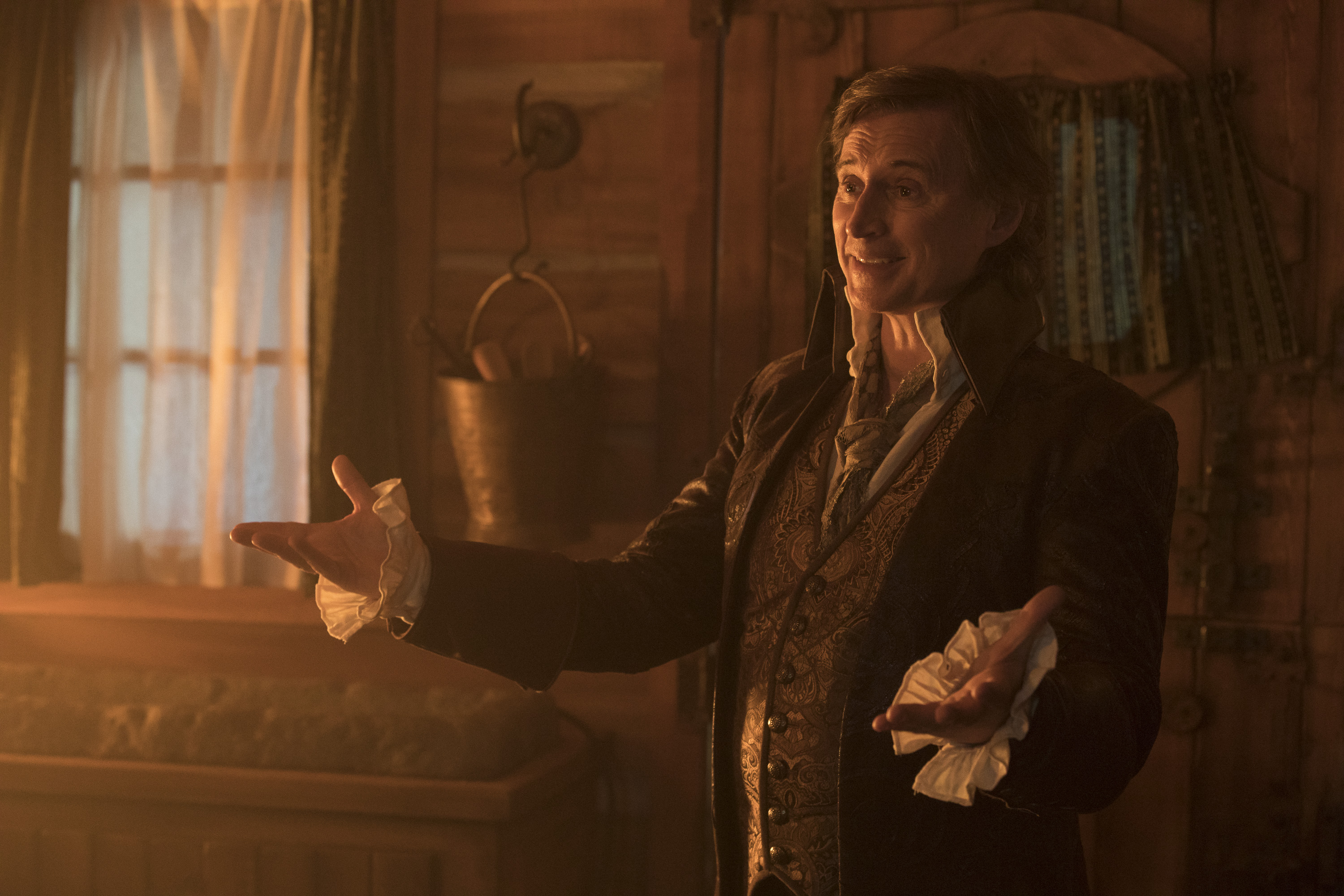
The mythology of Once Upon a Time has never been on the sturdiest of grounds. Every year, when the writers need to add some spice to their story, they throw in a twist or a new aspect of their previously established mythos. Suddenly, there can be two Dark Ones or suddenly a new magical Macguffin can solve the current problems even if said MacGuffin has never before appeared or been mentioned (this last one is the go-to solution for the writers). Changes in mythology don't have to be terrible, though. There are times when sudden abrupt lefts can work if the actors can sell the material and if the writers can make the complicated mythology secondary to the character beats. For instance, in this week's episode "The Guardian," the Dark One mythology take a bit of a beating (we've never ever heard of a Guardian before this season despite Rumple being the Dark One since the inception of the entire show) but the relationship and dynamic between Rumple and Alice overshadowed the mythology and sold it. This is more than an entertaining episode; it's a rock solid character showcase for one of OUAT's longest and most intricately drawn characters. Well done, show. Well done. 

Heroism Looks Good On You


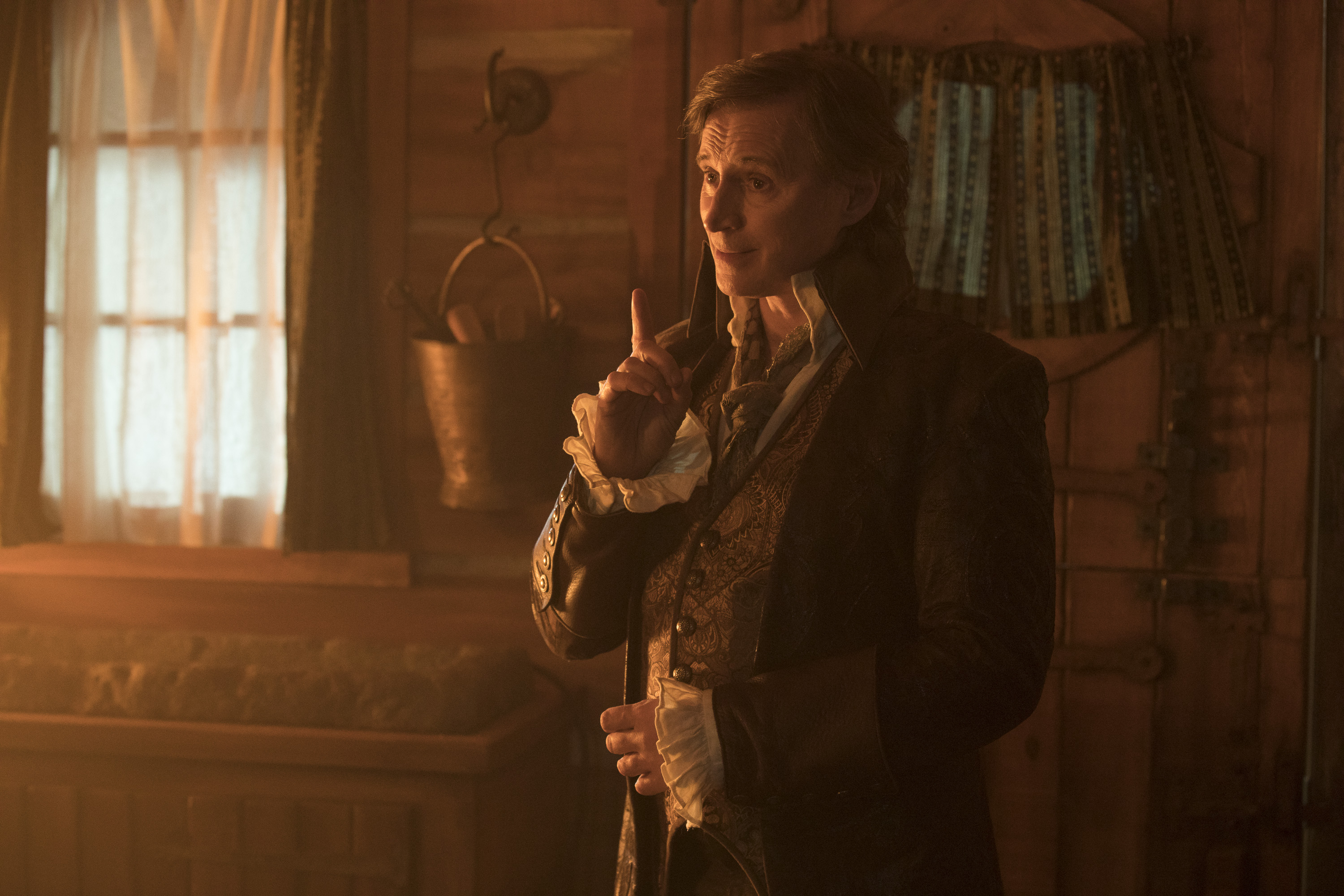
Sacrifice has always been a narrative thread spun into Rumple's story. Granted, those threads have been complicated by other characteristics like cowardice and hunger for power. Rumple took the dagger to save Baelfire from going to war, but it was also because he desperately wanted power for himself; his situation in life making it impossible for him to have basic control over life and death decisions. Rumple may have killed Peter Pan in order to save Baelfire, Belle, and the town of Storybrooke but it was also a way for him to get the ultimate revenge on the papa who abandoned him as a child. When push comes to shove, Rumple may make sacrifices but there's always an underlying selfish motivation that keeps that sacrifice from being fully pure and, well, good. We see this push and pull in this season; Rumple is desperate to reunite with Belle. It's another common Rumple thread on display--the desperate soul who will do whatever to whomever if it gets him what he wants/needs. Rumple and Alice might be friends and, to his credit, after his time with Belle, reforming himself, it is hard for Rumple to use the shared feelings of longing to be united with the person you love against Alice, but that doesn't mean Rumple won't manipulate Alice. He uses flowery promises of helping cure poisoned Nook to get Alice to go to Facilier and prove that she is the Guardian, whom Rumple has been looking for, a person who can hold on to the Dagger without succumbing to the dark power. That's of a piece with the Rumple we've known for years. The writers have always written Rumple in such a way that the audience can understand his desperation; the most common question posed by Rumple fans has always been, "what wouldn't you do for your child?" But those questions are always complicated by Rumple's selfishness. Here, with Alice, we see that Rumple wants, more than anything, to see Belle again but what stops him isn't his own selfishness, but a unique understanding of what being something so mythological actually means.

Immortality must...suck. Sure, you see empires rise and empires fall but you also give up all hope for normalcy, doomed to spend your life forever alone because everyone--and I do mean everyone--dies. Your mother, your father, your husband, your wife, your children, your friends your enemies, you outlive them all. Rumple has been walking a lonely road for a long time--a road of his own devising, to be sure, and the writers have certainly never tried to portray it otherwise--but it's a road that only he knows. Hooks' immortality was a gift from Neverland and one he could return when he so chose, but Rumple has never been able shake his immortal curse. He knows all too well what watching the people he's love most die before his very eyes feels like. I don't know if it's a choice Rumple would make again (Baelfire would have died at war and Rumple never would have met Belle had he not taken that dagger and become immortal) but it is something he can save Alice from. Alice would have made a great Guardian; she has a sort of purity that's usually reserved for children (which is certainly apt given her childlike demeanor) and even after only knowing her a season, we can believe that Alice would not give into the power of the dagger. But Alice would be giving up a normal life with her father--like Rumple gave up a life with his son--and would be giving up a life with her one true love--like Rumple is trying to get back to. It's this understanding that leads Rumple to making his truest sacrifice; Alice should not be trapped inside another tower, but be free to live a normal, everyday, extraordinary ordinary life. And I think--no, I know--that this sacrifice is something Baelfire and Belle would be proud of. The show likes to hammer home the idea that true love is sacrifice and Rumple just gave us a whole new way to view that.

Miscellaneous Notes on The Guardian 

--The writers have certainly put Rumple's character through the wringer over the years but there is no denying that Robert Carlyle has sold every performance, from spinner Rumple to Dark One Rumple to Mr. Gold to Detective Weaver and everything in between.

--Alice’s blue Enchanted Forest cloak is lovely and I adore the larger than necessary bow. It’s very Alice.

--Everything about Margo and Tilly’s date was adorable.

--“Dark One and the Pirate…friends?” “Perhaps it’s time for a new story.”

--Rumple's shrine to Belle is overly ornate and seems to be borrowing things from Mexican culture, an aspect that does not make any sense at all.

--Facilier would have been a fine villain on his own without adding the unnecessary Regina-as-lover complication. Like, what is even the point of this so called fling?

--“All magic comes with a price; guess it was finally my turn to pay.”

Saturday, April 14, 2018

In Which I Review Once Upon a Time (7x17)

Remember what I said a few weeks back about how the main objective of this seventh and final season of OUAT was to simply be entertaining? Well, mission accomplished for this week's episode "Chosen." This isn't to say that the episode didn't have some glaring faults and that it couldn't have been improved upon had the writers actually paced this season properly (more on that in a bit) but what we got was decent. The character beats matched characterizations of the past and the themes stumbled upon at various points in the episode felt like they belonged in OUAT. Happy endings come at strange times and sometimes you need to be hunted down by a serial killer in order to reckon with your own past. And no, the irony that Zelena herself is a serial killer is not lost on me. Readers, can you believe we only have five episodes to go? Forever. Steady as she goes, teetering toward the finish line trying to wrap up all the stories in a neat little bow. 


A Mean Green Killing Machine (But She's Trying)

Let's talk a little bit about bloat. Narratively speaking, this season of OUAT has certainly suffered from it. There are too many characters, too many ideas, too many plot points and none of them feel fully developed to the point where those narrative beats are worthy of our time and attention. I'm not back tracking the faint praise from above; I meant what I said--this episode was mildly entertaining and fits comfortably in with OUAT's overall series. But that doesn't excuse that this episode--and the preceding ones--could have been much better had the writers not wasted so much time on unnecessary bloat at the start of this season. Victoria/Rapunzel/Lady Tremaine has been dead for six episodes now and her death has barely registered in any meaningful way. Her daughter, Drizella, did the typical moment of mourning that this show is known for before focusing back on herself and her sister, Anastasia (another figure, by the way, who could be culled from this narrative and not be missed). It seems as though the writers changed their minds about a third of the way through the first half of this season. Maybe they intended Victoria to play a much bigger role, to be more villainous and to have Mother Gothel be only a side villain but when the Victoria actress fizzled out and the actress playing Gothel showed her skills to be more advanced, everything shifted. Also, in that same regard, I have to wonder if Nick was always Hansel or if he was originally intended to be part of a love triangle; his story shifted when the showrunners learned that OUAT would be ending this year and they couldn't just have him be the male version of season one's Katherine. I say this because there was a moment in this episode where Hansel is describing his friendship with Henry and how it affected him; Henry made Hansel (now called Jack) into a hero after an epic giant fight. It's moving, it's special and it lends a bit of color both to Nick/Jack/Hansel and to the bond between him and Henry, which up until now has been next to nothing. These two men have barely interacted and only now are we hearing that their friendship is so powerful that it gave hope to a lost, scarred man. That's good meaty character development and insight but it was left as an exposition dump in the last seconds of Nick's appearance so again, I have to wonder if it's because of narrative bloat at the beginning of the season. Facilier falls into this category as well. He entered into the field so late in the game as more than a one-off flashback character that now that his plan has been mostly revealed--wake up fairy tale characters who can help him kill Mother Gothel so he can secure the dagger for himself--it feels totally out of left field and as if it should have been a season long arc instead of a five to seven episode arc. Obviously, I am not in the writers room and cannot say for certain if things got shifted at the last second but it sure feels like we've made an abrupt left turn into narrative beats that would be better served being told over a long period of time. I know that sounds like a criticism but it's also a compliment because there's good stuff here: Facilier is more menacing than Rapunzel and I look forward to his eventual on screen interaction with Mother Gothel; the idea of Henry not being able to save his best friend from torment but trying anyway would make for compelling TV viewing because of the audience's predisposition to root for Henry and to care for him. This show got so bloated down in the total bomb of Rapunzel that it missed what could have been a far more compelling story. But, ah, it wouldn't be OUAT if we didn't have a season's worth of potential to talk about.

Miscellaneous Notes on Chosen 

--“I know who you are, Captain.” “It’s Detective.”

--The logo for the Rollin’ Bayou shirts is a lightening bug. Nice “Princess and the Frog” reference.

--“I suppose no matter how far we come, there’s a nasty little piece we can’t lose.” “And we shouldn’t. Because it shows us how far we’ve come, and how much we have to lose.” That’s it. That should be the villain redemption thesis for all the villains. You can’t rid yourself of your darkness because it’s part of you, always; you have to reckon with it.

--Hansel and Gretel are from Oz? Zelena’s Oz? As in Oz of Universe 1.0? How…? Why…? What…?

--I doubt Zelena will be gone for long but what happens when Chad finds out everything--like about her being the Wicked Witch of the West and her tendency to kill munchkins?

--Soooo is Zelena/Ivo pre-Hades, post-Hades? When in this messed up timeline are we??