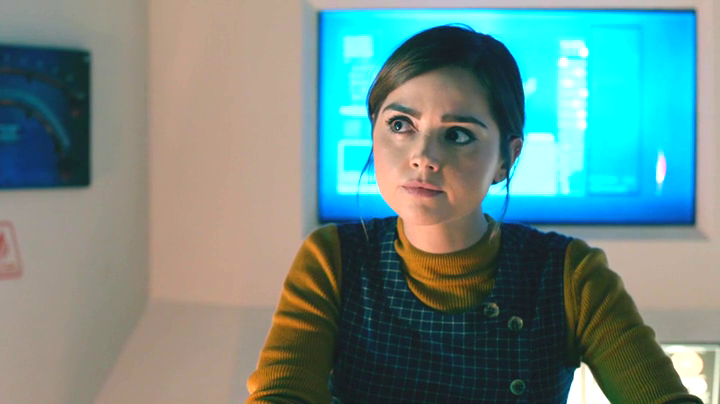
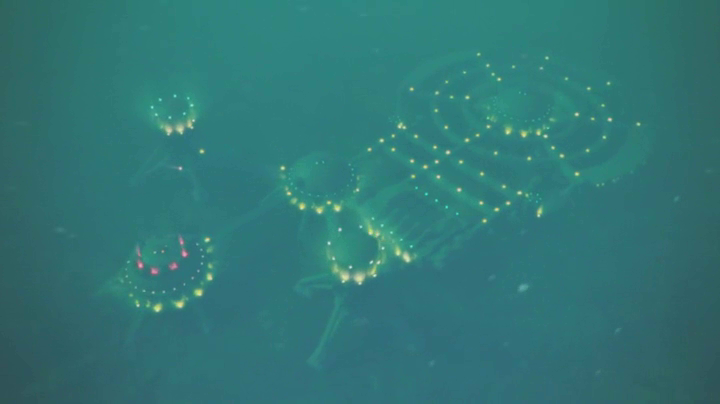
In Arthurian mythology, the Fisher King is the last man in a (very) long line who is charged with keeping the Holy Grail. The King, sometimes referred to as the Wounded King, also has a sympathetic relationship with his kingdom. As one might guess from his moniker, the Wounded/Fisher king is injured (groin, most usually) and as he suffers, so does his kingdom. His injury renders him impotent and since he is unable to sew his own seed and bring forth a son to rule after him, his kingdom, in turn, becomes a barren wasteland. As above, so below. The sympathetic relationship between king and country extends long after the legend of the Fisher King, though I need not document it here. What's important is that the Fisher King is often found waiting for someone to come along and heal him--Percival, Galahad or Bors, depending on iteration of text. As one might expect, these knights who heal the Fisher King can do so because they are the chosen ones. It's a shame, then, that Doctor Who's version of the Fisher King bears so little resemblance to his mythological namesake. The show could have really pulled a few cosmic punches (my favorite kind) by rendering the Doctor as the Galahad figure who heals the would and causes things to grow again. However, I'm willing to overlook it since the episode landed many other punches this time around. In this week's episode, "Before the Flood,' we go on a wibbly wobbly, timey wimey journey in which the Doctor is cast as the conquering hero through a lot of jumps and spins and turns. So, grab a copy of Beethoven's Fifth and let's go!
I first want to discuss something that has nothing to do with plot or the timey wimey-ness of it all, but rather has everything to do with character. My favorite moment in this episode was the emotional beat between the Doctor and Clara. Too often in the Moffat era, the emotional resolutions or important bits are either cut off at the knees or at reduced to shouting matches that only resolve out of frustration or because the monster of the week is chasing down the main cast. However, in this week's episode, there was a really great phone conversation--happening across time, naturally--between the Doctor and Clara that really sang. This makes two weeks in a row that script writer Toby Whithouse has given a nice, introspective, and heartfelt conversation between the Doctor and Clara; last week, the Doctor felt the need to remind Clara that he's responsible for her and this week, Clara begs the Doctor to come back for her, not to die and leave her. I find, maybe for the first time ever, that I am not bothered by Clara defining herself by a man--er, Time Lord. I suppose in some ways this begging to be rescued or using love as a reason to come back would have disturbed me, but it's not out of line with any of the other Companions the Doctor has had 'lo these 50 plus years and in Clara's case, we're dealing with some serious emotional baggage and trauma. Once more, Danny Pink's death hangs over this episode. Clara cannot stand the idea of losing another person she loves. She's lost the first Doctor she ever traveled with, the 11th, and it took her the span of an entire episode (and almost being eaten by robot machine things) to come around to seeing the 12th Doctor. Clara's lost Danny twice over, first in the mundane fashion, and then in the more fantastical way. But Clara's also lost her innocence; she's lost the wide eye wonder she had back when the adventure was still more magical than adrenaline producing.
I still think the overall thesis for Clara has been tweaked from being in an abusive relationship (with travel, the TARDIS, and the spirit of adventure) to repressing hurtful emotions after the cost of addiction becomes clear; but in this week's episode we see those emotions surface. In other words, we see Clara as human, and so does the Doctor. His willingness to go die speaks volumes about his hero-status (and perhaps, also, his reckless and macabre tendencies) but for a moment he forgets how much his death will hurt the person he cares about the most. I really loved when the Doctor turned the phone conversation private between the two of them--Doctor and Companion--and he began to realize just how hurt Clara would be; laying his head on the TARDIS console, only able to say her name and listen to her emotional plea, it really struck a chord in him and in me. Also, in the same vein, this is what happens when you give Peter Capaldi something meaty to work with; he knows how to play the Doctor as both the egotistical mad man with a crazy box who solves all the problems and as the lonely wounded god who understands that traveling with him changes you in a fundamental way, but he's willing to risk your life and soul in order to not be alone. All of those charged emotions--the remorse, the guilt, the fear, the desire--were there during this phone call. I just wish it had been carried through to the end; we never got a proper emotional closure from either party; the final scene being a narrative timey wimey wrap up. Ah, well. I'll take what I can get, eh?
Outside of the heightened emotional beat I mentioned above, the episode is mostly very good. It's very Moffat-era with the time streams going haywire and too many characters having too little to do and not leaving a lasting impression. The villain never felt very threatening because the motivation of the Fisher King is left unbelievably vague (but also because the Doctor always wins, or at least manages to get him and his companion out of harms way.) In fact, I had to look at the writing credits twice to make sure that Moffat did not co-write this one; he didn't, though, it's pure Whithouse. The Doctor secretly being behind a lot of the plot and time twists, and it only coming to light at the end of the episode, isn't new, much like the plot of last week's episode being rote, but it was an exciting ride nonetheless. What I want to touch on briefly, here in the last paragraph, is the opening segment. That one was...strange. And certainly one that is going to cause some controversy. I'm of two minds. On the one hand, the Doctor's monologue felt like Whithouse didn't think his audience would "get it" by episodes end--that the Doctor was behind the flood (insert your own God reference here), that he was responsible for the Fisher's King's destruction (same parenthetical applies), and, moreover, the lingering question of how the Doctor knew what to do when he ended up changing the future. The opening break in the fourth wall and the Doctor's Beethoven example take away a lot of the narrative punch of the ending and realizing just how much the Doctor was behind everything because, due to the very beginning, you're expecting some heavy timey wimey stuff. You've just been told, by the Author (in the skin of the Doctor looking directly into the camera) to expect some sort of paradox. The resolution of the plot this week likely would have been much more surprising had I not known that we'd be witnessing some sort of time stream madness. However, the Doctor breaking the fourth wall and moving about the TARDIS like a mad man, giving a very impressive and mysterious speech, works well in Capaldi's hands. Once again, I must state that when he is given proper Doctor Who-esque material, he really delivers. In the end, the opening sequence is something that is best left as a one time thing and only in the hands of a very skilled actor. So...who did write Beethoven's Fifth?
Miscellaneous Notes on Before the Flood
--Caution, Doctor Who. Don't overuse the guitar playing gag too much. It's fun, but I worry if you make it common.
--Interesting opening credits too, with the guitar playing in the background.
--Really could have done without the two love stories because the four characters in question left little impression on me. We could all tell that the deaf lady and her translator were in love, but the other two felt thrown in at the last second.
--The Doctor has done 99% of the heavy lifting in the past two episodes. It's really working, especially in contrast to season eight.
--"First proper alien, and he's an idiot."
--"I have to die." "Not with me. You die with the one who comes after me. If you love me in any way, you'll come back."
--So the Fisher King just wanted to invade Earth? But...why? There are thousands, if not millions, of planets out there.
--"Even a ghastly future is better than no future at all. You bent the rules to life and death, so I'm putting it straight." Get down with your mythic self, Doctor. You do you.
Sunday, October 11, 2015
Friday, October 9, 2015
In Which I Review Sleepy Hollow (3x2)
Got a secret, can you keep it? You'll take this one to the grave. Okay, that was rather low hanging fruit, but it works with this week's episode, 'Whispers in the Dark,' because this week is all about the secrets we keep and how they can lead to our demise...even if there isn't a giant black cloud hunting you down. The duplicity of many of the characters takes center stage in this episode and they are forced to either come clean or keep in the dark, biting their tongues even though there is the fantastic axiom that the truth shall set you free. As usual, and as I've come to expect, this is another great episode that really relies on Abbie and Ichabod's chemistry to drive the somewhat silly story (I love how, thus far, Abbie and Ichabod have only been apart for brief moments in time; never enough that you get bored, but just enough to let them develop independent of each other as much as they develop together). As we march onward in season three, Sleepy Hollow proves that it's going to stick its well developed landing. Grab an apothecary (much to Ichabod's chagrin) and let's go!
I want to spend most of this review talking about one Abigail Mills. Abbie has always been fairly forthright because secrets have a minimal place in her pragmatic, forward seeing universe. Remember when Abbie laid her sad history bare in just the first three episodes of the first season? Ichabod was a perfect stranger and they were still figuring out the whole Team Witnesses thing, but Abbie knew there was no point in keeping the secret of her and Jenny. It was something Ichabod needed to know and it wasn't something that was keeping Abbie up at night so it was easy for her to be so forthcoming. The secret that she's keeping this week, then, must be a doozy because Abbie is reticent to a point that we've never seen before. Abbie jokes that Ichabod should mind his business when it comes to Daniel Reynolds; she says that the key to being good roommates is respecting boundaries (a good life lesson, but comes across as another 'stay on your side of the line, Mr. Crane'), and even after Ichabod confesses his secret that was brought to light when the Wraith confronted him, Abbie stayed silent, preferring to bury herself back in the case of the week instead of seeking absolution. We know precious little of Abbie's nine months being back in the mortal world and away from her Witness counterpart but we got hints of it this week; it was clearly a rigorous process to move through the FBI training at such a fast pace, but along the way, there was Daniel, though this isn't the real issue but let's stay there for a moment. I've never been silent on the matter of Ichabbie; I'm in favor of it, whether it be friendship or lovers, but with the appearance of Abbie's old flame, it looks as though the writers are sticking to their Best Friends/Witness shtick. You know what? I respect that. I really do. Male and female friendships (that stay friendships moreover) are all too rare in media culture. It always happens; someone falls for someone and there is unrequited love followed by opening up followed by declarations of affection. Should this never come to pass for Ichabbie, that's perfectly fine. They are better off as friends; truly. Now, back to Daniel and Abbie. There's something there and I'm fine seeing where it goes, especially if Daniel is the sort of man who will let Abbie be her own woman, but the bigger secret isn't Abbie's romance (because these writers realize that there can be more to a woman than romance. Quick. Someone go remind OUAT). Abbie found her father! Way back in the first season, I predicted that Abbie's father would come up at some point and lo' here he is. Is Abbie ready to meet her father again? No, and it takes courage and all manner of strength to admit that you want a connection with someone but that you're just not prepared for that yet. It takes self awareness and a lot of introspection. I wish the writers would let us see that, though, instead of the after effects but that's what flashbacks are for! I know this review seems brief and low on content for Ichabod, but this was really Abbie's episode and therein lies my focus. I'm relieved that by episode's end Abbie opens her heart and soul to Ichabod, once again proving that those two are linked in ways that are simultaneously mythical and so wonderfully, gloriously, human.
Miscellaneous Notes on Whispers in the Dark
--Ichabod being domestic is the most adorable thing ever.
--Ichabod's secret doesn't feel as though it should be as weighty as he views, it but it does show how honorable he is. He truly is a good man.
--Love Ichabod giving Daniel Reynolds the side eye.
--Some amazing CGI effects this episode. The Whispering Wraith was really scary.
--I'm honestly not feeling the Betsy Ross storyline. I can't get a read on her apart from "badass Pre-Abbie" and no one is going to top Abbie in terms of awesome or narrative importance.
--Hi Joe Corbin! Joe and Jenny are going to have a little mission together, aren't they? Good luck, guys.
--"I shall find my place in this new world, but not at the expense of my colonial soul."
--What exactly does Pandora want? It's only two episodes in so I won't worry quite yet, but thus far the villain of the year is feeling a bit vague. What's her motivation?
I want to spend most of this review talking about one Abigail Mills. Abbie has always been fairly forthright because secrets have a minimal place in her pragmatic, forward seeing universe. Remember when Abbie laid her sad history bare in just the first three episodes of the first season? Ichabod was a perfect stranger and they were still figuring out the whole Team Witnesses thing, but Abbie knew there was no point in keeping the secret of her and Jenny. It was something Ichabod needed to know and it wasn't something that was keeping Abbie up at night so it was easy for her to be so forthcoming. The secret that she's keeping this week, then, must be a doozy because Abbie is reticent to a point that we've never seen before. Abbie jokes that Ichabod should mind his business when it comes to Daniel Reynolds; she says that the key to being good roommates is respecting boundaries (a good life lesson, but comes across as another 'stay on your side of the line, Mr. Crane'), and even after Ichabod confesses his secret that was brought to light when the Wraith confronted him, Abbie stayed silent, preferring to bury herself back in the case of the week instead of seeking absolution. We know precious little of Abbie's nine months being back in the mortal world and away from her Witness counterpart but we got hints of it this week; it was clearly a rigorous process to move through the FBI training at such a fast pace, but along the way, there was Daniel, though this isn't the real issue but let's stay there for a moment. I've never been silent on the matter of Ichabbie; I'm in favor of it, whether it be friendship or lovers, but with the appearance of Abbie's old flame, it looks as though the writers are sticking to their Best Friends/Witness shtick. You know what? I respect that. I really do. Male and female friendships (that stay friendships moreover) are all too rare in media culture. It always happens; someone falls for someone and there is unrequited love followed by opening up followed by declarations of affection. Should this never come to pass for Ichabbie, that's perfectly fine. They are better off as friends; truly. Now, back to Daniel and Abbie. There's something there and I'm fine seeing where it goes, especially if Daniel is the sort of man who will let Abbie be her own woman, but the bigger secret isn't Abbie's romance (because these writers realize that there can be more to a woman than romance. Quick. Someone go remind OUAT). Abbie found her father! Way back in the first season, I predicted that Abbie's father would come up at some point and lo' here he is. Is Abbie ready to meet her father again? No, and it takes courage and all manner of strength to admit that you want a connection with someone but that you're just not prepared for that yet. It takes self awareness and a lot of introspection. I wish the writers would let us see that, though, instead of the after effects but that's what flashbacks are for! I know this review seems brief and low on content for Ichabod, but this was really Abbie's episode and therein lies my focus. I'm relieved that by episode's end Abbie opens her heart and soul to Ichabod, once again proving that those two are linked in ways that are simultaneously mythical and so wonderfully, gloriously, human.
Miscellaneous Notes on Whispers in the Dark--Ichabod being domestic is the most adorable thing ever.
--Ichabod's secret doesn't feel as though it should be as weighty as he views, it but it does show how honorable he is. He truly is a good man.
--Love Ichabod giving Daniel Reynolds the side eye.
--Some amazing CGI effects this episode. The Whispering Wraith was really scary.
--I'm honestly not feeling the Betsy Ross storyline. I can't get a read on her apart from "badass Pre-Abbie" and no one is going to top Abbie in terms of awesome or narrative importance.
--Hi Joe Corbin! Joe and Jenny are going to have a little mission together, aren't they? Good luck, guys.
--"I shall find my place in this new world, but not at the expense of my colonial soul."
--What exactly does Pandora want? It's only two episodes in so I won't worry quite yet, but thus far the villain of the year is feeling a bit vague. What's her motivation?
Monday, October 5, 2015
In Which I Review Once Upon a Time (5x2)
If last week's episode was proof that OUAT still had some magic left in its most likely final season, this episode proved to me that magic is fleeting and goes as quickly as it comes. This weeks episode, "The Price," suffered from a host of problems but the one that stands out the most is that it was utterly boring and pointless. It felt like fanfiction where ships--canon and non canon--take center stage and every overly used melodramatic trope is pulled out: a ball with murderous intent! A life in danger! New romances! Modern music and Ye Olde Dancing because "we are both" (or something)! Scene chewing! Care Bare Stares! There was, quite frankly, just no point to this episode. Instead of focusing on the Dark Swan, what happened to her and how she and her family are coping in this new amnesia filled world while simultaneously looking at Arthurian mythology and the heroes journey, the plot turned to something about a Greek Fury, the zenith of the moon, and that a price must be paid for a death denied, something OUAT has usually eschewed with a wave of their magic hands. Robin was never in danger but we had to have a big sob scene of everyone thinking he might really die before Emma's Dark (wut?!) Magic saved the thief. But, hey, Captain Swan got denied their True Love's Kiss, so that should put a smile on my face (and it did). I said last week, OUAT is now an episode by episode for me. This week? It failed on a lot of levels. Grab an iPod and let's jam this one out.
The Tree Is Our God
Here's the sad and honest truth--I don't have a whole lot to talk about. This episode was not the least bit thought provoking except in wondering how far the writers could take their characters into the absurd. Everyone stops to attend a ball; Merlin is in a tree (though, I have less issue with that, honestly, because it's so true to Arthurian mythology); Regina pretends to be the Savior for some inexplicable reason (lying is not a good way to make friends, y'all and the ruse is quickly learned). Because of the complete lack of depth in the flashback of six weeks ago, I want to ask some questions and just spitball some answers. That's what the show has left me with; well, this episode at least. Like in the first half of season 4, there is nothing in the way of introspective character building. It's all about the shiny shiny plot. I can't sit here and wax on and on about moral and philosophical questions of goodness and heroism and villainy. Regina says she's the Savior, is confronted by her very obvious past by one lone person in Camelot (do Arthur and Guinevere not get out much?) and proves how far she's come by not turning Ser Rude into a toad. Bravo. But it's nothing we haven't seen before and therefore Regina's get a brief round of applause before I become bored again. Thankfully, that's when Charming up and shanked Ser Rude even though last season the empty platitude "heroes don't kill" was bandied about over and over after Emma magicked Cruella off a cliff. See, consistency. It's not a thing on this show. So now heroes can kill when their friend is in danger? Okay, well, Emma saved Henry from the crazy two-toned sociopath last year and yet it was the final straw that broke a camel (or something) and she went all Crazy Red Eyes and held a gun to Lily's head in the middle of an abandoned road.
Okay, so back to questions and spit-balling on plot because that's all I'm left with at this point. Merlin's in a tree. In Arthurian mythology, Nimue (sometimes called the Lady of the Lake) put him in there. Merlin was quite hot to trot for the Lady of the Lake but Arthurian romances are decidedly unromantic, at least in terms of how we think and conceptualize romances in our modern world. If I had to guess, I'd say Merlin's true love, Nimue, put him in that tree for reasons. Because OUAT can be relied on for some things (like amnesia!) chances are that Nimue was also the first Dark One (ignore the timeline; it's a lie) and there's some tragic sob story coming our way about Merlin and Nimue. I, frankly, don't care. I'm more worried about how to get Merlin out that tree. True Love's kiss can break any curse so do we need some bark macking? Is Emma supposed to chop down the tree with Excalibur? Outside of Merlin we've got Emma's magic healing touch--because losing Robin would be such an utter tragedy on this show. I mean, how could we possibly go on without his inconsistent honor and his bizarre facial expressions? What I'm bothered by here is that Emma is now the Dark One and is using Dark Magic. Yet somehow she is able to save Robin from the brink of death with said Dark Magic...and it was still light white magic. I'm bothered by both but let's just focus on the first part. Regina now wields Light Magic which is supposed to be stronger than Dark Magic. Yet Regina's Light Magic can't save Robin because of a random plot twist that the sword was enchanted to kill Regina and therefore nixes out her magic so thus only Dark Magic can. Emma's True Love Magic wasn't strong enough to even attempt to save Neal (yeah, you knew it was coming) back in season three. Yet her evil Dark One magic can save Regina's boyfriend. Again, it's about consistency and how it simply doesn't exist on this show. The rules of the world depend on the current arc and even on the current week. Next episode, they could decide that Emma's Dark Magic can't do anything and only Regina's Light Magic can save everyone. Why should I be invested in this story and and myth and the characters if the writers aren't even trying to have their world be logical and true to their own rules. Fantasy does not mean that anything goes; it means that you have to build a world that has internal rules and then, most importantly, you have to follow those rules. It doesn't matter how silly and stupid those rules are; if the rule is that all blonde people need to walk backwards at sunset, then every blonde person must walk backwards at sunset! It doesn't meant that you suddenly have one blonde walking forward simply because it fits your plot. This has turned into a rant but it's because I am so utterly frustrated by the total lack of internal logic in this show. It's dizzying and exhausting and getting worse the longer this show goes on. I need to move on now. Quick, someone cast an inconsistent and convenient curse! Apparently you won't need the heart of the thing you love most, so don't worry about that.
Hell Hath No Fury
Okay, OUAT, nice try but even going to my comfort zone of Greek mythology isn't going to work in saving this episode. Like in the flashback there is little here to talk about that is of interest except the plot, apart from one thing that does make my myth-loving side tingle. So let's spit ball some ideas about where this is going. The appearance of the Fury and Charon in his boat signals the reality of the Underworld; it exists here in the Onceiverse and I am going to wager that we'll see it again. In fact, I think I just figured out how the season is going to end--Emma is going to have the Darkness sucked out of her by the Fury, but with the Darkness also goes her soul and down down down goes the Savior into the Underworld. What then? Oh, only one of my favorite classic tropes: the katabasis. I had thought that the show would use this half of the season to be Emma's katabasis, though with a less literal descent into the Underworld. But, it might be that they will go super traditional and have their heroine literally descend into the Underworld and have to face down death (in the form of a fast talking Hades a la James Woods) before resurfacing, the mistress of both words, a Savior fully realized. That's how you end the series and it's one I could get behind so long as Emma saves herself and the writers don't dip into their Greek mythic bag and make Hook out to be like some sort of Orpheus figure going down into the Underworld to find his Eurydice. If the writers really want to bring this full circle, then they will give Snow a bigger role to play (should this prediction come to pass) and stage it as a successful Demeter and Persephone story where Demeter can save her child for more than six months of the year. Emma saved Henry and therefore saved everyone. Snow saves Emma and therefore saves everyone. Parallels! Like I said last week, if done right, meaning without any of the writers tendencies to insert those annoying flashy and tweetable moments, then it could really be something. It could be mythic and interesting and in line with how stories are told. Sadly, Zelena is still around (if mute) which means we aren't likely to get a heartfelt and deep story. And that's...it. That's all I got for this episode; a plot heavy, uninteresting, CGI eyesore that sets up potential plot but loses that solid ground it found last week. So it goes here in the Onceiverse.
Miscellaneous Notes on The Price
--A dwarf became a tree. To quote Regina, "well,that's new."
--The CGI for Camelot might be the worst CGI on the show. I can't decide if it's this or Arrendale.
--Rumple chose power over love. Well, yes but also no. He needed his power to find a certain little boy named Bae. But, oh right, he doesn't exist on this show anymore and Rumple is just "evil." My bad! Remember when character motivations were really complex and interesting?
--Emma Swan is like Bloody Mary or Beetlejuice; you have to say her name three times to get her to appear.
--Snow and Charming will die with Regina, leaving their newborn son an orphan. Parents of the year, right there.
--Trees like tacos.
--Henry has a crush because instead of finding him a friend, we went straight to romance.
--Silent Zelena is the only good Zelena.
--True Love's Kiss: Denied!
The Tree Is Our God
Here's the sad and honest truth--I don't have a whole lot to talk about. This episode was not the least bit thought provoking except in wondering how far the writers could take their characters into the absurd. Everyone stops to attend a ball; Merlin is in a tree (though, I have less issue with that, honestly, because it's so true to Arthurian mythology); Regina pretends to be the Savior for some inexplicable reason (lying is not a good way to make friends, y'all and the ruse is quickly learned). Because of the complete lack of depth in the flashback of six weeks ago, I want to ask some questions and just spitball some answers. That's what the show has left me with; well, this episode at least. Like in the first half of season 4, there is nothing in the way of introspective character building. It's all about the shiny shiny plot. I can't sit here and wax on and on about moral and philosophical questions of goodness and heroism and villainy. Regina says she's the Savior, is confronted by her very obvious past by one lone person in Camelot (do Arthur and Guinevere not get out much?) and proves how far she's come by not turning Ser Rude into a toad. Bravo. But it's nothing we haven't seen before and therefore Regina's get a brief round of applause before I become bored again. Thankfully, that's when Charming up and shanked Ser Rude even though last season the empty platitude "heroes don't kill" was bandied about over and over after Emma magicked Cruella off a cliff. See, consistency. It's not a thing on this show. So now heroes can kill when their friend is in danger? Okay, well, Emma saved Henry from the crazy two-toned sociopath last year and yet it was the final straw that broke a camel (or something) and she went all Crazy Red Eyes and held a gun to Lily's head in the middle of an abandoned road.
Okay, so back to questions and spit-balling on plot because that's all I'm left with at this point. Merlin's in a tree. In Arthurian mythology, Nimue (sometimes called the Lady of the Lake) put him in there. Merlin was quite hot to trot for the Lady of the Lake but Arthurian romances are decidedly unromantic, at least in terms of how we think and conceptualize romances in our modern world. If I had to guess, I'd say Merlin's true love, Nimue, put him in that tree for reasons. Because OUAT can be relied on for some things (like amnesia!) chances are that Nimue was also the first Dark One (ignore the timeline; it's a lie) and there's some tragic sob story coming our way about Merlin and Nimue. I, frankly, don't care. I'm more worried about how to get Merlin out that tree. True Love's kiss can break any curse so do we need some bark macking? Is Emma supposed to chop down the tree with Excalibur? Outside of Merlin we've got Emma's magic healing touch--because losing Robin would be such an utter tragedy on this show. I mean, how could we possibly go on without his inconsistent honor and his bizarre facial expressions? What I'm bothered by here is that Emma is now the Dark One and is using Dark Magic. Yet somehow she is able to save Robin from the brink of death with said Dark Magic...and it was still light white magic. I'm bothered by both but let's just focus on the first part. Regina now wields Light Magic which is supposed to be stronger than Dark Magic. Yet Regina's Light Magic can't save Robin because of a random plot twist that the sword was enchanted to kill Regina and therefore nixes out her magic so thus only Dark Magic can. Emma's True Love Magic wasn't strong enough to even attempt to save Neal (yeah, you knew it was coming) back in season three. Yet her evil Dark One magic can save Regina's boyfriend. Again, it's about consistency and how it simply doesn't exist on this show. The rules of the world depend on the current arc and even on the current week. Next episode, they could decide that Emma's Dark Magic can't do anything and only Regina's Light Magic can save everyone. Why should I be invested in this story and and myth and the characters if the writers aren't even trying to have their world be logical and true to their own rules. Fantasy does not mean that anything goes; it means that you have to build a world that has internal rules and then, most importantly, you have to follow those rules. It doesn't matter how silly and stupid those rules are; if the rule is that all blonde people need to walk backwards at sunset, then every blonde person must walk backwards at sunset! It doesn't meant that you suddenly have one blonde walking forward simply because it fits your plot. This has turned into a rant but it's because I am so utterly frustrated by the total lack of internal logic in this show. It's dizzying and exhausting and getting worse the longer this show goes on. I need to move on now. Quick, someone cast an inconsistent and convenient curse! Apparently you won't need the heart of the thing you love most, so don't worry about that.
Hell Hath No FuryOkay, OUAT, nice try but even going to my comfort zone of Greek mythology isn't going to work in saving this episode. Like in the flashback there is little here to talk about that is of interest except the plot, apart from one thing that does make my myth-loving side tingle. So let's spit ball some ideas about where this is going. The appearance of the Fury and Charon in his boat signals the reality of the Underworld; it exists here in the Onceiverse and I am going to wager that we'll see it again. In fact, I think I just figured out how the season is going to end--Emma is going to have the Darkness sucked out of her by the Fury, but with the Darkness also goes her soul and down down down goes the Savior into the Underworld. What then? Oh, only one of my favorite classic tropes: the katabasis. I had thought that the show would use this half of the season to be Emma's katabasis, though with a less literal descent into the Underworld. But, it might be that they will go super traditional and have their heroine literally descend into the Underworld and have to face down death (in the form of a fast talking Hades a la James Woods) before resurfacing, the mistress of both words, a Savior fully realized. That's how you end the series and it's one I could get behind so long as Emma saves herself and the writers don't dip into their Greek mythic bag and make Hook out to be like some sort of Orpheus figure going down into the Underworld to find his Eurydice. If the writers really want to bring this full circle, then they will give Snow a bigger role to play (should this prediction come to pass) and stage it as a successful Demeter and Persephone story where Demeter can save her child for more than six months of the year. Emma saved Henry and therefore saved everyone. Snow saves Emma and therefore saves everyone. Parallels! Like I said last week, if done right, meaning without any of the writers tendencies to insert those annoying flashy and tweetable moments, then it could really be something. It could be mythic and interesting and in line with how stories are told. Sadly, Zelena is still around (if mute) which means we aren't likely to get a heartfelt and deep story. And that's...it. That's all I got for this episode; a plot heavy, uninteresting, CGI eyesore that sets up potential plot but loses that solid ground it found last week. So it goes here in the Onceiverse.
Miscellaneous Notes on The Price
--A dwarf became a tree. To quote Regina, "well,that's new."
--The CGI for Camelot might be the worst CGI on the show. I can't decide if it's this or Arrendale.
--Rumple chose power over love. Well, yes but also no. He needed his power to find a certain little boy named Bae. But, oh right, he doesn't exist on this show anymore and Rumple is just "evil." My bad! Remember when character motivations were really complex and interesting?
--Emma Swan is like Bloody Mary or Beetlejuice; you have to say her name three times to get her to appear.
--Snow and Charming will die with Regina, leaving their newborn son an orphan. Parents of the year, right there.
--Trees like tacos.
--Henry has a crush because instead of finding him a friend, we went straight to romance.
--Silent Zelena is the only good Zelena.
--True Love's Kiss: Denied!
Sunday, October 4, 2015
In Which I Review Doctor Who (9x3)
Hands up, who expected that? I'm being a touch sarcastic because the truth is that a lot of this was "expected." This week's episode, "Under the Lake," is absolutely in the wheelhouse of Doctor Who; this is as close to a haunted house and ghost story as the show is likely to get. There's a lot of science mumbo jumbo (but, then again, there always is) and the set up of a group of scientists stranded somewhere remote being plagued by some sort of alien and mythical creature is Doctor Who writing 101 (maybe 102 if 101 is general time and space travel). This episode fits comfortably in with season two's "The Impossible Planet" and season five's "The Rebel Flesh." The premise is as Doctor Who does: drama, horror, intrigue, science fiction, fantasy, and suspense. There's nothing wrong with fitting inside the wheelhouse but it doesn't make for a stellar and memorable hour either. Even if the episode does end with a cliffhanger, the tension barely registers because the cliffhanger is also in the wheelhouse of these two part episodes where the Doctor is usually in some sort of mortal danger and it's resolved in the next episode (the Doctor falls into the pit; the Doctor's flesh avatar is revealed, ect). In any case, this week is a normal episode that has little to discuss or analyze (though that won't stop me!) so grab a dead man and let's go!
Because this episode fits so well into the typical storytelling of Doctor Who, there is little to discuss as being abnormal or original or, really, even thought provoking. Again, this isn't a bad thing necessarily. Doctor Who is an old (very old) program and it knows what sort of stories it is expected to tell. The Doctor and his Companion stumbling (accidentally, of course, because the TARDIS knows where the Doctor needs to be even if he doesn't) into a bizarre situation that only they can solve is actually the entire set up of the show. It's the deviation from this rote setup that typically lends to more exciting television (say, the 'Midnight's or 'Turn Left's of the Whoverse). The guest stars of the week--the intrepid scientists of the underwater mining station, the Drum--are both bland and not. I don't remember any of their names, but I can talk about them in terms of traits or characteristics because they each have one to help the audience remember and identify them. There's "The Scientist" (cute guy in glasses); "The Computer Girl" (girl who looks suspiciously like Torain Bellisario); "The Leader" (deaf girl) and "The Other" (the translator). By the same token, I can't really remember any of the names of the scientists from 'Impossible Planet' or 'Rebel Flesh' but I feel safe in saying that they likely fit into these same categories. What is perhaps more interesting to talk about, because I won't do a straight up plot review (ick!), is the question of the two-part episode season Moffat and company are going for. According to all the episode titles, this entire season is split into two part episodes. It's not something Doctor Who has ever attempted before (at least not to my knowledge) and I'm questioning whether or not it actually works. Had the intention not been to have this be a two-parter, this episode could have easily wrapped up in one episode. Cut some of the cast, cut some of the running, and have the Doctor get to his "ah ha!" moment (coordinates that imprint themselves on your mind even after death) sooner, and Clara and the Doctor could have been home in time for tea and biscuits. Two part episodes are meant to be grand sweeping epics of TV that feel like you're watching a movie; of course, the issue here, is that Moffat likes to go for blockbuster every single week which is why in the past few seasons Doctor Who haven't felt as deep as it once was. Flash over substance, in other words. I'm split on the two part episode approach. On the one hand, I obviously need next week to explain what happened to the Doctor and what the ghosts want, but on the other hand, I don't think this story is strong enough to warrant a second helping.
One more topic of interest and that's Miss Clara Oswald. Did anyone else think that a lot of this episode was meant to invoke Danny Pink and what happened at the end of season eight? Certainly the Doctor is feeling that way because he brings it up (sort of) in his discussion of Clara's emotions and when he stumbles into the truth that the souls of the dead are being hijacked and used as a transmitter, he looks directly at Clara as if expecting her to break into sobs. It's hard to tell how much time has passed since the end of season eight. A year? A month? A week? Less? More? Who knows (that's not an intentional meta joke)! But because Clara doesn't react in the way a traumatized woman who lost the man she loved because his soul was hijacked (see, parallel), I do have to wonder if she's having some emotional avoidance issues. The thesis with Clara, last year at least, was her abusive and addictive relationship with the TARDIS, the Doctor and the whole "all of time and space" concept. Clara became the cautionary tale for what happens when people stay too long with the Doctor. The cravings, the recklessness, the lying were all part and parcel of the Clara Oswald character last year. My big concern with Clara sticking around for another go was a fear that the thesis would be tossed or forgotten. I don't think it has been either of those things, but maybe carefully changed. Instead of focusing on her addiction (though she does put up a fuss about wanting--no, needing--to be off on an adventure) it's focusing on how she's shutting down certain parts of her that hurt in order to keep going. This whole adventure should call to mind Danny Pink, but nowhere is Danny mentioned. He looms over the episode quite large, but no one dares to speak his name. The scene between the Doctor and Clara about said emotional trauma and Clara's shrug and "I'm fine" attitude was the best of the episode and I'm hoping that gets explored more next week. It likely will given that the Doctor apparently died in the past and his now a hollow eyed ghost? Yeah, I don't know either. Go with it, folks.
Miscellaneous Notes on Under the Lake
--"You're from UNIT?" "If that's what it says..." Bless physic paper.
--The Doctor apparently deleted sign language for semaphore. Cause that will come in handy someday.
--Clara's handwritten cards for the Doctor about how to express human emotion in tough situations had me laughing hysterically.
--Does the Doctor seem a bit death obsessed this episode? He's almost too jovial about the ghosts and his list of questions he wants to ask the ghosts (what's it like to die? do you miss living?) felt like someone who's been thinking a bit too much about what it might be like to die.
--Of course there was a massive flood on base. It was only a matter of time.
--Was I too negative in this review? I wasn't trying to be because nothing about this episode is offensive in any way. I did enjoy swaths of this episode, particularly the way The Doctor and Clara worked together, but Clara was in her proper place and the Doctor got to do all the showing off.
--"You're going to go back in time? How do you do that?!" "Extremely well."
Because this episode fits so well into the typical storytelling of Doctor Who, there is little to discuss as being abnormal or original or, really, even thought provoking. Again, this isn't a bad thing necessarily. Doctor Who is an old (very old) program and it knows what sort of stories it is expected to tell. The Doctor and his Companion stumbling (accidentally, of course, because the TARDIS knows where the Doctor needs to be even if he doesn't) into a bizarre situation that only they can solve is actually the entire set up of the show. It's the deviation from this rote setup that typically lends to more exciting television (say, the 'Midnight's or 'Turn Left's of the Whoverse). The guest stars of the week--the intrepid scientists of the underwater mining station, the Drum--are both bland and not. I don't remember any of their names, but I can talk about them in terms of traits or characteristics because they each have one to help the audience remember and identify them. There's "The Scientist" (cute guy in glasses); "The Computer Girl" (girl who looks suspiciously like Torain Bellisario); "The Leader" (deaf girl) and "The Other" (the translator). By the same token, I can't really remember any of the names of the scientists from 'Impossible Planet' or 'Rebel Flesh' but I feel safe in saying that they likely fit into these same categories. What is perhaps more interesting to talk about, because I won't do a straight up plot review (ick!), is the question of the two-part episode season Moffat and company are going for. According to all the episode titles, this entire season is split into two part episodes. It's not something Doctor Who has ever attempted before (at least not to my knowledge) and I'm questioning whether or not it actually works. Had the intention not been to have this be a two-parter, this episode could have easily wrapped up in one episode. Cut some of the cast, cut some of the running, and have the Doctor get to his "ah ha!" moment (coordinates that imprint themselves on your mind even after death) sooner, and Clara and the Doctor could have been home in time for tea and biscuits. Two part episodes are meant to be grand sweeping epics of TV that feel like you're watching a movie; of course, the issue here, is that Moffat likes to go for blockbuster every single week which is why in the past few seasons Doctor Who haven't felt as deep as it once was. Flash over substance, in other words. I'm split on the two part episode approach. On the one hand, I obviously need next week to explain what happened to the Doctor and what the ghosts want, but on the other hand, I don't think this story is strong enough to warrant a second helping.
One more topic of interest and that's Miss Clara Oswald. Did anyone else think that a lot of this episode was meant to invoke Danny Pink and what happened at the end of season eight? Certainly the Doctor is feeling that way because he brings it up (sort of) in his discussion of Clara's emotions and when he stumbles into the truth that the souls of the dead are being hijacked and used as a transmitter, he looks directly at Clara as if expecting her to break into sobs. It's hard to tell how much time has passed since the end of season eight. A year? A month? A week? Less? More? Who knows (that's not an intentional meta joke)! But because Clara doesn't react in the way a traumatized woman who lost the man she loved because his soul was hijacked (see, parallel), I do have to wonder if she's having some emotional avoidance issues. The thesis with Clara, last year at least, was her abusive and addictive relationship with the TARDIS, the Doctor and the whole "all of time and space" concept. Clara became the cautionary tale for what happens when people stay too long with the Doctor. The cravings, the recklessness, the lying were all part and parcel of the Clara Oswald character last year. My big concern with Clara sticking around for another go was a fear that the thesis would be tossed or forgotten. I don't think it has been either of those things, but maybe carefully changed. Instead of focusing on her addiction (though she does put up a fuss about wanting--no, needing--to be off on an adventure) it's focusing on how she's shutting down certain parts of her that hurt in order to keep going. This whole adventure should call to mind Danny Pink, but nowhere is Danny mentioned. He looms over the episode quite large, but no one dares to speak his name. The scene between the Doctor and Clara about said emotional trauma and Clara's shrug and "I'm fine" attitude was the best of the episode and I'm hoping that gets explored more next week. It likely will given that the Doctor apparently died in the past and his now a hollow eyed ghost? Yeah, I don't know either. Go with it, folks.
Miscellaneous Notes on Under the Lake
--"You're from UNIT?" "If that's what it says..." Bless physic paper.
--The Doctor apparently deleted sign language for semaphore. Cause that will come in handy someday.
--Clara's handwritten cards for the Doctor about how to express human emotion in tough situations had me laughing hysterically.
--Does the Doctor seem a bit death obsessed this episode? He's almost too jovial about the ghosts and his list of questions he wants to ask the ghosts (what's it like to die? do you miss living?) felt like someone who's been thinking a bit too much about what it might be like to die.
--Of course there was a massive flood on base. It was only a matter of time.
--Was I too negative in this review? I wasn't trying to be because nothing about this episode is offensive in any way. I did enjoy swaths of this episode, particularly the way The Doctor and Clara worked together, but Clara was in her proper place and the Doctor got to do all the showing off.
--"You're going to go back in time? How do you do that?!" "Extremely well."
Friday, October 2, 2015
In Which I Review Sleepy Hollow (3x1)
Just in time for Halloween, Sleepy Hollow--the most wacky, fun, spaghetti-to-the-wall show on TV--is back for some more insane mythology and campy goodness. And, as always, Ichabbie came out to play. Ahhh, I have missed them. There were a lot of questions going into the new and third season of Sleepy Hollow: how would Ichabod handle Katrina's death after she did an about face and went evil? What new monster will Team Witnesses have to face now that both Moloch and Henry are gone? How will the relationship between Ichabod and Abbie grow and develop? And, maybe most importantly, can Sleepy Hollow find its way back after a somewhat difficult second half of their last season? While I enjoyed the season two finale, the emotional resolution was also left hanging out in Limbo and the show felt like it was getting a massive reset which, I admit, sometimes shows do need. With the proverbial red button pushed, can Sleepy Hollow remember its founding paradigm and refocus on what made it so much fun in the first place? This week's episode, "I, Witness" attempts to answer all those questions and more. So, grab yourself an Ichabbie hug (squeeeee) and let's go!
Evil has returned to Sleepy Hollow after, apparently, a very long vacation. Much like at the end of the first half of season 2, evil has been put out to sea away from the little town and our Witnesses find themselves apart but unlike last year, one of them is dealing with this much better than the other--well, so she believes. Abbie is certainly coming into the world, eh? She's on a path and that's where Abbie likes to be: focused, determined and sure. Forever the pragmatist, Abbie Mills does not get bogged down in the philosophical quandaries that bother her co-Witness. Before all the evil and head chopping started, Abbie was headed to the FBI and now she's met that goal. As far as Abbie is concerned, her role in Team Witnesses is done. She has a new mission and while the criminals she hunts down are still monsters, they are as mundane as the world around her without Ichabod Crane. Speaking of the (unbelievably) handsome devil, Mr. Crane is totally adrift, unsure of his destiny and his purpose. Thankfully, he found Jesus. No, not the son of God, but rather the prison bunk mate Ichabod met when he was detained for trying to smuggle a Sumerian tablet in from Scotland. Because this is Sleepy Hollow and that's how it goes! Spaghetti to the wall, remember. I wouldn't have it any other way. So what's going on with Ichabod? He's lost; he's alone and he doesn't understand how he is supposed to live in this world if he has no mission. Before, being trapped in the modern world was tolerable and, possibly, even enjoyable because Ichabod had the war against evil. There was Molcoh and Henry and the Apocalypse and his mission was clear and obvious: stop all these things. With Abbie's help, Ichabod fought the evil demons that came to Sleepy Hollow. But now? Now there is nothing and the cost of fighting evil was the life of his son and his wife. Ichabod has always been a traveler as a man out of time and out of his culture. Ichabod follows that theme and goes traveling to find his new destiny, but in the process loses the one thing that gave his life meaning, monsters or no: Abbie. Turns out, Mr. Crane dropped the ball and didn't call for nine months. *scoff* Men.
Abbie may think that she's found a new mission with the FBI but it takes Ichabod coming back into her life to make her realize that her mission is the same as it always has been: to fight the magical monsters. Abbie and Ichabod have always been each others other half. Now, I don't mean that romantically but they are stronger together. They fit together, two parts of a puzzle. The FBI and the drug overlords of the world aren't where Abbie's mission lies; her's is a more mythic and more important one. And, it has to be with Ichabod. I think, in part, Abbie was glad to get away from the crazy for nine months. After all, it has followed her since she was a young girl in that grove with white trees and Moloch brought Henry forth. But you cannot run from your destiny, from your true mission. I cheered so hard when Abbie declared, loud and proud, "The monsters are real and it's my job to stop them. It's my mission." Get down with your mythic self, Abbie! The thrust of this episode is two-fold, really. First it sets up the new player in town, Pandora with her box (yes Classic Greek Mythology!) and secondly, to reconnect Abbie and Ichabod. They are stronger together; they are meant to be together. Destroyers. Partners. Witnesses. Friends. Together, they are not alone.
Miscellaneous Notes on I, Witness
--Bye bye Headless? Into the box you go!
--Don't have too much of a read on Pandora yet, but she does seem properly scary.
--Crane on a plane. That must have been hysterical.
--The hair looks great for both Ichabod and Abbie. And Ichabod putting on his Ye Olde Clothing was basically porn.
--Betsy Ross seems interesting enough, but here's hoping she stays in her own time and doesn't make her way to modern day Sleepy Hollow. I'm all for the paralleling of Abbie and Betsy, but the girl should stay in her own time.
--Miss Jenny was GREAT in this episode. I love her friendship with Ichabod and the three of them working together felt like old times. "Guns, knives, things that go boom."
--"They take our history and used it to decorate an eatery!" "They also have mini golf."
--Abbie saved Crane from the Yaogui because that's how Sleepy Hollow rolls. You do those wonderful role reversals! I live for them.
--Ichabod yelling "not a pirate!" made my entire TV year.
Evil has returned to Sleepy Hollow after, apparently, a very long vacation. Much like at the end of the first half of season 2, evil has been put out to sea away from the little town and our Witnesses find themselves apart but unlike last year, one of them is dealing with this much better than the other--well, so she believes. Abbie is certainly coming into the world, eh? She's on a path and that's where Abbie likes to be: focused, determined and sure. Forever the pragmatist, Abbie Mills does not get bogged down in the philosophical quandaries that bother her co-Witness. Before all the evil and head chopping started, Abbie was headed to the FBI and now she's met that goal. As far as Abbie is concerned, her role in Team Witnesses is done. She has a new mission and while the criminals she hunts down are still monsters, they are as mundane as the world around her without Ichabod Crane. Speaking of the (unbelievably) handsome devil, Mr. Crane is totally adrift, unsure of his destiny and his purpose. Thankfully, he found Jesus. No, not the son of God, but rather the prison bunk mate Ichabod met when he was detained for trying to smuggle a Sumerian tablet in from Scotland. Because this is Sleepy Hollow and that's how it goes! Spaghetti to the wall, remember. I wouldn't have it any other way. So what's going on with Ichabod? He's lost; he's alone and he doesn't understand how he is supposed to live in this world if he has no mission. Before, being trapped in the modern world was tolerable and, possibly, even enjoyable because Ichabod had the war against evil. There was Molcoh and Henry and the Apocalypse and his mission was clear and obvious: stop all these things. With Abbie's help, Ichabod fought the evil demons that came to Sleepy Hollow. But now? Now there is nothing and the cost of fighting evil was the life of his son and his wife. Ichabod has always been a traveler as a man out of time and out of his culture. Ichabod follows that theme and goes traveling to find his new destiny, but in the process loses the one thing that gave his life meaning, monsters or no: Abbie. Turns out, Mr. Crane dropped the ball and didn't call for nine months. *scoff* Men.
Abbie may think that she's found a new mission with the FBI but it takes Ichabod coming back into her life to make her realize that her mission is the same as it always has been: to fight the magical monsters. Abbie and Ichabod have always been each others other half. Now, I don't mean that romantically but they are stronger together. They fit together, two parts of a puzzle. The FBI and the drug overlords of the world aren't where Abbie's mission lies; her's is a more mythic and more important one. And, it has to be with Ichabod. I think, in part, Abbie was glad to get away from the crazy for nine months. After all, it has followed her since she was a young girl in that grove with white trees and Moloch brought Henry forth. But you cannot run from your destiny, from your true mission. I cheered so hard when Abbie declared, loud and proud, "The monsters are real and it's my job to stop them. It's my mission." Get down with your mythic self, Abbie! The thrust of this episode is two-fold, really. First it sets up the new player in town, Pandora with her box (yes Classic Greek Mythology!) and secondly, to reconnect Abbie and Ichabod. They are stronger together; they are meant to be together. Destroyers. Partners. Witnesses. Friends. Together, they are not alone.
Miscellaneous Notes on I, Witness
--Bye bye Headless? Into the box you go!
--Don't have too much of a read on Pandora yet, but she does seem properly scary.
--Crane on a plane. That must have been hysterical.
--The hair looks great for both Ichabod and Abbie. And Ichabod putting on his Ye Olde Clothing was basically porn.
--Betsy Ross seems interesting enough, but here's hoping she stays in her own time and doesn't make her way to modern day Sleepy Hollow. I'm all for the paralleling of Abbie and Betsy, but the girl should stay in her own time.
--Miss Jenny was GREAT in this episode. I love her friendship with Ichabod and the three of them working together felt like old times. "Guns, knives, things that go boom."
--"They take our history and used it to decorate an eatery!" "They also have mini golf."
--Abbie saved Crane from the Yaogui because that's how Sleepy Hollow rolls. You do those wonderful role reversals! I live for them.
--Ichabod yelling "not a pirate!" made my entire TV year.
Tuesday, September 29, 2015
In Which I Review Masters of Sex (Season 3)
This is a bit of a new tactic on my part--a seasonal review instead of a episode by episode one. Often times, the real world (curse it!) doesn't allow for weekly TV reviews unless it's a show I'm already committed to reviewing each and every week. Sadly, Masters of Sex wasn't one of those shows because I typically have to watch it the next day or even a few days after and my anal retentiveness is such that leaving a review more than a day late would annoy me to no end. But, unlike in past seasons of MoS, I felt compelled to sit down and do a review for the whole season. You can take that as a good thing or a bad thing. I take it as a bit of a bad one. Don't get me wrong; MoS is still better than 75% of the other stuff that filters across my screen on a daily basis; the issue is that two seasons ago that percentage would have been much higher. MoS is different from my favorite time period piece, Mad Men, because MoS is, while dramatized, ultimately grounded in the historical reality of Bill Masters and Virgina Johnson. The writers can play fast and loose with names of kids or certain events since literary license does, in fact, exist, but everyone who watches MoS and has a basic and rudimentary understanding of the Masters and Johnson legacy know the ultimate endgame. This isn't Mad Men where I was never fully sure where Don Draper would end up because he wasn't a historical figure; everyone knows that Masters and Johnson married and continued to do their groundbreaking work together, even after their divorce some 22 years later. My point is that in a show in which your audience knows the endgame because of said historical reality, is it fair or right to keep them on tenterhooks while you play the "will they or won't they" dance that is, at the end of the day, incredibly unnecessary? Is it fair or right to keep bringing in new or reoccurring guest actors and characters in order to keep the endgame from happening when the entire point of your narrative is a dramatized look at a historical record? My answer is the reason for the review.
Masters of Sex is a show that is, for me, largely defined by well written--often times brilliant and inspired--scripts that are so successful because of the performances of their two leads actors, Michael Sheen and Lizzy Caplan. Masters of Sex has the subtle and high drama quality of Mad Men, though lacking, I think, in some of Matthew Weiner's more successful subtleties, often choosing to be a bit more on the nose with their multi-layered storytelling. In the past, this approach hasn't bothered me since I knew that the writers would get to Bill and Gini's marriage and relationship, in spite of roadblocks in the work, conventions of the time (we do begin in the 1950s after all, earlier even than Mad Men) and even taking the focus to minor characters like the always enjoyable Betty and less enjoyable Betty Francis..shoot, I mean Libby Masters. For example, the season two episode "Fight" is regarded as the best of the show (and I agree, though "Asterion" gets a close second for a genius direction style) and an episode that might parallel "The Suitcase" on Mad Men (hands down, the best episode of that show). But where Mad Men only had the fight in the background, something that was going on in the minds of the characters but pretty much never explicitly shown or talked about because it was serving as a metaphor for what was going on for Don and Peggy, MoS made the fight enter the limelight a bit too much, with its playing in the background, the episode ending with Gini watching it, everyone talking about this big fight, and even Bill's clumsy attempt to teach Gini how to fight. So, even though MoS was doing the same thing of having a world class fight parallel the interactions between Bill and Gini, it's a bit more heavy handed than Mad Men (another example here would be the differences in opening credits; MoS's opening score being one of the most decidedly unsubtle opening credits, maybe ever). However, in spite of the often heavy handed nature of paralleling stories, MoS was still a great show that explored the nature of Bill and Gini, two groundbreaking individuals who approached their groundbreaking work in different ways. Bill, the pragmatist who is concerned with the hard science and who is, more often than not, an egotistical asshole who can't quite reach some sort of human level, and Gini, the super dedicated secretary-cum-researcher who understands people and their interactions and gives Bill and good dose of humanity and class. It's the interactions between these two characters that made MoS so very intriguing and so very fun to watch. I didn't need to guess at whether Bill and Gini would actually be together because it was always clear from their unstoppable dynamic on the show that nothing would ever really keep them apart. They are each others balance.
So imagine my surprise when MoS spent an entire episode this season trying to give a monkey a boner while Bill and Gini fought over the issue of sexual surrogacy. Talk about heavy handed! This episode, "Monkey Business" (ugh that title), the worst of the season and even the entire show, lacked even the smallest hint of subtlety as Gini stood in for a sexual partner for a giant gorilla who wanted to touch her breasts first in order to mate. Meanwhile, back in the office, Bill gets excited about a new surrogacy program that Gini has reservations about because she thinks there needs to be a level of established intimacy between sexual partners before any sort of sexual healing can begin. Poor monkey, in other words. He needs Gini's help to get aroused just like Bill's archetypal "long suffering male" who needs a female to stand in and help the process along. Any female will do, just so long as she is capable of getting the man's junk to play along. Last season, when it was Bill who was suffering and Gini helped him achieve lift off (as it were), the idea of sexual surrogacy made a world of sense since, once again, the story revolves around Bill and Gini and their relationship that has grown from partners in medicinal crime to friends to lovers to people who are intimately married if not legally so. Bill and Gini's surrogacy also proved Gini's point that there needs to be a connection between sexual partners when one of them is suffering from some sort of dysfunction. In the massive time jump from season 2 to season 3, it's like Bill forgot about Gini's well reasoned point and decided to embark, rather Helter Skelter, into a project about which his partner has no interest. But this surrogacy subject is only a symptom of the largest problem season three of MoS had: keeping Bill and Gini apart through any means necessary. Enter, ladies and gentleman, Dan Logan.
Do you know what season three should have been about? The launch and publication of Bill and Gini's book about human sexual response. You may have heard of it; it was (is) kind of a big deal. The story of the book, which has been what Masters and Johnson were striving towards since we met them back in the series premiere and Gini was still just a secretary, petered out soon after the season three premiere and feels all but forgotten in light of new characters and the back and forth dance of Bill and Gini. The effects of the book were marginalized--Gini's teenage daughter Tessa reading it and making herself sound more experienced than she was leading to a traumatic event at homecoming; the religious missionary who hounded Bill on his way to work preaching about sin and the devil and Bill's corruption of mankind. Instead, the launch of one of the most important books in the 20th century got turned into a story about Bill's jealousy and Gini's desires. It's not to say that those two factors aren't important but it's not as if MoS hasn't played with them before. Bill was jealous of Gini having several boyfriends back in season 2 because it meant that Gini wasn't with him--something we see play out once again this season, like in episode 9 in which Bill tearfully begs Gini to be with him sexually because he needs her and she gives in but is almost cold and cruel afterwards, snarling and condescendingly asking "all better?" Gini has had to find outlets for her desires to be with Bill in ways that are not just sexual before--like the aforementioned multiple boyfriends in season two that culminated in her asking Bill to let her have someone to hold on to because she isn't allowed to hold on to him. I had thought we were past the point where the jealousy and the need would rear its ugly head, especially since early on in season three Bill, Gini and the new baby Lisa were forming a little family of their own (with big sister "Sexual Human Response" entering the world almost on cue with the little human-tyke). There was a real sense that the book was going to be a sort of baby for Bill and Gini and their own unique and burgeoning family. I would have enjoyed that story line since the book, in a way, really was the force that pushed Masters and Johnson out of the lab and into America's face (dildos and all). What happened instead was not a book as baby story line, but instead a story about needing money to continue to do the research and bringing in perfume magnate Dan Logan who's good looks, soft side, and charm instantly swept Gini off her feet and they began an affair (and yes, it's an affair not only because Gini is still married to George and Dan to his wife, but also because Gini is essentially cheating on Bill, something even she knows when she begins to lie to Bill about her nightly romps with Mr. Logan). Once again we have Gini's desires to be with someone totally being coupled with Bill's jealousy and not having his "saving grace" in Gini
This is the first season in which I truly began to question whether or not the show writers would keep with the big historical force that was a united (legally) Masters and Johnson. This was, honestly, the first season in which I questioned if Bill and Gini would end up together. The show kept them apart more than together (at least that's how it felt; I haven't broken down the numbers by any means). There is a difference between enjoying the buildup up to the climax of Bill and Gini, but never questioning whether or not the climax would occur, and becoming convinced that you're in some sort of delay-hell and that you'll never hit the big bang (too many sexual jokes in the blog, amiright?). Because the writers wanted to delay the inevitable (one would hope it's still inevitable), every character under the sun had to be given a surrogacy story line in order to fill time until the end of the season. Nora becomes a surrogate for Bill in the wake of Gini's distance. The Scully's return, each with their own surrogate for each other and the hole in their hearts at the dissolution of their (very rocky) marriage. Austen becomes a surrogate for Betty and Helen who want a baby but live in a world where two lesbians can't adopt a child. Next door neighbor Paul becomes a surrogate for Robert as Libby tries to hold on to an emotional connection with a man dead for 5 years. Libby Masters has one of the most frustrating story lines on the show and it stems from her uselessness as a character. She suffers from what I'm going to call the Betty Draper effect. Libby's character narrative is simple: she is the long suffering housewife of a myopically focused man who loves the image of her, but does not love Libby herself. He needs to maintain the "happy family" image in order to be successful in his line of work, but finds the suburban life of a wife and kids to be a drag on what he's really passionate about, his work (and another woman). Sound familiar? It's Don and Betty from Mad Men, circa season 1-3. Because of this, Libby is essentially one note; her story is about being lonely and put upon and then striking out against the life she no longer wants in the only way she can, covert affairs in which she tries desperately to forge a connection. The problem rapidly becomes that once you play that story out (in season 2 with Libby and Robert's affair) then doing it all over again is boring and remedial. There's nothing left to say about Libby Masters; the writers appear to find her more fascinating that the audience because I simply don't care about her unhappy life or her attempt to find sexual satisfaction and emotional connection in the arms of another man. With nothing left to say about Libby, it's time to give her character the heave-ho, as historical Masters will do before long, and have her fade into the background, something that the show can easily do because unlike Don and Sally Draper, Bill has zero connection to his children with Libby.
This is now becoming a very long review, which is never my intention, so let's wrap this one up. My larger point is this: while Dan Logan might be based on a real life person, as is the affair conducted between him and the real life Gini Johnson, this narrative purpose has only ever felt like a means to keep Bill and Gini apart, not something that was organic and made sense. Virginia Johnson falling for the smooth talking, ladies man? In what universe? Instead the romance between the two was simply a plot device to keep Bill and Gini apart, the one thing that makes MoS interesting and (well) worth the watch. Season Four needs to step up, remember the basic paradigm and really focus, once more, on Bill, Gini, and their astounding work.
Miscellaneous Notes on Season Three of Masters of Sex
--While the Bill and Gini story line suffered immensely this season, there are two that surpass it just out of sheer stupidity and silliness. Nora being an impostor working for the Bible Thumpers was cheap and too hi-jinks filled to be taken seriously. The same can be said for Betty and Helen and the baby story line. While it's natural for Helen to want a baby, it was (shock) repetitive of past story lines with these two in which Helen and Betty lament that they, as lesbians in the 1960s, cannot have a normal life.
--Alison Janney as Margaret Scully is always a welcome sight, but her counterpart, Beau Bridges, not so much. Again this goes back to subtly. Mad Men knew how to do closeted homosexuals in Sal Romano and the fear that he felt everyday that someone would learn his secret. But it also wasn't in your face. Everyone watching knew Sal was gay but it was not absurdly pushed so that every scene he was in was somehow reminding the audience that Sal was, in fact, gay. With Dr. Scully in MoS, everything somehow comes back to his closeted homosexuality, and maybe never more so than this season when his reappearance had nothing to do with the bigger narrative, but just more examinations of homosexual life in America, 1960.
--I still have no idea why Austen Langham is on this show. But thankfully, he's zooming over to The Flash, one of the best shows on Network TV right now (unnecessary plug, I know).
--A few other story line notes: Tessa could have been a very interesting and sympathetic story had the writers not simultaneously chosen to make her a mustache twirling villain of the highest order. I had immense sympathy for her early on as the teenager girl obviously struggling to find a connection with anyone, especially her mother. Her rape was horrifying to watch and could have been a narrative point between her and Gini given that it was Gini's book and the knowledge contained inside that prompted the rape. However, directly following the rape, the writers took every chance they could to make Tessa out to be "bad girl" to the point of cliche deviousness. It got old really fast.
--Let's end this on a positive, shall we? While I had issues with the season overall, obviously, there were two truly spectacular moments. First, the moment between Bill and Dan in which Bill declares, "Masters and Johnson. That's how people see us. It's how we see ourselves" is the entire thesis of the show and the fact that the writers are emphasizing that gives me hope that the stalled third season was just a misstep. Second, Bill declaring his love to Virginia reminded me how much l loved the Masters and Johnson dynamic since the start.
Masters of Sex is a show that is, for me, largely defined by well written--often times brilliant and inspired--scripts that are so successful because of the performances of their two leads actors, Michael Sheen and Lizzy Caplan. Masters of Sex has the subtle and high drama quality of Mad Men, though lacking, I think, in some of Matthew Weiner's more successful subtleties, often choosing to be a bit more on the nose with their multi-layered storytelling. In the past, this approach hasn't bothered me since I knew that the writers would get to Bill and Gini's marriage and relationship, in spite of roadblocks in the work, conventions of the time (we do begin in the 1950s after all, earlier even than Mad Men) and even taking the focus to minor characters like the always enjoyable Betty and less enjoyable Betty Francis..shoot, I mean Libby Masters. For example, the season two episode "Fight" is regarded as the best of the show (and I agree, though "Asterion" gets a close second for a genius direction style) and an episode that might parallel "The Suitcase" on Mad Men (hands down, the best episode of that show). But where Mad Men only had the fight in the background, something that was going on in the minds of the characters but pretty much never explicitly shown or talked about because it was serving as a metaphor for what was going on for Don and Peggy, MoS made the fight enter the limelight a bit too much, with its playing in the background, the episode ending with Gini watching it, everyone talking about this big fight, and even Bill's clumsy attempt to teach Gini how to fight. So, even though MoS was doing the same thing of having a world class fight parallel the interactions between Bill and Gini, it's a bit more heavy handed than Mad Men (another example here would be the differences in opening credits; MoS's opening score being one of the most decidedly unsubtle opening credits, maybe ever). However, in spite of the often heavy handed nature of paralleling stories, MoS was still a great show that explored the nature of Bill and Gini, two groundbreaking individuals who approached their groundbreaking work in different ways. Bill, the pragmatist who is concerned with the hard science and who is, more often than not, an egotistical asshole who can't quite reach some sort of human level, and Gini, the super dedicated secretary-cum-researcher who understands people and their interactions and gives Bill and good dose of humanity and class. It's the interactions between these two characters that made MoS so very intriguing and so very fun to watch. I didn't need to guess at whether Bill and Gini would actually be together because it was always clear from their unstoppable dynamic on the show that nothing would ever really keep them apart. They are each others balance.
So imagine my surprise when MoS spent an entire episode this season trying to give a monkey a boner while Bill and Gini fought over the issue of sexual surrogacy. Talk about heavy handed! This episode, "Monkey Business" (ugh that title), the worst of the season and even the entire show, lacked even the smallest hint of subtlety as Gini stood in for a sexual partner for a giant gorilla who wanted to touch her breasts first in order to mate. Meanwhile, back in the office, Bill gets excited about a new surrogacy program that Gini has reservations about because she thinks there needs to be a level of established intimacy between sexual partners before any sort of sexual healing can begin. Poor monkey, in other words. He needs Gini's help to get aroused just like Bill's archetypal "long suffering male" who needs a female to stand in and help the process along. Any female will do, just so long as she is capable of getting the man's junk to play along. Last season, when it was Bill who was suffering and Gini helped him achieve lift off (as it were), the idea of sexual surrogacy made a world of sense since, once again, the story revolves around Bill and Gini and their relationship that has grown from partners in medicinal crime to friends to lovers to people who are intimately married if not legally so. Bill and Gini's surrogacy also proved Gini's point that there needs to be a connection between sexual partners when one of them is suffering from some sort of dysfunction. In the massive time jump from season 2 to season 3, it's like Bill forgot about Gini's well reasoned point and decided to embark, rather Helter Skelter, into a project about which his partner has no interest. But this surrogacy subject is only a symptom of the largest problem season three of MoS had: keeping Bill and Gini apart through any means necessary. Enter, ladies and gentleman, Dan Logan.
Do you know what season three should have been about? The launch and publication of Bill and Gini's book about human sexual response. You may have heard of it; it was (is) kind of a big deal. The story of the book, which has been what Masters and Johnson were striving towards since we met them back in the series premiere and Gini was still just a secretary, petered out soon after the season three premiere and feels all but forgotten in light of new characters and the back and forth dance of Bill and Gini. The effects of the book were marginalized--Gini's teenage daughter Tessa reading it and making herself sound more experienced than she was leading to a traumatic event at homecoming; the religious missionary who hounded Bill on his way to work preaching about sin and the devil and Bill's corruption of mankind. Instead, the launch of one of the most important books in the 20th century got turned into a story about Bill's jealousy and Gini's desires. It's not to say that those two factors aren't important but it's not as if MoS hasn't played with them before. Bill was jealous of Gini having several boyfriends back in season 2 because it meant that Gini wasn't with him--something we see play out once again this season, like in episode 9 in which Bill tearfully begs Gini to be with him sexually because he needs her and she gives in but is almost cold and cruel afterwards, snarling and condescendingly asking "all better?" Gini has had to find outlets for her desires to be with Bill in ways that are not just sexual before--like the aforementioned multiple boyfriends in season two that culminated in her asking Bill to let her have someone to hold on to because she isn't allowed to hold on to him. I had thought we were past the point where the jealousy and the need would rear its ugly head, especially since early on in season three Bill, Gini and the new baby Lisa were forming a little family of their own (with big sister "Sexual Human Response" entering the world almost on cue with the little human-tyke). There was a real sense that the book was going to be a sort of baby for Bill and Gini and their own unique and burgeoning family. I would have enjoyed that story line since the book, in a way, really was the force that pushed Masters and Johnson out of the lab and into America's face (dildos and all). What happened instead was not a book as baby story line, but instead a story about needing money to continue to do the research and bringing in perfume magnate Dan Logan who's good looks, soft side, and charm instantly swept Gini off her feet and they began an affair (and yes, it's an affair not only because Gini is still married to George and Dan to his wife, but also because Gini is essentially cheating on Bill, something even she knows when she begins to lie to Bill about her nightly romps with Mr. Logan). Once again we have Gini's desires to be with someone totally being coupled with Bill's jealousy and not having his "saving grace" in Gini
This is the first season in which I truly began to question whether or not the show writers would keep with the big historical force that was a united (legally) Masters and Johnson. This was, honestly, the first season in which I questioned if Bill and Gini would end up together. The show kept them apart more than together (at least that's how it felt; I haven't broken down the numbers by any means). There is a difference between enjoying the buildup up to the climax of Bill and Gini, but never questioning whether or not the climax would occur, and becoming convinced that you're in some sort of delay-hell and that you'll never hit the big bang (too many sexual jokes in the blog, amiright?). Because the writers wanted to delay the inevitable (one would hope it's still inevitable), every character under the sun had to be given a surrogacy story line in order to fill time until the end of the season. Nora becomes a surrogate for Bill in the wake of Gini's distance. The Scully's return, each with their own surrogate for each other and the hole in their hearts at the dissolution of their (very rocky) marriage. Austen becomes a surrogate for Betty and Helen who want a baby but live in a world where two lesbians can't adopt a child. Next door neighbor Paul becomes a surrogate for Robert as Libby tries to hold on to an emotional connection with a man dead for 5 years. Libby Masters has one of the most frustrating story lines on the show and it stems from her uselessness as a character. She suffers from what I'm going to call the Betty Draper effect. Libby's character narrative is simple: she is the long suffering housewife of a myopically focused man who loves the image of her, but does not love Libby herself. He needs to maintain the "happy family" image in order to be successful in his line of work, but finds the suburban life of a wife and kids to be a drag on what he's really passionate about, his work (and another woman). Sound familiar? It's Don and Betty from Mad Men, circa season 1-3. Because of this, Libby is essentially one note; her story is about being lonely and put upon and then striking out against the life she no longer wants in the only way she can, covert affairs in which she tries desperately to forge a connection. The problem rapidly becomes that once you play that story out (in season 2 with Libby and Robert's affair) then doing it all over again is boring and remedial. There's nothing left to say about Libby Masters; the writers appear to find her more fascinating that the audience because I simply don't care about her unhappy life or her attempt to find sexual satisfaction and emotional connection in the arms of another man. With nothing left to say about Libby, it's time to give her character the heave-ho, as historical Masters will do before long, and have her fade into the background, something that the show can easily do because unlike Don and Sally Draper, Bill has zero connection to his children with Libby.
This is now becoming a very long review, which is never my intention, so let's wrap this one up. My larger point is this: while Dan Logan might be based on a real life person, as is the affair conducted between him and the real life Gini Johnson, this narrative purpose has only ever felt like a means to keep Bill and Gini apart, not something that was organic and made sense. Virginia Johnson falling for the smooth talking, ladies man? In what universe? Instead the romance between the two was simply a plot device to keep Bill and Gini apart, the one thing that makes MoS interesting and (well) worth the watch. Season Four needs to step up, remember the basic paradigm and really focus, once more, on Bill, Gini, and their astounding work.
Miscellaneous Notes on Season Three of Masters of Sex
--While the Bill and Gini story line suffered immensely this season, there are two that surpass it just out of sheer stupidity and silliness. Nora being an impostor working for the Bible Thumpers was cheap and too hi-jinks filled to be taken seriously. The same can be said for Betty and Helen and the baby story line. While it's natural for Helen to want a baby, it was (shock) repetitive of past story lines with these two in which Helen and Betty lament that they, as lesbians in the 1960s, cannot have a normal life.
--Alison Janney as Margaret Scully is always a welcome sight, but her counterpart, Beau Bridges, not so much. Again this goes back to subtly. Mad Men knew how to do closeted homosexuals in Sal Romano and the fear that he felt everyday that someone would learn his secret. But it also wasn't in your face. Everyone watching knew Sal was gay but it was not absurdly pushed so that every scene he was in was somehow reminding the audience that Sal was, in fact, gay. With Dr. Scully in MoS, everything somehow comes back to his closeted homosexuality, and maybe never more so than this season when his reappearance had nothing to do with the bigger narrative, but just more examinations of homosexual life in America, 1960.
--I still have no idea why Austen Langham is on this show. But thankfully, he's zooming over to The Flash, one of the best shows on Network TV right now (unnecessary plug, I know).
--A few other story line notes: Tessa could have been a very interesting and sympathetic story had the writers not simultaneously chosen to make her a mustache twirling villain of the highest order. I had immense sympathy for her early on as the teenager girl obviously struggling to find a connection with anyone, especially her mother. Her rape was horrifying to watch and could have been a narrative point between her and Gini given that it was Gini's book and the knowledge contained inside that prompted the rape. However, directly following the rape, the writers took every chance they could to make Tessa out to be "bad girl" to the point of cliche deviousness. It got old really fast.
--Let's end this on a positive, shall we? While I had issues with the season overall, obviously, there were two truly spectacular moments. First, the moment between Bill and Dan in which Bill declares, "Masters and Johnson. That's how people see us. It's how we see ourselves" is the entire thesis of the show and the fact that the writers are emphasizing that gives me hope that the stalled third season was just a misstep. Second, Bill declaring his love to Virginia reminded me how much l loved the Masters and Johnson dynamic since the start.
Monday, September 28, 2015
In Which I Review Once Upon A Time (5x1)
In my last OUAT review, for the season four finale, there was a question of how I approach the show. The first half of the finale episode was so utterly magical and spectacular that for a brief wonderful moment, it felt like the show I had loved for so long. Of course, it all went to hell in a hand basket for the second half, but the point remains that when last we visited this show, I was torn about how I felt. I had all summer to think and...I came to zero conclusions. Absolutely none. OUAT is now an episode by episode experience for me. Some episodes will be less frustrating than others, though I'll always find flaws (it's what I do). That's going to be my approach. I still anger-watch OUAT but occasionally there might be a spark of brilliance. In the fifth season premiere, with the too-on-the-nose title, "The Dark Swan," the fight for Emma's soul begins. Straight off the bat, this season could be really great. No, I mean that seriously. It could be. This is hugely mythic and cosmic, two things that I adore in TV narrative. The show is taking the heroes journey and playing it out with Emma's "descent" into darkness and the question of whether or not Luke Skywalker the Savior can resist the Dark Side. If OUAT can get past the trappings of needing to insert shipping drama and create big Tweetable moments that are simultaneously buzzworthy and somehow squicky (Robin and Zelena, for example) and focus, instead, on crafting a heartfelt narrative about the perils of being a savior, then this season could really be something. Or...you know, not, because OUAT refuses to give up the ghost of loud tweetable moments. So, with all that in mind, grab another Disney/Pixar Princess (hello Merida) and let's go!
Temptation, Thy Name Is Bobby Carlyle
Normally, for OUAT, I break my reviews down into two parts: the past and the present. But this episode took a hard left and decided to eschew the normal narrative set up (for the most part) so I'm going to follow suit and only discuss what is going on in the present day. If there is one narrative point from start to finish, it's the idea of temptation. Darkness and evil are not slimy, disgusting things that lurk and hide in the shadows. It's one of my pet peeves when pieces of media present evil or the incarnations of evil as being somehow disfigured and deformed, revolting to behold. Evil is supposed to tempt you. It wants you to give in and in order to do that, it has to present itself as a very enticing offer. That apple in the Garden was probably the most delicious looking piece of fruit in the history of fruit. Temptation is seduction; it's about reaching out to some baser level and flashing you with all the shiny and pretty. Temptation is lust and wealth and power and and greed and it is supposed to feel good. It is at this crossroads of desire and abject horror that Emma Swan finds herself after the "vortex of evil" sucked her back into the Enchanted Forest and into the Pit of Eternal Goo, last seen in the episode where Neal sacrificed himself to resurrect Rumple. So, you know, happy memories for me! Right off the bat, Emma--our Jesus figure--is met by her own Devil--the Darkness who chooses to take on Rumple's appearance--out in the wilderness and is told and shown just how wonderful succumbing to the Darkness could be. The idea of tempting the hero is an old one, and one that almost every hero is going to encounter as they walk down Monomyth Road. Jesus was tempted in the wilderness; Harry is tempted by Voldemort and the Sorcerer's Stone and later the Deathly Hallows; Luke is tempted by the Dark Side; Buffy becomes a Dark! Slayer in season 6. All of this is on point and in line with what we expect with the heroes journey. It's Hero Writing 101 and it's older than you or I which is why I enjoy it. If you read my reviews, then you know I'm a sucker for a good archetype or a good old fashioned cosmic story. That's what this season is or at least needs to be. It's OUAT finally getting back to their roots and instead of introducing another new villain who has yet another connection to the CharMillStiltskin clan who has some horrendously cliche sob story, we have our capital "S"avior being tempted by a Cosmic Evil. It feels far more in line and organic to the show than anything they've done in the past two years. Wow, look at this. I'm complementing OUAT again, guys. It's a brave new world.
It's not just Emma Swan who is facing temptation, though. Back in Storybrooke, our delightful cast of characters are tempted in every direction for how to solve the Missing Swan problem. And by cast of characters, I really mean Hook and Regina because to hell with those other people, amiright? Oh, dear. I've gone back to criticism. Bound to happen, y'all. Actually, let's focus on this for a second. This is a major problem for me. Now, given that TV is a business and that TV writers often play to their strongest fanbases, I do understand that it's natural for Hook and Regina to get a bigger part simply because their characters are among the most popular. I can't tell you the last time I saw fans wanting to discuss Snowing except in how boring, one note, or frustrating they've become. And then last year they went and stole a baby, so they've got that going for them. Since Regina and Hook are incredibly popular with fans, they take center stage in the search for Emma, but this feels disingenuous to Snow and Charming who get little to do except say a few lines here and there and simply wait for Regina and Hook to act. Every action in this episode to aide in the search for Emma is done by either Regina or Hook while Snow and Charming simply stand around. It's...super frustrating because I remember back in season 2 when Snow jumped into a spinning top hat (this show, y'all) in order to find her daughter, Charming trying to follow behind. There is a line Hook utters at the end of the episode about heroes and villains coming together to save and find Emma and while that is a nice enough thought, it's not something we see on screen. It's just the mostly-reformed villains doing all the leg work while the heroes are sidelined. It's an issue OUAT has had for several seasons now because the writers find the villains more enticing, more interesting, and either easier or more fulfilling to write. As such, while I really loved Snow's line "we are going to put our nonsense aside and find my daughter" it also rang hollow because she's literally doing nothing but standing around with a baby, watching her step mother (Regina) who has, shall we say, anger issues, and Hook, someone who once left Snow for dead in a cell, work to find Emma while she does nothing. Charming, as always, is basically wallpaper.
But let's get back to temptation and how it plays into our other characters. For both Regina and Hook, temptation look a lot like a certain nasty green witch. Or, rather, a former green witch. Is there something to be said about the devil you know being better than the devil you don't? Zelena is powerful enough, and evil enough, to create a portal (plot device!) using the Apprentice's wand (plot device!) in order to take everyone to Emma. But Regina is loathe to unleash Zelena's chains and allow her sister to come out and play. For Regina, Emma's dilemma is stressful but not tempting enough to turn to her wicked sister, even though it is reemphasized time and time again that Emma sacrificed herself for Regina (something that continues to baffle fans given that Adam and Eddy insist that Emma did it for the town, not for Regina specifically. But hey, they gotta get in their standard amount of Queer Baiting, right?). Regina shows a level of restraint that is admirable because while it is important for the team to go and save Emma, there are other considerations, like having a hand chopping rapist witch on the loose! Hook, on the other hand--hook?--only cares about saving Emma and will play with anyone who can get him back to his main squeeze. I suppose, if I'm being generous with CaptainSwan (wut?), there is something in here about love knowing no boundaries and knowing no limitation but when was the last time I was generous to CaptainSwan? The fact is that love should have limitations. Love run rampant is neither healthy nor positive. It's dangerous and once again this 'ship is all about the ends justifying the means. I'm annoyed with the very heavy romance in this episode, be it CaptainSwan, OutlawQueen or even the always baited SwanQueen, because I really want Emma to save herself this year instead of it being a man who comes along and True Love Kisses the Darkness out of her, but my hope in that regard is very slim. I know where this is going, at least I think I do--a TLK that breaks the Dark One's curse and ends Darkness once and for all. I'll just wait and see; that's all I can do, right?
Miscellaneous Notes on The Dark Swan
--"....your turn." I laughed so hard and for a very long time. Temptation plays a role with the Camelot crew of some indeterminate point in history as well. Excalibur feels a bit "The One Ring" like in that it calls to people and only the worthy one can bear it. The Camelot cast is only briefly seen so there's not much to say about them right now.
--I love that the Dark One's dagger is the missing piece of Excalibur. I think that's a very interesting narrative point and sets up a thesis for the show as a whole. The sword is supposed to be a weapon of good, only working in the hands of a divinely appointed Messiah King. The fact that the missing bit of it is a weapon of evil and corruption speaks to the fact that there is very little that separates lights and dark and how in order to be complete you need both. I wonder if Merlin forged the blade and it broke into the dagger when he tethered the Darkness to a human.
--Speaking of Merlin, dude is a creeper in a movie theater, no? Also, super obvious that he's Merlin since "The Sword and the Stone" is playing on the big screen. Not subtle, OUAT.
--Hook is a horrible influence on Henry. Did the Pirate stop and think, even for one second, about the fact that Zelena killed Henry's father?
--For the moment, Merida felt slightly out of place and was inserted rather sloppily. But I doubt we've seen the last of her. The fact that she actually explained why she's running around the woods means there is another story we're getting on top of the Camelot one.
--Zelena cut off her own hand and then reattached it. The woman is obviously insane and should not have possession of a child. But did the show go ahead and admit that Zelena raped Robin? Did I mishear that? Zelena called him an unwilling pawn and Robin emphasizes that he was quite unwilling. So...that's a rape admission right?
--"Do you like knitting?"
--"I like her spunk. Break her neck!"
--The ending. Oh ye gods, the ending. I hated this ending. I am fine with Emma being the Dark One. The season would be pointless if she wasn't, but again with the amnesia, OUAT? Really? Because you haven't done it to death!? It's an old trope and it's one that is past its expiration date. I might have ranked the episode higher if not for this horribly cliche and over wrought ending.
Temptation, Thy Name Is Bobby Carlyle
Normally, for OUAT, I break my reviews down into two parts: the past and the present. But this episode took a hard left and decided to eschew the normal narrative set up (for the most part) so I'm going to follow suit and only discuss what is going on in the present day. If there is one narrative point from start to finish, it's the idea of temptation. Darkness and evil are not slimy, disgusting things that lurk and hide in the shadows. It's one of my pet peeves when pieces of media present evil or the incarnations of evil as being somehow disfigured and deformed, revolting to behold. Evil is supposed to tempt you. It wants you to give in and in order to do that, it has to present itself as a very enticing offer. That apple in the Garden was probably the most delicious looking piece of fruit in the history of fruit. Temptation is seduction; it's about reaching out to some baser level and flashing you with all the shiny and pretty. Temptation is lust and wealth and power and and greed and it is supposed to feel good. It is at this crossroads of desire and abject horror that Emma Swan finds herself after the "vortex of evil" sucked her back into the Enchanted Forest and into the Pit of Eternal Goo, last seen in the episode where Neal sacrificed himself to resurrect Rumple. So, you know, happy memories for me! Right off the bat, Emma--our Jesus figure--is met by her own Devil--the Darkness who chooses to take on Rumple's appearance--out in the wilderness and is told and shown just how wonderful succumbing to the Darkness could be. The idea of tempting the hero is an old one, and one that almost every hero is going to encounter as they walk down Monomyth Road. Jesus was tempted in the wilderness; Harry is tempted by Voldemort and the Sorcerer's Stone and later the Deathly Hallows; Luke is tempted by the Dark Side; Buffy becomes a Dark! Slayer in season 6. All of this is on point and in line with what we expect with the heroes journey. It's Hero Writing 101 and it's older than you or I which is why I enjoy it. If you read my reviews, then you know I'm a sucker for a good archetype or a good old fashioned cosmic story. That's what this season is or at least needs to be. It's OUAT finally getting back to their roots and instead of introducing another new villain who has yet another connection to the CharMillStiltskin clan who has some horrendously cliche sob story, we have our capital "S"avior being tempted by a Cosmic Evil. It feels far more in line and organic to the show than anything they've done in the past two years. Wow, look at this. I'm complementing OUAT again, guys. It's a brave new world.
It's not just Emma Swan who is facing temptation, though. Back in Storybrooke, our delightful cast of characters are tempted in every direction for how to solve the Missing Swan problem. And by cast of characters, I really mean Hook and Regina because to hell with those other people, amiright? Oh, dear. I've gone back to criticism. Bound to happen, y'all. Actually, let's focus on this for a second. This is a major problem for me. Now, given that TV is a business and that TV writers often play to their strongest fanbases, I do understand that it's natural for Hook and Regina to get a bigger part simply because their characters are among the most popular. I can't tell you the last time I saw fans wanting to discuss Snowing except in how boring, one note, or frustrating they've become. And then last year they went and stole a baby, so they've got that going for them. Since Regina and Hook are incredibly popular with fans, they take center stage in the search for Emma, but this feels disingenuous to Snow and Charming who get little to do except say a few lines here and there and simply wait for Regina and Hook to act. Every action in this episode to aide in the search for Emma is done by either Regina or Hook while Snow and Charming simply stand around. It's...super frustrating because I remember back in season 2 when Snow jumped into a spinning top hat (this show, y'all) in order to find her daughter, Charming trying to follow behind. There is a line Hook utters at the end of the episode about heroes and villains coming together to save and find Emma and while that is a nice enough thought, it's not something we see on screen. It's just the mostly-reformed villains doing all the leg work while the heroes are sidelined. It's an issue OUAT has had for several seasons now because the writers find the villains more enticing, more interesting, and either easier or more fulfilling to write. As such, while I really loved Snow's line "we are going to put our nonsense aside and find my daughter" it also rang hollow because she's literally doing nothing but standing around with a baby, watching her step mother (Regina) who has, shall we say, anger issues, and Hook, someone who once left Snow for dead in a cell, work to find Emma while she does nothing. Charming, as always, is basically wallpaper.
But let's get back to temptation and how it plays into our other characters. For both Regina and Hook, temptation look a lot like a certain nasty green witch. Or, rather, a former green witch. Is there something to be said about the devil you know being better than the devil you don't? Zelena is powerful enough, and evil enough, to create a portal (plot device!) using the Apprentice's wand (plot device!) in order to take everyone to Emma. But Regina is loathe to unleash Zelena's chains and allow her sister to come out and play. For Regina, Emma's dilemma is stressful but not tempting enough to turn to her wicked sister, even though it is reemphasized time and time again that Emma sacrificed herself for Regina (something that continues to baffle fans given that Adam and Eddy insist that Emma did it for the town, not for Regina specifically. But hey, they gotta get in their standard amount of Queer Baiting, right?). Regina shows a level of restraint that is admirable because while it is important for the team to go and save Emma, there are other considerations, like having a hand chopping rapist witch on the loose! Hook, on the other hand--hook?--only cares about saving Emma and will play with anyone who can get him back to his main squeeze. I suppose, if I'm being generous with CaptainSwan (wut?), there is something in here about love knowing no boundaries and knowing no limitation but when was the last time I was generous to CaptainSwan? The fact is that love should have limitations. Love run rampant is neither healthy nor positive. It's dangerous and once again this 'ship is all about the ends justifying the means. I'm annoyed with the very heavy romance in this episode, be it CaptainSwan, OutlawQueen or even the always baited SwanQueen, because I really want Emma to save herself this year instead of it being a man who comes along and True Love Kisses the Darkness out of her, but my hope in that regard is very slim. I know where this is going, at least I think I do--a TLK that breaks the Dark One's curse and ends Darkness once and for all. I'll just wait and see; that's all I can do, right?
Miscellaneous Notes on The Dark Swan
--"....your turn." I laughed so hard and for a very long time. Temptation plays a role with the Camelot crew of some indeterminate point in history as well. Excalibur feels a bit "The One Ring" like in that it calls to people and only the worthy one can bear it. The Camelot cast is only briefly seen so there's not much to say about them right now.
--I love that the Dark One's dagger is the missing piece of Excalibur. I think that's a very interesting narrative point and sets up a thesis for the show as a whole. The sword is supposed to be a weapon of good, only working in the hands of a divinely appointed Messiah King. The fact that the missing bit of it is a weapon of evil and corruption speaks to the fact that there is very little that separates lights and dark and how in order to be complete you need both. I wonder if Merlin forged the blade and it broke into the dagger when he tethered the Darkness to a human.
--Speaking of Merlin, dude is a creeper in a movie theater, no? Also, super obvious that he's Merlin since "The Sword and the Stone" is playing on the big screen. Not subtle, OUAT.
--Hook is a horrible influence on Henry. Did the Pirate stop and think, even for one second, about the fact that Zelena killed Henry's father?
--For the moment, Merida felt slightly out of place and was inserted rather sloppily. But I doubt we've seen the last of her. The fact that she actually explained why she's running around the woods means there is another story we're getting on top of the Camelot one.
--Zelena cut off her own hand and then reattached it. The woman is obviously insane and should not have possession of a child. But did the show go ahead and admit that Zelena raped Robin? Did I mishear that? Zelena called him an unwilling pawn and Robin emphasizes that he was quite unwilling. So...that's a rape admission right?
--"Do you like knitting?"
--"I like her spunk. Break her neck!"
--The ending. Oh ye gods, the ending. I hated this ending. I am fine with Emma being the Dark One. The season would be pointless if she wasn't, but again with the amnesia, OUAT? Really? Because you haven't done it to death!? It's an old trope and it's one that is past its expiration date. I might have ranked the episode higher if not for this horribly cliche and over wrought ending.
Subscribe to:
Posts (Atom)