Monday, July 7, 2014

In Which I Reveiw The Leftovers (1x2)

Aggression. If kept unchecked it has a tendency to boil over and cause havoc. When you're so angry about the events in your life that you just want to hit something...it's good to keep a plastic penguin around. In this weeks episode, "Penguin One, Us Zero" the leftover anger of loosing friends and family bubbles up in various forms of aggression--violent and non violent ones. Tiny little indicators that you are just not the picture of mental health. There were a lot of plot strings in this episode, some that had zero to do with the others but are obviously important to the overall narrative. Gun fights, robbery, tree chopping, and man vs toaster oven, all manifestations of aggression that just can't be kept under lock and key anymore. 

 Kevin is still having a rough time. In the narrative of the show, it has been a few weeks since the parade to remember the heroes who were taken. After killing many dogs and punching a member of the cult, Kevin's coworkers are a bit concerned that he's lost his marbles--a distinct possibility seeing as his father lost his own marbles. Kevin is having weird dreams, most of which revolve around violence. In the pilot, he crashes his car into a deer; this week, he is stalking through the woods, scantily dressed I might add, to watch the Mystery Man with the Gun shoot at a member of the cult (my guess is that the target was Kevin's wife). Is Kevin crazy? I'm going to go with YES. In two episodes, he's violently assaulted someone, killed a pack of dogs, had conversation with a Mystery Gun Man who no one else even sees or can find, he's dismembering a toaster oven to find a lost bagel like some crazed drug addict who simply can't rest until the problem is solved, and he seems to have a hard time distinguishing from being awake and being asleep. The worst part might be that those around Kevin keep trying to cover up his obvious psychopathy. The mayor (who apparently is/was sleeping with Kevin's equally mental father) tells Kevin to lie to the therapist about not killing any more dogs; Kevin's lieutenant is willing to cover up the evidence of Kevin's own state of mind; Kevin's own father--who is presented at first as being totally rational and then starts talking to spirits in the air--tells him to pretend to be normal. Why is it so important that we ignore his state of mind? I think the other issue is that the show is trying to present Kevin's obvious tenuous hold on reality as if there are forces greater than him that are interfering in his life--so his mental degradation isn't his fault; it's the work of some metaphysical "Other." In the opening dream, Kevin's feet are on fire (okay?) and then he wakes up to find that his neighbors have set something on fire and when he goes over to help them, he ends up burning his feet in the snow.  It has a decidedly "this was all destined to happen" feel about it, but doesn't change the fact that Kevin is having some pretty odd dreams and waking violent flashbacks.

Last week, Meg decided to up and leave her fiancee and join the Guilty Remnant Cult. Her reasons for that have yet to be explained, or even why the GR was after her in the first place. Do they just randomly choose people they think will come along? Meg is being kept in the pledge house, meaning that she's still allowed to wear color and doesn't have to smoke yet. Laurie, Kevin's estranged wife, is Meg's sponsor. In order to become a full member of the GR, a pledge must be toughened. Which apparently means giving up one worldly possession a night and chopping down trees. I'm sure the chopping down of the tree is supposed to symbolize something--as Meg points out in the show to my amusement--but I'm much more interested in the other practices of the cult, not necessarily how one becomes a cult member. Why no talking? Why smoke? What exactly do they want? Kevin says they want to remind everyone of what happened, but...why? It's only two episodes in so I'm not going to predict that the show won't answer those questions yet, but in this post-LOST age, they can't keep us waiting around forever. The Leftovers is presenting these vignettes of people poorly coping with traumatic events as if there is a deep level of symbolism behind them, but that's not what the show was based on. There are no answers, so trying to wade through the minutia of symbolic meaning feels pointless. The entire bagel sequence from start to finish was one long tortured metaphor for insanity and also the disappearance of 2% of the world's population. Kevin, the tortured hero, rescues the bagel by freeing it from the confines of the toaster reality--the toaster being hell obviously. Now, Kevin, armed with his new knowledge about the inner workings of the toaster can rescue everyone and everything and the world can live as one. Except, again, that's not what this show was supposed to be about. There is no solution, there is no greater mystery to unfold that exists outside of human understanding. People vanished and now we cope. Go with you gut, The Leftovers. Have Kevin be completely mental and killing dogs and talking to invisible friends. It makes more sense than to slowly unravel some metaphysical mystery that is supposed to teach us all a lesson.

In an unrelated side story, Kevin's son and his uh..friend?...Wayne are now on the run. Wayne's compound was overrun with cops who are incredibly bad at their job. In what universe do cops fire on people before they are fired upon, go running into a house to terrorize girls who have been brain washed, and threaten to kill them if they try and flee? The scene failed to give me any kind of context for why teenage Asian girls are suddenly a threat. Wayne himself manages to flee, and Tommy takes one of the girls--who is SUPER important according to Wayne--with him. Wayne is a creeper. He likes to "hug it out." This is how he cures people. He hugs them. I'm sure there is some underage sex going on as well, but it's really about the hugs. Does Wayne really believe he's some sort of Messiah, or is he just a manipulative warlord pimp who is good at being charismatic? He talks a good game, I'll give him that. He manages to make Tommy think that there is some higher level plan and the little Asian girl (Christine?) is a big part of it. Sure. What is Tommy's deal though? He's obviously haunted by what happened a few years ago (good, that's the premise of the show) but is he really so into Wayne's message that he can't see how full of holes it is? The problem with that is Tommy is clearly not into the message! He refuses the magical Wayne hug. There is probably some "I want my pain!" thing going on here, but until we learn more about Tommy, he's just rather a blank box who is trying very hard not to sleep with Christine.

Craziness must run in the family, cause I don't know what Jill's deal is unless she's just a time bomb waiting to explode like her dad. She and her friend, who is doing such a nice impression of American Beauty teenage femme-fatle, spent the whole episode stalking a woman who carries a gun. They seems to think that the gun-carrying woman, who lost her whole family the day of the disappearance, is going to hurt someone. I guess that's the world in which they live now--gun automatically equals a violent scenario. It couldn't just be for protection, because no one and nothing is safe anymore. It's a tortured realization but not one that is unexpected. Is this more of an effort to feel something? Is Jill hoping that she'll witness violence first hand? Yeah...she's her father's daughter.

Miscellaneous Notes on Penguin One, Us Zero

--"I like dogs"
"Then stop shooting them cause that's what crazy people do!"

--Is Mystery Man with a Gun real? He has some obviously not real moments in the show: refuses to give his name, leaves his truck with a dead dog in Kevin's driveway, claims he is doing the Lord's work. He's either real and very strange or dead-all-along and there is something other worldly going on with Mystery Man with a Gun, Kevin and Jill and their various states of mind fuckery.

--"I should never have told you to watch The Wire." Haha. Obvious HBO show reference is obvious.

--I guess Meg has overcome her past life or something. Poor tree.

Tuesday, July 1, 2014

In Which I Review Under the Dome (2x1)

Look what came back! Oh happy happy day! A year ago, when this blog was brand new, I decided to review Under the Dome as a fun summer project. Over the course of one summer season I went from intrigued to confused to really angry to somewhat mollified. There were plots and intrigues and random characters who came out of basements to make pronouncements (RIP Max No-Last-Name) and there were funny eggs. By the end, I wasn't sure if I wanted to spend another summer with the show, but a year away has made me rethink that. This show is silly. It's weird and sometimes frustratingly stupid. It can be over the top cheesy and melodramatic. But if you stop expecting it to be a masterpiece of science fiction, then it can be fun. And the season two premiere, "Heads Will Roll" (yes, I'm serious. That is the title for this episode) was actually rather compelling. I barely remember what happened last season, but it doesn't matter much. Just go with the flow. Welcome back to Chester's Mill, a town like yours and mine, except stuck under a really big fish bowl. 

When we left off last summer, Julia had dropped the magical egg into the lake, pink stars were falling, and Big Jim and Little Crazy Pants Junior were about to hang Barbie. The premiere picks up right where we left off and explores how (almost) everyone got to live another day!

I don't think the Dome is happy. Instead of letting Big Jim exact his plan to kill Barbie to cover up his own crimes, the Dome sends out a loud noise. This noise is painful for those inside Chester's Mill; so painful, in fact, that most of the residents pass out right where they are standing. Only Barbie, Jim, Junior. and Linda are left standing no the green because you need your main characters to do something other than fall to the ground. Oh, I'm sure there is an explanation for why they weren't affected--the Dome loves them more, the Dome hates them more, the Dome is a fickle bitch who likes to pretend it's God and tease the little ants that live inside it. Normal Dome stuff. But along with the now passed-out residents of Chester's Mill, the Dome has become magnetized and is pulling all the metal objects toward it--grills, car keys, hand cuffs, cars. Barbie manages to weasel his way out of the noose and he, Jim, Linda and Little Crazy Pants Junior go to inspect the wall of the Dome. Now this is a brilliant plan. Surely nothing bad will happen when you go to where all the REALLY HEAVY metal objects are being drawn. It's not like this could possibly lead to anyone's death or anything.

RIP Linda. You were sad a lot in the first season and it made it kind of hard to like you in the end, but being crushed by a car against a magnetized mystical Dome is no way to go.

While Barbie, Jim and Little Crazy Pants Junior are witnessing the crushing of Linda, Julia is still at the lake having deposited her egg. (I missed writing about this show). Moments after releasing the egg into the watery depths, a girl appears in the center of the lake, obviously drowning. Julia, being the smart resourceful girl that she is, dives in and proceeds to pull her out with the help of a New Guy! The New Guy stumbled out from nowhere and saves the day. He's going to be important, I can just feel it. The New Guy takes Julia and the slightly drowned New Girl to his house where we learn that his name is Sam and he's an ex-alcoholic and an ex-EMT and, because we need to give some sort of sympathy to the handsome mystery man, he lost his sister to suicide and has become a recluse. He and Julia have buddy-buddy time, which is exactly what I would do if some guy appeared out of nowhere, told me he was a recovering alcoholic who now lives alone because the small all-American town hates him. Also what I would do: leave the unconscious drowned New Girl alone with the New Guy while I went looking for all my friends. Smart, Julia. Smart. The New Guy does pose as an interesting new figure, I'll grant. Sam obviously has some inside information about the Dome in the form of a book we see him flipping through, which includes images of the New Girl and bloody handprints. However, he fails at babysitting and the New Girl gets up and leaves without him noticing. Who is she? I think the fact that she came out of the water moments after Julia dropped the egg make it pretty obvious: she was what was inside the egg. Growing? Incubating? Ready to be hatched? Does this make Julia her mom? Is New Girl a manifestation of the Dome? What ever she is, she spends most of the episode wandering around town looking lost, dazed, confused and mysterious. Angie is the only one, outside of Julia and New Guy, who notice her. Remember that for later.

The dynamic team of Barbie, Jim and Little Crazy Pants Junior have decided to split up, most likely because Jim still really wants to kill Barbie. Jim heads to his house and the underground shelter where Angie once had such a pleasant life as the resident captive. There, Jim gets stuck with a Dodee ghost. Remember Dodee? Jim murdered her and then burned the radio station to the ground because...she was hearing things? I don't honestly remember. Suffice to say, Jim killed her and Dead Dodee is not happy about her new situation. The question is, really, is that Dodee? Dead Dodee doesn't think so. Dead Dodee claims to be a messenger. And I suppose I'm to assume that this is a message from the Dome? The Dome honestly just likes screwing with people. On the one hand, we've got Dead Dodee who is telling Jim that the Dome is demanding his sacrifice or else everyone, including Little Crazy Pants Junior, will suffer. But on the other hand, Julia thinks the Dome wants the killing to stop because violence is bad. I think poor crushed Linda would agree with her, but sadly she's unable to voice an opinion because the Dome smooshed her with a car. When Jim finally manages to get out of the shelter (random explosion that does not kill Jim nor renders him deaf, or at least with a slight ringing in his ear), gun in hand, he meets back up with Little Crazy Pants Junior, but just then another mysterious magnetic pulse goes off and still more people collapse to the ground, including Little Crazy Pants Junior! Oh no! Apparently this is a wake up call for Jim who thinks that he is to blame. Sure. If the Dome really is angry that Jim killed Dodee (and is basically a mob king pin who is trying to rule the town with an iron fist) then yes it's all Jim's fault.

Oh Little Crazy Pants. I almost missed you. After the Dome renders him unconscious, Little Crazy Pants Junior has a dream. Or, I suppose in this case, we'd call it a vision. Wandering through a deserted Chester's Mill that is not Chester's Mill, Junior encounters something called Zenith. Now, if I had to guess, that's going to be important. How do I know? Because when Junior finds a snowglobe (dome alert!) of the town, it clearly shows Zenith Tower...and then it turns to blood. Future tip: things that turn to blood and break in a TV show are probably important. Continuing down not-Chester's Mill lane, Little Crazy Pants Junior sees a woman walking around town. Turns out to be....Mommy Dearest. Remember: Junior thinks his mom killed herself and all she left behind were paintings of the Dome and what's to come. Oh, and a lot of emotional trauma because Little Crazy Pants Junior was stuck with Big Crazy Pants Jim. The Vision-o-Mom insists that she never left Junior and that he's her "sweet boy." Um. Your boy locked a girl in an underground shelter, handcuffed her to a bed, and basically made a menace of himself last season. He's not playing with a full deck here, Mrs. Rennie. Momma Crazy Pants might top Little and Big Crazy Pants in terms of crazy because this whole vision feels real, as if Momma Crazy Pants might be apart of some Dome conspiracy.

While all this is going on, the other three Miracle Children (Jorrie! Oh you sweet little couple) are running for their lives since all the metal in Chester's Mill is out to get them (Under the Dome, Season 2: When Trash Cans Attack). This was actually a rather interesting sequence--knives flying, nails flying. But, a quibble. Joey hides behind a table with his hand still out front and a nail proceeds to lodge itself in his palm. Hand, nail, wood, miracle wudnerkind with some sort of mystical connection to the Dome (God). The Messiah overtones are strong with this one. And when the nail passed through his hand, leaving a gaping wound, it was a bit too "Christ" for me. Joey has been set up, all along, as the one who understands the Dome; he was fascinated by it and he clearly has a stronger connection to it than some of the other kids. But now that they've gone and put a clear Christ image on him, I have to wonder if Joey will be dead by seasons end. The Dome doesn't want any more killing, or maybe it wants the RIGHT death. Poor Norrie. However will she cope without her Joey? The trio meet up with Barbie and...another new person. Ok, seriously. I have New Guy, New Girl, and now New Girl, the redux? At least this one came with a full name: Rebecca Pine, high school science teacher who has (gasp) been studying the Dome since it fell. She proposes that they need to De-magnentize the Dome by creating some Frankenstein science project. Now, don't get me wrong. High school science teachers are totally smart. My uncle is one. But, why is it that the only person studying the Dome since it fell is a high school science teacher? Aren't there...engineers in Chester's Mill? People who work with peers and not acne faced angsty teens? What exactly have those people been doing (probably going to Max No-Last-Name's underground Fight Club). So: in sum, we've got science vs Big Jim's test of faith. Science vs faith, why do I think this going to be the strong central theme for this season? Big Jim's solution to the Dome problem isn't as elegant as a science project---he thinks killing himself will do the job. And Julia is more than happy to help out, until she realizes that the Dome wants the killing to stop, and like a miracle the Dome stops pulsing and the fog clears. Now was it faith? Or was it the the magnet from Science Teacher Pine working after building up a charge? See. Science vs Faith.

Now that the town has returned to normal, or as normal as it gets when you live in a giant Dome, we get several revelations. Ready? They are rather big. First, New Guy Sam is really Uncle Sam (insert joke here) to Little Crazy Pants Junior. Sam was Junior's mother's brother. Is Sam just as crazy? Uncle Crazy Pants? Big Jim is obviously not happy to see his brother-in-law and when Little Crazy Pants Junior tries to tell Jim about his vision of Momma Crazy Pants, Jim dismisses it--because Jim clearly hasn't learned anything from the past hour in which a Dead Dodee tried to give him a message from beyond the grave which resulted in him almost hanging himself. So yes, why would we listen to Little Crazy Pants when your mysterious recluse brother-in-law suddenly shows up looking for New Girl (not science teacher, Lake Girl)? It's not like this should send up red flags for people living in a giant fish bowl. Angie, who is not Big Jim's biggest fan, asks Junior to have her back (STUPID) because Angie still wants to appease the Dome by offering a blood sacrifice of Big Jim. And this leads us to the conclusion. Angie sees New (Lake) Girl and follows her into the high school. New (Lake) Girl runs scared from Angie but not before Angie notices that the New (Lake) Girl is overly fascinated with a locker--shiny metal!. When Angie looks inside, there is some sort of glow and then...an axe chops off her head. Or at least kills her, I'm not sure if she's headless. RIP Angie. And RIP whatever remains of Junior's Sanity. Killing his little Angie-kins is not going to be good for his Crazy Tendencies. Cut to the final moments of the show: Junior's mom--alive--painting while a news report talks about a dome having fallen over a random town. So...she's alive? How? And what does she know about the Dome (probably everything). Theory time: the locker that so fascinated New (Lake) Girl holds another mini dome, with a replica of Chester's Mill inside. The residents of Chester's Mill are actually an ant colony and the Real Dome is in the Big World where Momma Crazy Pants is. Everything is a smaller version of the world, all of them living inside a Dome.


Miscellaneous Notes on Heads Will Roll

--What an utterly pretentious title. No heads rolled. Unless Angie really is headless now.

--Of course Stephen King has a cameo in this episode.

--"What the hell are you supposed to be? The Ghost of Christmas Future?"

--Raise your hand if you feel a love triangle brewing between Barbie, Julia, and Rebecca Pine. Barbie will have to choose: faith or science.

Monday, June 30, 2014

In Which I Review The Leftovers (1x1)

I have a soft spot for anyone who was once associated with LOST. As a former LOST-a-holic, I try to keep track of where the actors and producers and writers are and check out their new creative projects. Sometimes, it's a success (Once Upon a Time) and sometimes it's a dismal failure (Josh Holloway in Intelligence). Since LOST ended four years ago, co-creator and head writer Damon Lindelof has been off the TV grid, mostly working on the Star Trek movies. His venture back into TV is in the form a book-turned-small screen adaption of life post "Rapture." Going into this episode of TV, I must admit I had little interest. Post-rapture TV has been done before. The world turns gritty and ugly; most of the time this rapture event leaves the world backwards, technology has decayed, people are fighting over wells for water, rusted out shells of cars line the streets. All of which makes little sense since I'm fairly certain the book of Revelation makes no mention a technological standstill. The post rapture, post apocalyptic world is a hellscape to remind viewers, and characters in the show, of a life that once was, a better life. And maybe that's all well and good but it's deadly dull when each new "post" world is exactly the same. You can also expect some heavy handed metaphysical musings from the characters about God, divine wrath, sin, the Devil, ect. What is refreshing about The Leftovers, at least from the first episode, is that none of this really happened. The secular and pious voices come from the TV channels, which, over the course of the hour Pilot, vacillate from scientists who have no answers to religious leaders who have no answers. The post apocalyptic landscape looks a lot like our present day, just with less people. Technology still works, kids go to school, adults go to work, cars run, iPods play. The metaphsyical nature of a rapture is left to the talking heads on screen because what the characters in the story care about is how this event personally affected them; and more to the point, how they, the Leftovers, are coping with it. Hint: most of them are coping with it badly. 


Three years ago, 2% of the world's population suddenly vanished. There was neither rhyme nor reason; they just simply left the earth. This "rapture" took all sorts of people: celebrities known for excessive living, newborn babies, fathers, mothers, the old and infirm, the young and healthy, Christian, Jewish, Muslim, atheist. We aren't given much in way of the confusion that surely followed, but rather we move forward in time three years to how everyone is dealing now. It's a small town and the mayor, following a federal mandate, is insisting that everyone is ready to move on. It's time to remember the heroes (even if their heroic quality is simply being taken) and have parades and celebrations. We have a tendency in America to celebrate and "remember" tragic events. Anniversaries of days gone by are brought up annually with picnics, parades, balloons, fireworks. It's...bizarre. At the same time that you're supposed to be moving on, you're forced to continually relive the event in question, as if we are worried that moving on means forgetting. And it's something Police Chief Kevin is against. He doesn't think three years is enough time for people to start feeling better. Kevin thinks that the town is basically trying to put a shiny spin on the tragic loss and move on, as if suddenly having millions upon millions of people vanish can ever be moved on from, especially when there are no answers to be had.

Kevin himself is an interesting guy. Father, husband, cop. He is small town America personified, except I think it's quite possible that he's loosing his mind in the wake of loosing those he loved. None of Kevin's immediate family was taken three years ago, but yet somehow he lost them. His son, Tommy, has joined up with a mysterious guru who claims he can help people unburden themselves but comes across as a dangerous warlord who enjoys flashing knives at people in the dark--and just so happens to have many Asian bikini-clad women lounging around a pool. Kevin's daughter, Jill, was once a straight-A student who is now numb and angry. She lashes out violently at times, and then moves to dissociation during acts of sexual violence (chocking a guy while he masturbates and all she can do is stare and the ceiling and let one tear fall). And Kevin's wife, Laurie, has decided to join up with a fascinatingly disturbing cult that might be the reason to keep tuning in, if only to learn what the heck his Guilty Remnant wants and why they act the way they do. More on them in a minute. Kevin, though, is obviously angry but trying his best to keep it together. He drinks quite a bit and I think is sleep walking, during which time he destroys his kitchen. He blames it on a deer though, so that's okay. There is a feral threat lurking around every corner--mobs, rabid dogs, sharpshooters, but most of all... men. Kevin's daughter might think that he'd never hurt a dog, but by episodes end, he's tearfully unloading his handgun into a pack of rabid dogs who came out of nowhere to take down a deer. The wild things that hurt the innocent--it's a motif in the show. Just as the wild dogs attacked something that was simply standing there, the angry mob attacked the cult even though they were leading a peaceful protest. And, of course, just as human kind was going through their day to day lives, someone or something decided to pluck 2% of them away.

Cults are a typical occurrence in any kind of "post" world. Upheaval always forces people to reexamine their lives and make drastic turns. Laurie, Kevin's wife, made her choice at some point after the rapture. She has taken up with the Guilty Remanent, a cult living in the suburbs. I like that they are in the suburbs; it drives home the point that these were all normal people until something happened to the world in which they live. Normally, the cult would be out on some desolate farm, cut off from the rest of the world. But these specters in white live amongst everyone else, even though they aren't welcome. Their cultic practices are unique to say the least. Dressing in all white doesn't seem too far off the path, but the chain smoking is. Boards with quoteables line the hallways, "we do not smoke for our enjoyment. We smoke as a demonstration of our faith." We learn little about the cult, mostly because no one is allowed to talk; they use paper and pen to communicate. At the remembrance memorial, they appear with signs telling people to stop wasting their breath. The cult was probably the most interesting part of the episode. Part of their duties include following unsuspecting people around, silently, smoking, and staring. It unhinges a woman name Meg who decides to join them instead of having them follow her anymore. What they believe in, or don't believe in, has yet to be made clear but it's something to look forward to.

There are a lot of other goodies in the show but for a pilot episode, it's more important to get the main cast down--the family who didn't loose each other in the rapture but are lost to one another anyway. It's possible that the show may delve into the more theological aspects of a "post" world--God, angels, demons, and Satan may appear, but I somehow doubt it. The show doesn't much care for the how of the rapture and maybe not even the why, but the what now question. The people taken will likely never come back and the characters still around will never get an answer as to why they were left over. It's how they learn to deal with and live in the new world that matters.

Or maybe it's aliens. This is Lindelof after all.

 Miscellaneous Notes on the Pilot

--I'd encourage people to check the show out. It's an interesting hour of TV.

--There are a lot of characters so far and it's hard to keep them straight, but that's very LOST. There are also some flashbacks, but unlike with LOST and ONCE, they aren't important yet.

--Christopher Eccleston plays an American preacher. He'll always be the 9th Doctor to me, so it's a bit odd but I really want to know what caused him to start spewing information about those taken.

--Lot of interesting musical elements in the show--classical piano motifs cut in at intervals of violence or upheaval.

Sunday, June 8, 2014

In Which I Review The Fault in our Stars (Movie)

Some infinities are bigger than others

Over a year ago, when this blog was brand new, I did a series of books reviews. One of the fist books I talked about was John Green's "The Fault in our Stars." I gave it an A- and a rave review. I admit I am biased when it comes to John Green products. I've been a big fan of his for a long time, both as an author and as a vlogger. When I heard that Hollywood was adapting his New York Times best selling novel, I was both thrilled and incredibly apprehensive. How could they possibly hope to match the beautiful story John Green wrote? They couldn't manage to cast people who would do Hazel and Gus justice, right? Most of my fears were assuaged when I saw the trailer for the film--if the 1 minute long trailer could make me cry, then it had to be on the right track. You should know going in that this is going to be a rave. Honestly, this might be one of the most faithful adaptations of a novel I've seen in years. But, fair warning, if you go to see the film, take some tissues, you'll need them. 

Hashing the Plot

Let's do a quick overview of the plot before I get into what I liked and didn't like. Hazel Grace Lancaster is 16 years old and dying. She was diagnosed very young with cancer, stage 4. She wasn't expected to survive long but went through all the treatment options we assoiciate with cancer: chemo, radiation, more chemo, and finally a "miracle" drug that managed to prevent the cancer from spreading any further. Despite the miracle, Hazel is still dying, just more slowly now. Her lungs "suck at being lungs" and she needs a constant stream of oxygen supplied by a tank. When the film picks up, Hazel is just living her life day-to-day as one might expect: she watches TV, she goes to the doctor, she hangs out with her parents. But her mother and father are worried that she's depressed, a side of effect of the cancer. Hazel's voice over tells us that it's a side effect of dying, but almost everything is. Her doctor and her mother encourage her to go to a support group. The group serves as a cliche piece of any "cancer story" you read about--a group of young people who must strive to find the beauty in life despite all the odds. They sit in the literal heart of Jesus Christ and talk about how they are doing today. Hazel hates every second of it. Unlike the plucky young heroine of other cancer novels, who's illness causes them to struggle admirably, Hazel has accepted that she is going to die and that oblivion is inevitable. Then Augustus Waters bumps into her.

Augustus Waters is a boy who lives for the symbolic and the metaphorical. Take the cigarette, put it between your teeth but never light up, thus taking away the power it has to kill you. Augustus Waters, trying to take back control of his life, one non-puff at a time. Gus is both like and not-like Hazel. He had cancer but has been cancer-free for over a year; he lost half a leg because of the disease but for the most part he sees his life "on a roller coaster that only goes up." His only fear? Oblivion, which is cute and pretentious, but so is Gus. This is a boy who only does something if it's symbolic and metaphorical, after all. Hazel finds this fear of the oblivion silly and tells him so at their first meeting while sitting in the Literal Heart of Jesus: there will come a day when all of humanity is wiped out and everyone and everything will be forgotten. But if this bothers you, just ignore it. That's what everyone else does. Gus is drawn to Hazel instantly but Hazel is more reticent. She wants to just be friends because Hazel sees herself as a grenade, and one day she's going to explode and harm everyone around her. It's her responsibility to lessen the casualties. But as Gus smiles and says, "you keeping your distance from me in no way lessens my feelings for you." And so, a friendship is formed. One of the ways they bond is over the novel "An Imperial Infliction" by one Peter van Houten. Hazel swears by this book; it's her totem that she carries around because it accurately describes what it's like to die but the author is someone still alive, something Hazel responds to as she lives her in-between life. The book ends mid-sentence because that's how life goes, but that doesn't stop Hazel from wishing she knew what happened to the character's friends and family. Sadly, Mr. Houten refuses to speak to his fans and lives a life of solitude in Amsterdam.

The world is not a wish granting factory, but sometimes you do get what you desire. Augustus arranges it so that he, Hazel, and Hazel's mother can visit Amsterdam to speak with Peter van Houten in his home, and hopefully get answers to what happens to family members after someone dies of cancer. Gus does the big bold romantic gestures a lot and you fall in love with him because of it--slowly, and then all at once. Amsterdam is both a success and a failure. On the one hand, Hazel and Gus grow closer and Hazel decides that despite life being a shout into the void, this is the only life she gets and she wants to spend it with Gus. On the other hand, it turns out that Peter van Houten, the man with the answers, is a drunk hack who refuses to speak to the pair or give them any sort of answers. He is, as Hazel so rightly put it, a douchepants.

I am going to stop the plot hashing here because I do not want to spoil the movie. Rather, go see it yourself or read the book or do both! To go any further means giving away some things that are very spoilery and this is a movie/book you should savor without knowing what happens next.

What I Did Not Like 

I have almost nothing to put here. Really. I have maybe 3 very tiny nitpicky things but that's it.

--There was one conversation between Hazel and her dad about the universe that I thought should have been left in, but it's not a reason to hate on the film as a whole.

--If you haven't read the novel, it might be hard to understand what "An Imperial Affliction" is and why Hazel and Gus love it. In the book "The Fault in Our Stars" Hazel uses it a lot as a benchmark of her life. She related to the lead, Anna, quite a bit (something that is important to van Houten as well).  For example, the line "the risen sun too bright in her loosing eyes" is a phrase that Hazel and Gus discuss frequently, but the movie doesn't spend a lot of time focusing on the fictional novel within a fictional novel. I think it works well for the movie if you haven't read the book, but as a book reader, you do notice it.

--This critque is to Hollywood in general: do yourself a favor and find a scholar who can speak Greek and Latin in order to teach your actors how to say things in that language. It is not pronounced "harm-may-sha" it's "harm-ma-tea-ah." It only bothers me as someone who reads Greek and Latin.

What I Liked

--Everything. My sad paltry useless words cannot accurately convey how beautiful this movie was. The movie was an almost word-for-word adaptation of the novel, which is what I was hoping for. Why change something when it works so well? There is a lot of pain in this film, make no mistake. I lost count of the number of times I cried. But if there is one lesson (there are several) in this book/film: that's the thing about pain, it demands to be felt.

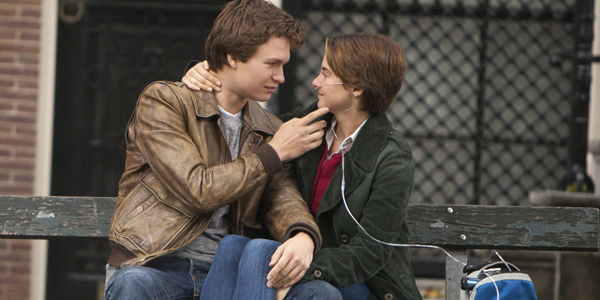
--Shailene Woodley and Ansel Elgot. Casting for TFIOS needed to be impeccable and it was. When Ansel was cast as Gus Waters, I was very apprehensive. He wasn't quite what I pictured from the book, but he sold it in this film. Clad in leather, with a beautiful smile and kind eyes, but moving through life from metaphor to metaphor, he did it perfectly. Shailene has really proven herself in the past few years of being able to do anything. Her history with the book is well known; she wrote a letter to John Green expressing her love for the novel long before the movie was cast. She brought Hazel to life

--The smaller story line of Isaac was given just enough space to make Isaac a fleshed out character but not to detract from Gus and Hazel. He was also some much needed comic relief without being simply comedic. In particular, I loved the basement scene where Isaac is raging against the world while Hazel and Gus try to have a serious conversation.

--The soundtrack is also really good and I enjoyed seeing the pair in Amsterdam for real.

Overall rating: A

Just go see it. You have no reason not to. This isn't just another YA adaptation. This isn't another life affiriming sick movie. This is something more.
So go see it.

Okay?
Okay.

Sunday, June 1, 2014

In Which I Review Maleficent

And yes I know it's true that visions are seldom what they seem...

When I was younger, Sleeping Beauty was a classic favorite. Like most young girls growing up in the middle of the Disney Renascence, I loved the songs and the story and I found Maleficent to be particularly terrifying. To this day, I would still rank her among the scariest Disney villains. The wicked fairy who turned into a larger than life dragon is still quite the iconic image for Disney. The latest venture back into the world of classic stories is another in a long line of revisionist films in which the villain is transformed into a misunderstood anti-hero and the "real" story is told through the eyes of a character who was previously denied a voice in their original tale. The last example, in theaters at least, was Oz the Great and Powerful in which we learned how the Wicked Witch became wicked and of course, Once Upon a Time has been doing the villain into anti-hero into hero take for three seasons now. Most of these ideas are following in the rather large footsteps of Gregory Magurie's "Wicked" saga in which the Wicked Witch of the West is given a name and a voice and a story that cannot be reduced to "ugly witch tries to kill a good girl." Where Maguire succeeds is in his character of Elphaba--that her story is outside of normal anti-hero woman tropes; her love life factors in, but only much later. How she became "evil" is a series of events beginning with her birth. And this is what Disney--be it Oz the Great and Powerful or Maleficent--fails at. They are still stuck in 1959. The moral of this new bright and shiny Maleficent movie? Don't have sex. Sex is bad. Virginity is good. 

Hashing the Plot

I want to do a quick, down and dirty plot explanation before moving into the problems I have with this film--and, to be fair, what I did like about the picture. Be aware that this is NOT spoiler-free. We are told from the first few moments that this is not the story we have been told before, but that what we are about to see is the true version of events. Long ago, there were two kingdoms, the human one and the fairy kingdom (called for some inexplicable reason The Moors). The two kingdoms were incredibly different--the human or "real" kingdom was populated by men who warred and were gluttonous and envious and revengeful. The mythic fairy kingdom--the realm of the divine--was beautiful and glorious, an inner sanctum only accessible by those who were magical and pure themselves. The king of the human land hated the fairies and wished to see them destroyed, but a tentative peace has been established at the start of the film. Inside the divine realm lived a little fairy by the name of Maleficent who was--as you might expect--good and kind and proper. She heals trees and is friends with the various mythic inhabitants that live in her realm. She's also an orphan because this is Disney and all heroes are orphans or have lost at least one parent (no, I'm not kidding. You tell me one famous Disney figure who has both parents living happily with them). When she is still quite young, a human boy wanders past the threshold of the mortal and into the divine. Heads up--in mythology, transgression into the divine never ends well.

The young boy--who is also an orphan, shockingly enough--is named Stephan and he and Maleficent become fast friends as children. Stephan visits Maleficent and the divine realm often and as they grow up together, the nature of their relationship changes. Before her 16th birthday, Stephan gives Maleficent a kiss and tells her, it is a true love's kiss. But Stephan, being a mortal boy, goes back to the mortal world to seek out his fame and fortune and gradually he begins to visit the divine realm and Maleficent less and less. But don't worry, Maleficent just gets over him. No, I'm just kidding, of course she doesn't. Because all women are weak and silly and the only thing that could possibly make them interesting is a man. But I'll come back to this later. For reasons that don't make a lot of sense, the king of the human world decides to go to war with the divine realm, which is now under the protection of Maleficent herself. The two sides engage in battle and Maleficent decimates the king's army using the Ent's from Tolkein. Well, at least that's what they look like. At the same time, she does some harmful damage to the king and the king is now at death's door. The king has no heir, only a daughter (and women are weak and foolish and cannot rule without a man), so he promises to marry of his child to the man who can kill Maleficent and bring back proof. Stephan, during all this, has become a close ally to the king, though we do not know how an orphan boy with no money or skills or talents ended up being the servant to the king. Stephan has grown ambitious in his years away from the divine and so seeks out to kill his former friend, Maleficent.

Stephan returns to the divine realm, bearing a sleeping potion. After he has lulled Maleficent into a false sense of security, he gives her the drink that will put her under and then takes out his knife, determined to end her life. But at the last second, he cannot do it, so instead, he violently removes her wings and leaves her in the woods. And yes, you are supposed to read this as sexual and yes, to be technical and CORRECT, it's a metaphorical rape and a loss of innocence. Maleficent awakens in pain and grieving for her lost wings but also her lost love who has betrayed her. This sexual awakening and trauma changes Maleficent and she determines to seek revenge on Stephan. Because Maleficent has changed, the divine realm changes. It grows dark and gloomy and the creatures grow fearful of their new dark queen, who is the Mistress of All Evil. Because she can no longer fly, Maleficent saves a raven from death and the raven swears allegiance to Maleficent, and can now turn from raven to man at Maleficent's will. After a short period of time, Stephan and the new Queen have a baby girl and there is to be a celebration in the kingdom.

From here, the film is incredibly derivative of the Disney animated classic and so this is going to go fairly quickly. At the party, Maleficent shows up and curses baby Aurora--on the babe's 16th birthday, she will prick her finger on a spinning wheel and fall into a death like sleep, never to be awoken except by True Love's Kiss, which Maleficent does not believe exists after Stephan's betrayal. Fearing for their child's safety, baby Aurora is sent to live with the three good (and incredibly annoying) fairies in a remote part of the forest until they day after her 16th birthday. The child grows up unaware of who she really is, and the whole time Maleficent stands guard over the child, watching. Because the fairies are incredibly ignorant on the ways of child-rearing, Maleficent finds herself, more often than not, taking care of Aurora and she comes to care for the child to the point where Maleficent tries to remove the curse, unsuccessfully. Maleficent and Aurora grow closer and Aurora wishes to come live with Maleficent in the Moors, which prospers once again under Aurora's hands (cause virginity is good and the divine can only be handled by the sacred feminine). But when Aurora learns her true identity, she returns to Stephan's castle. Stephan has become increasingly paranoid and has no reaction to his daughter except to lock her up. There, driven by the curse laid upon her, Aurora stumbles across a room full of spinning wheels and pricks her finger, thus subcumming to the a death-like sleep.

Prince Philip, a totally colorless character if ever there was one, tries unsuccessfully to wake the Sleeping Beauty. But there appears to be no hope for poor Princess Aurora when Philip's lips fail. Maleficent, overcome by grief that she could not stop the curse, promises the sleeping girl that she will stand guard over her and let no harm fall upon her. And then Emma Maleficent gives Henry Aurora a kiss on the forehead and the curse breaks because there is nothing more powerful than a mother's love (we get it Disney. You like Once Upon a Time and Once Upon a Time likes you. You're glad that they have decided to fan-wank to you for the past three seasons. You don't need to pay homage to a show that pays homage to you. It's redundant). The mother-daughter pair try to leave only to be stopped by Stephan who is determined to kill Maleficent once and for all. Maleficent turns her raven into a dragon and there is a very loud battle. Whilst this happens, Aurora stumbled upon the room in which Stephan has kept Maleficent's wings, locked in a cage, but apparently still working. Aurora frees the wings, which return to Maleficent and she defeats Stephan. Crisis resolved, Aurora unites the kingdom and they all live happily ever after. 

What I Liked

 --The visuals ARE stunning. There's no denying that most of the budge for this film went into making it as beautiful as possible. The land of the fairies is exactly what you think it will be, full of color and life and a sort of dream-like mythic reality that humanity can never hope to penetrate. There are some instances where I thought it was a little much, as if they threw in color and light just for the sake of it.

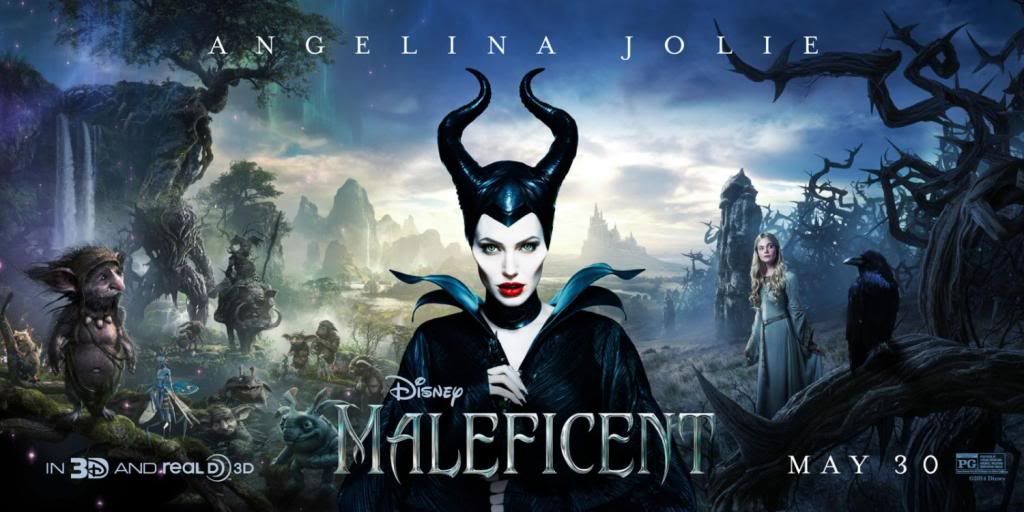
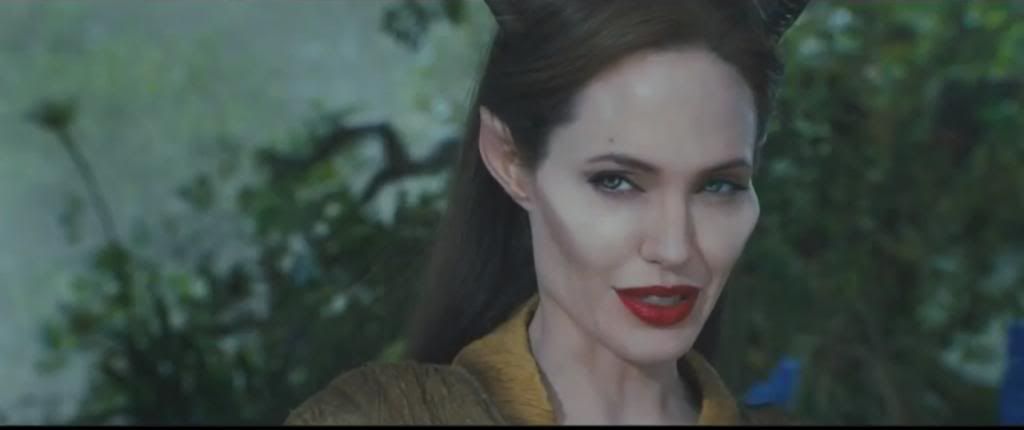
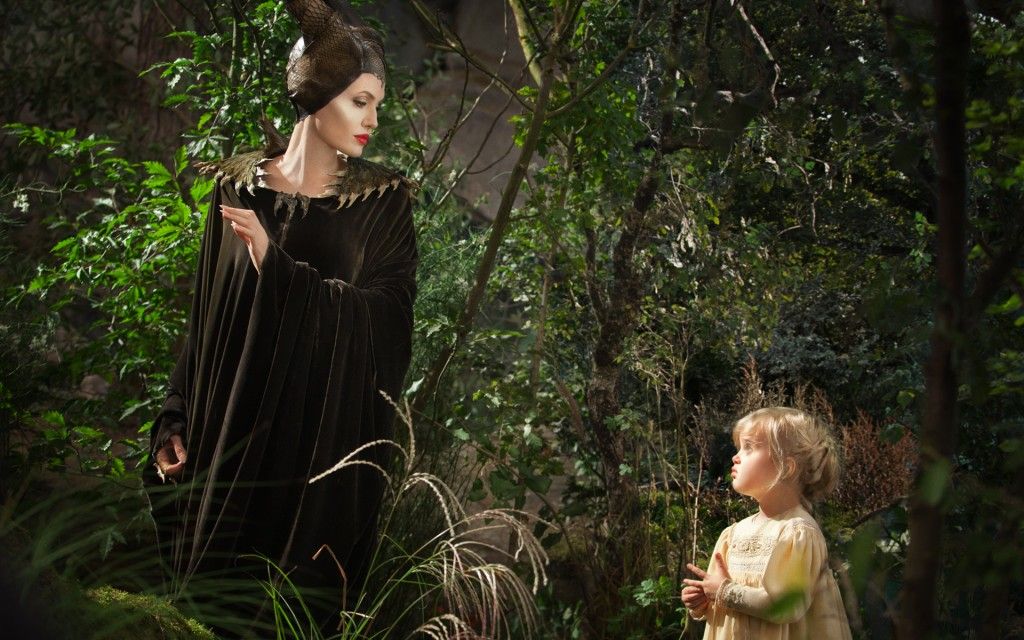
--Angelina Jolie was born to play this role. When this movie was announced and you heard who would play the lead, I bet most of you said, "of course." She is deliciously wicked and broken in the role. She wears the leather costumes with ease and those prosthetic cheekbones fit her to a T. You can tell that Jolie had a lot of fun with this role, really sinking her teeth into doing some good ol' fashioned scene chewing.

--The costumes are to die for. Or at least Maleficent's are. The snake skin horned head wrap is stunning and I imagine there will be an Oscar nomination for the film's costuming department. The costuming for Aurora is perfunctory; it gets the job done. The princess is rendered in soft virginal hues of pink, peach, gold, and blue.

--The curse scene was the best in the film. Straight up Disney brought to life, and I'm not going to complain. Jolie had a ton of fun filming that one, and it works for her. 

What I Didn't Like

--Let's talk about sex. This movie is predicated on the fact that sex is wrong and virginity is to be celebrated. I gave this deceleration to my mother as we left the theater, to which she responded "what?!" What essentially happens to Maleficent, her driving motive for the whole film, is a loss of sexual innocence and purity. The removal of her wings as she sleeps is a stand in for both the wedding night and, as I mentioned, rape. It is this incident that turns Maleficent into the mistress of all evil; while she was still virginal and pure, even though she knew the ways of the world and the wickedness of man, she was still "good." The writer of this film decided that they only way to make Maleficent an interesting character was through sex, motherhood, and most damning of all, a man. Once she meets Stephan, her entire center becomes the love she bears for this man. We are told nothing about her life in between Stephan's visits, only that when he is gone, she mourns for him. And when he robs her of her sexual power--takes her divine feminine--she becomes a leather clad, staff wielding, baddie. The land of the divine, the fairy land, becomes dark and sinister, thorns overtaking the flowers and peaceful nature because Maleficent has lost her heart (and virginity). The woodland creatures live in fear of what Maleficent has become, a sexually aware woman who's entire modus operandi is focused on a man. Now, I am not trying to diminish rape even in the slightest, but this movie is one giant fail of the Bechdel test because everything revolves around a man: be it the dying and vengeful king; young boy Stephan; teenage heartthrob Stephan; horrible father Stephan; and crazed Stephan who must die. You almost expect Maleficent to pull out a pint of Ben and Jerry's ice cream and her Adele "21" CD and sing "Someone Like You."  It is only when Maleficent if gifted her sexual power back--in the form of her divine angelic wings--does she manage to conquer the man who stole it from her in the first place.

The only time a man is not in control? Virginal Aurora. Philip is reduced to a side character who has maybe 10 lines, which is ironic given that the Disney animated film is really his story, not Sleeping Beauty's. Aurora is the perpetual virgin queen that was promised, if not on film than in the mythic reality in which this film operates and from the archetypal world from which it draws. True love's kiss from a man does not work on Aurora, her father has little emotional effect on her, and in the end we aren't sure what the status of Philip and Aurora even are. When Aurora enters the fairy land, it springs to life in the wake of her purity and innocence. The final shot of the film is Aurora, bathed in gold (the same color, mind of you, of the divine light that radiates from Maleficent's wings once they are returned to her) being crowned queen of both the mortal and the divine realm. Philip is there but only in the last few seconds, and the movie leave it vague what their relationship is. Are they to be friends as once Maleficent and Stephan were, thereby breaking the violent cycle? Are they to be lovers? Partners? We are not sure. Disney canon will, of course, say that they are lovers and will be wed, but Disney canon also said that Philip's true love kiss would wake Aurora from her curse. Aurora is not made the queen of the realms because she is a good ruler or even because she has a strict "right" to them (the mortal one perhaps though that is complicated since the sexist overtones of the movie make it impossible to believe that the kingdom would let a woman rule, but not the divine. Maleficent was the ruler because she was the "best" of them all). Aurora rules because she is the essence of purity and sexual innocence. Her interactions with Philip, when they meet, are timid and shy; she can barely speak to him.She is the perfect example of being demurely feminine.

What saves Maleficent, in the end, is motherhood, not that evil and revenge are wrong, because she has no problem still going after Stephan. When Aurora is still a screaming babe, and the fairies are too inept to take care of her, Maleficent sends the raven to the baby with a milk flower from which Aurora suckles. It may be through a middle man, but Maleficent gives the baby suck, which is something that is not even subtly about motherhood. While I understand that THIS is the new take on the Sleeping Beauty story, it's not new. It's the same idea you would have found in 1950s and 1960s Disney and outside Disney. Women are saved because their nature is to be nurturing mothers who love their children. I don't want to call it propaganda but Maleficent's entire center is first based on sexual loss and then on being a mother, or, if you want to get rather un-puritanical, grin and bear your husbands affections because your children are your reward.  And if you want to extend this metaphor, consider this: Aurora is played by several younger actresses until Elle Fanning takes over. The actress who plays the 2-3 yr old Aurora? Jolie's own daughter.

It's a bit un-post modern and it's not really revisionist: the only way for a woman to be powerful is to be either a virgin (Aurora) or a mother (Maleficent), though the virgin clearly trumps all. In a way, Maleficent becomes the Sleeping Beauty who who has something taken from her and only returned through true love. There are a few images that reinforce what I've been saying that I'll just touch on them quickly: the potion Stephan gives Maleficent is blood red and we only see it steadily dripping on to the ground like the blood that would have occurred during the breaking of the hymen; the metaphor is taken further by the wings being on display, like a bloody sheet that would have been hung up to prove that a marriage was consummated. There is a lot of phallic imagery, from the way Stephan constantly weilds his knife, to the many swords used to take down Maleficent to the staff Maleficent uses after the assault as a crutch (metaphor alert: Maleficent uses the representation of the male sex organ because her own sexual power has been taken!). I suspect some will claim that Maleficent gets her sexual power back (her wings) and thus defeats Stephan but I find his problematic for two reasons. First, Maleficent does not retrieve her wings, they are given back to her by Aurora. And second, even with her recovered wings, Maleficent can not be the queen of the divine realm; that position now belongs to virginal Aurora.

--Aurora. Oh boy, where to start? Well, for one, they kept her very Disney-fied. She's a simpering moron with little to say or do. Elle Fanning's job in this movie to be pretty. She is to stand quietly and smile and look pretty. Like in Disney, she is granted gifts from the fairies: beauty and grace. Because that is all a woman is supposed to offer this world, I suppose. A true revision would have given her some smarts so she didn't do idiotic things like think the leather clad woman with horns was her fairy godmother (not kidding).  I suppose since all that was required was to be pretty, she did it well. You can add Philip to this list as well as an essentially useless character who's role was to simply be there because nostalgia dictates it.

--The three fairies, who were the best part of the Disney move, are incredibly annoying and shrill. They are the comic relief of the film and spend more time shrieking and fighting with each other than they do anything else. In the Disney film, they are actually quite helpful and powerful. Another case of turning women into simpering idiots, I suppose.

--A lot of quiet moments of no action or advancement. Now, I complimented Jolie in this role and I meant it. But too much of this film is the director having Maleficent sitting or standing and simply looking. She spends a lot of time watching and gazing and the director takes advantage of Jolie's looks and makeup and costuming to find ways to light her and angle his camera to capture her beauty. It was fine the first few times because she does look incredible, but after awhile, I began to get annoyed with the constant close ups and focus on her cheekbones and eyes. 

--Maleficent doesn't turn into a dragon. I am going to repeat that. Maleficent doesn't turn into a dragon. Good lord--even ONCE got that part right!


Over all grade and thoughts:  I'm going to give it a C. The film is visually stunning and Jolie is divine looking in the costuming. But the not so revisionist "revision" and really sexist plot line take away a lot of the enjoyment I expected from this film. There is little in the way of laughter, though the film tries with the three fairies and occasionally the raven, who was a good character if very underused.  It's a very short film, for a summer flick, so it may be worth the money to go see it, but I'd wait until your local theater offers cheaper tickets.

Friday, May 30, 2014

In Which I Review Crossbones (1x1)

When I first learned that NBC would be producing a swash buckle take on the historic Blackbeard, I rolled my eyes and said, "of course they are." Because nothing screams summer like an adventure on the high seas. The trailer for "Crossbones" coupled with NBC's previous attempts at new drama (ie: Dracula) left me doubtful that this would be anything more than an exercise in foolishness. Despite having the accomplished John Malcovich as the lead, the show just seemed too ridiculous to take seriously. So image my surprise when the first episode, "The Devil's Domain," was actually...good. Now, I don't mean it's life altering Mad Men, Breaking Bad, Orphan Black kind of good. But it was good nonetheless. It blended humor and intrigue and good old fashioned pirating (pay attention, ONCE, this is how you do pirates) effortlessly. There was enough to keep me coming back for more and little in the way of filler or fluff.  Maybe NBC got something right for a change?

At present, there are only four characters that truly matter, and two of them are far more important than the others. Instead of introducing a veritable slew of new figures, the show did well in introducing necessary players but only providing tidbits as to who they really are and what they want. I have no doubt that there will be others that come into play as these 10 episodes play out. The cast is, as you might expect, an assorted motley crew of pirates and thieves--each one brandishing a different weapon. There are islanders and Englishmen and miscellaneous riff-raff. What really sells the show, so far at least, are the two leads of Blackbeard and Thomas Lowe.

I believe I made mention of this in my ONCE 3x17 post, but Blackbeard was a real historical figure. Despite what Hollywood would have you believe--as most pirates these days are based on the mythic representation of Blackbeard as opposed to any historical truth--he was not a crazed killing machine. He was a pirate, and a very good one, to be sure, but he did not go around killing people for the sake of killing. He also lit his beard on fire, but I suppose we can dispense with that for the sake of safety? NBC's take on the pirate, who does not have a flaming beard sadly, is not what I expected. I thought we'd get a caricature--not a character. He'd do all the things a pirate is supposed to do--say "arg" a lot, have a parrot, and with any luck be more comical than scary. Turns out, John Malcovich as a pirate, is terrifying. We're talking boot quaking, on the edge of your seat, really messed up terrifying. He's the best kind of terrifying--he'll smile as he threatens you. This Blackbeard is polite and educated and unlike his pirate brothers, he is above the more brutish desires and natures. He is clean and has the air of an English gentleman about him. Of course, he'll threaten you, hang you in the town square, draw and quarter you, flay you, and let all manner of terrible things befall you, but he'd drink his high tea and crumpets while doing it. In a word--this Blackbeard is cold. Ice to the touch. What his ultimate end game is, I don't know. But given that we first see him surrounded by a host of ticking clocks, I suspect he's literally running out of time. Time for what though--his life? Or until the British Empire gobbles up the rest of the world that he used to run and he is forced back into the murky depths, lost to civilization? Blackbeard is also cunning and has somehow managed to ensconce himself as king of this tiny isle, though life on a rock must be a dreadful one for a pirate. There is also, clearly, something in his past that haunts him. I was not expecting a dead woman covered in blood to show up, floating eerily at his door, but there she was! And so traumatizing was the specter, that Blackbeard had a physical reaction to her in the form of a nosebleed. Dead wife? Dead mistress? Not sure but I found this Blackbeard fascinating and enjoyable to watch.

Standing opposed to Blackbeard, but with a touch of pirate in him, is Thomas Lowe who is a doctor--spy--doctor--spy---I really don't know. He obviously has some medical training, though that could be as part of his spy training. And it's also obvious that Lowe has a gift for espionage. But apart from his standing orders to kill Blackbeard, we don't know a whole lot about him. His conversations with Blackbeard, though, were interesting. They are essentially trying to play a game of chess, and both know (or at least thinks they know) what the other wants. Lowe wants Blackbeard dead and Blackbeard wants Lowe's help before he hangs him up for the crows to peck at. Lowe strikes me as a loyal only when it suits him. While he has no problem following orders, I suspect he might be tempted by island living. Blackbeard has too little freedom, Lowe has too much. And of course, his temptress to the world of attachment is the naked swimmer Lady Katherine. Temptation, thy name is woman. What I'm more interested in is why Lowe became a spy in the first place. Spies on TV becomes spies because they are unattached, they are not bound by hearth and home and thus free to take up a life of danger, peaking into other people's hearth and homes. But it's also pretty common that spies are running from something--a bad family, a broken heart, and so on and so forth. What's Lowe's story? And what would it take--apart from Lady Katherine--to break Lowe's ties to the crown?

Quick nitty gritty of plot. The British Empire is quickly claiming many parts of the globe. However, the oceans are vast and many ships get lost without proper navigational equipment. Enter a curious looking device that will allow a ship to chart their location at sea. Once the British Navy has this at their disposal, the seas are theirs for the taking, and all pirates be damned. This device, its inventor, and the inventor's encoded diary are bound for London, Thomas Lowe in tow as a form of protection. Lowe's other objective is to find Blackbeard and kill him. Pretty simple, right? Except that the ship is taken over by Blackbeard's men and ransacked; Lowe makes a last ditch effort to destroy the machine and the diary but only succeeds in completely destroying the former. He is taken, with the diary, to a small island on which Blackbeard has set up shop. Blackbeard gives Lowe an ultimatum: translate the diary and you can live awhile longer or die now. It's only episode one, so I think we know what option Lowe takes.

Lowe does make one half hearted attempted at escape and murdering Blackbeard but changes his mind due to a plot involving the Spanish--this, as of right now, is unclear but will become clearer as the show progresses.

The other two important characters are the Lady Katherine, who is on the island hiding out from charges of high treason and her husband (?) who doesn't have a name yet, but is working with Blackbeard. Lady Kate (as I shall now call her) thinks her husband an invalid and in a wheelchair but he's faking that apparently. Didn't expect that either. There is also Selima, and if I had to hazard a guess, I'd say she and Blackbeard have a thing going. Selima like puzzles, that's all we know so far, but since that's her first character trait, it's an important one.

Over all, I'd say to check it out. The pilot held my interest and was good fun but also left me wanting more.

Miscellaneous Notes on The Devil's Domain

--Really nice set and costume design. Felt very tropical and pirate-y.

--Malcovich's accent took a bit of getting used to.

--A wee bit violent but nowhere near the blood and gore of Dracula

--Despite having a potential thing with Selima, Blackbeard also has a harem.

--Any good spy must have an assistant but I do hope Fletch doesn't become too comic relief-y.

Monday, May 26, 2014

In Which I Review Mad Men (7x7)

If you've ever taken a single European history course, then chances are you've heard of Napoleon and the infamous Battle of Waterloo. It was a rather decisive battle in European history; it not only ended Napoleon's reign as the Emperor of France, but it also ended a series of wars that raged over Europe and ushered in a 50 year era of peace between the countries. In other words, with Napoleon out and isolated, the best things in life were yet to come. Don's had a bit of a Napoleon theme running through him this season, though it took this episode, "Waterloo," for me to really see it. Big and brash commander who won more victories than he had defeats, but towards the end began making mistakes. Tiny little slip ups that resulted in loss of life and power, until finally, he was defeated and exiled to a tiny island. Don is much the same; he could do no wrong in that company, and even when he was drinking and sleeping around, he was still Don Draper. Then he began to make a few too many mistakes: pitching suicide for instance, and then finally the biggest mistake of them all, telling a room full of clients who he really is. And, then, with hat in hand, Don was shipped off on leave, exiled to his dingy apartment to wait judgement. Like Napoleon, Don staged a comeback and was granted a second chance. But this was Don's Waterloo--can a man really come back from leave? What places does Don Draper have in this agency now? Weiner and company would never be so literal or so repetitive to, once again, ship Don off in exile like Napoleon was after Waterloo, but while the war may have been won, it wasn't Don's victory. Don was just along for the ride. 

It's July 1969 and everyone in America (and the world, really) is waiting for Apollo 11 to either land on the moon and make history, or to crash and burn and kill everyone inside. Metaphorically, in SC &P everyone is waiting for the Burger Chef pitch, in which they will either sell their advertisement idea and make lots of money, or they'll crash and burn and kill the company. There is a lot riding on this pitch, which is why last week, Pete suggested (read: all but insisted) that Don be the one to deliver the pitch; Don's the one who can bring it home. It should be a sign of things to come when Pete cuts off Don's windup pitch; we won't be seeing Don pitch anything, maybe ever again. If you really think about it, Don hasn't pitched at all this season. At least not directly. Peggy doesn't know that Don was feeding Freddy Rumsen work, and brilliant work at that. But once he came back to SC&P, Don has kept his head down and done the entry level work of a junior ad-man. Until the last few moments of this episode, we haven't seen Don himself pitch; even then, the "pitch" at the end isn't a Don Draper ad pitch; it's a desperate Hail Mary pass to save his own career and isn't even directed at a client. Yes, the audience understands that Don has been practice pitching to his team for a few weeks now, but by denying the audience's chance to see that in action, you are also making a statement about Don's power: he has none. He's not even allowed to practice pitch fully.


His lack of power coupled with the issues of the past, coupled with Jim Culter's somewhat bizarre desire to move away from creative and into computer-based advertising sets us up for the metaphorical battle of Waterloo. Like in all good battles, first an issue of war is declared. The day the team is due to fly out to Indiana and pitch to Burger Chef, a letter comes across Don's desk informing him that he is in breech of contract and that he is going to be fired. A few episodes back, Don walked into a big tobacco meeting and proceeded to undermine Jim and Lou by pitching himself, not an ad. The move was a way to save his career, as the meeting was a set up to in force Don out in the first place. But, Jim now feels it is adequate grounds to dismiss Don. So long as Don is around, SC&P will always be a Don Draper company. The clients, for now (we'll get to to why only now), flock to Don to hear Don's ideas and Don's pitches. So long as Don Draper can still burst into meetings, Jim will never have the kind of company he wants. I must say, I'm a little shocked at how little regard Jim has for creative. His closest ally and partner is Ted, who is exactly like Don: creative first, business second. Does Jim think there is really a place for Ted in this new sterile, technology driven agency? What's more shocking are the way the votes go down when Don summons the partners together to vote on if he should stay or go. This scene was laced with tension. The scoring of Mad Men is always important, but unless it's an actual lyrical song, the music is never in your face and is often muted or very low. The music as Don calls the partners, his comrades in arms as it were, together was much louder and intense than anything we've heard in awhile. It created a sense of drama, but it also created a sense of fear. Don's on edge and almost takes a swing at Jim (which Jim deserves for throwing Don's "impoverished childhood" in Don's face), everyone is angry at one another and angry at Jim. Like civilized men (and woman) they first attempt a vote. Not surprisingly Jim (and apparently Ted who is absent in more ways than one this season) wants Don out of the company.

What really hits Don hard is that Joan sides with Jim. I have a lot of issues with this. Joan claims it is because Don costs her money and she's tired of it. I must say, this is a character development of Joan that I don't like.While the two have never been close, say in the vein of Peggy and Don's relationship, Joan and Don have always been allies and had a mutual respect for one another. When Joan got served divorce papers, it was Don who made her feel better. When the company wanted to whore Joan out to get the Jaguar car, it was Don who went to her apartment at night and asked her not to do it. Joan has always seen to Don's needs and never publicly judged or faulted him. As far as the money issue goes, Joanie has got a bit of revisionist history going on in her head. Joan is referring to how she, Bert, and Pete wanted to take the company public, before Don and Ted single-handedly managed to merge their two companies together without thought to the other partners in their respective firms. So while Joan can be upset that she lost money on that deal, she cannot actually fault Don because Don didn't know about this secret plan to take his company public. Both sides were guilty of back door dealing, but Don got the victory. I find Joan's lack of loyalty not only illogical but just unbelievable. Are the writers trying to get me to dislike Joan? Her obsession with money lately is a bit hard to swallow. Joan is doing alright, financially. She got a promotion and is making more money as a partner. The fact that she would hold this one (revisionist) incident over Don's head to the point where she wants him out, is ludicrous. Does Joan not realize that if Don Draper goes, the money goes with him? Don's name is still worth something, even if he is currently lacking power and is no longer the creative genius of seasons past. Until Peggy firmly establishes herself as the new go-to for creative, Don is the prized piece of horseflesh (best line ever?). If I have one criticism of this season, it's the way they are writing Joan about 75% of the time.

This particular skirmish might have come down in Don's favor, but that doesn't mean the battle is won yet.  Poor Don. All his marriages end by phone. One of my favorite episodes of Mad Men has to be the season 3 finale, "Shut the Door. Have a Seat." That episode was ALL over this one; lots of parallels or reversals of fortune. Quick reminder: in Season Two, Sterling Cooper was bought by a British firm who allowed SC a form of autonomy until the end of season three when the British firm was acquired by McCann Erikson. This meant that McCann Erikson (who has always lurked in the shadows of the show, ready to gobble up wherever Don Draper was working) would finally acquire SC and turn it into "a sausage factory." Don's talent would be lost and everyone else would be reduced to mediocrity. Don, unable to stand such a thought, convinced Lane Pryce, Bert Cooper, and eventually, Roger Sterling to stage a coup and form their own company, what was Sterling Cooper Draper Pryce until the end of season 5. Put a pin in all that for a moment, because what is really important for present day Don is what was happening between Betty and Don in the past: the ending of their marriage. Like Megan and Don, the dissolution of Betty and Don's marriage occurs in the shows of a national event, in their case in the wake of JFK's assassination. Don's first marriage ends in the face of a national tragedy, his second in the wake of a national triumph.  There were a lot of similarities between the way these two marriages ended: over the phone, the events surrounding them, and even some of the dialogue. In season three, Don tells Betty, "I'm not going to fight" and in season seven, Megan asks (in a round about way, since they are discussing, originally, the company trying to force him out): "aren't you tired of fighting. Maybe you should move on." When Don presents the idea of moving out to LA full time, Megan doesn't answer and Don knows: it's over. Their marriage was never going to last; it was too quick and it only served to a fill a hole in Don's heart when Anna died. Megan with her carefree attitude in California gave Don what he needed in that moment, but Megan never wanted to be the kind of wife and mother Don pictures himself with. Will we see Megan ever again? Probably. I can't see Weiner keeping her totally out of the show; look at how often we see Betty, even though Betty admits in this episode that she only ever sees Don when it's absolutely necessary and she's begun to think of him as more like an ex-boyfriend that a young girl would date, not a woman. However, maybe not since Megan has no other ties to Don, never having given him a baby. So while Don is loosing his second wife, there is another relationship that is also breaking up.

Julio and Peggy are an odd little duo. He serves as a stand in for the little boy Peggy gave up between season one and season two and likewise, Peggy is a stand-in for Julio's real mother, who probably loves her son but doesn't do a great job of seeing to his needs. Julio has been flitting in and out of Peggy's apartment all season; in lieu of any sort of romantic attachment, Peggy--the woman who says she doesn't know how to be the voice of moms--has become a mom. And now she is loosing another baby, but this one she didn't want to give up. This one she wanted to keep. It's a bit of cruel irony that just when Peggy figures out how to be a mother, it's ripped from her. But I suppose Julio served his purpose; he opened Peggy's eyes to the fact that she is a good mom, or could be someday. There was a lot of meaning in the lines, "yes she does. that's why she is moving." Peggy knows all about loving a baby so much that you move to suit their needs. Julio's mom is moving to Newark, but Peggy moved up in the corporal world, and let her son have a life he deserved, but she couldn't provide. Quick costuming note: when the SC&P team sit down to pitch to Burger Chef, Peggy will mimic Julio's outfit, green and blue stripes. Subconsciously, at this moment when Peggy must be the voice of moms, she's channeling her "adopted" son and, maybe unknowingly, wearing the outfit she last saw him in. It's actually pretty sweet.

I wasn't born in 1969 so I have no idea what it was like watching the moon landing, but from what I can surmise, Mad Men pretty much nailed what it was like to gather around the TV with your family and friends and wait with baited breath until Armstrong's foot touched down. About 125 million Americans tuned in to watch. That's a lot, in case you were wondering. This was a rather touching moment, as you have lot of families gathered around their TV's watching the moon landing--Don and his team in a small hotel; Betty and her clan in their mansion; Roger, his ex, their son-in-law, and grandson; Bert and his live-in maid, all piled together on a couch. A few things of interest: firstly, look at all the different types of families. You have the work family of SC&P, you have the modern version of a family with the Sterling's since Margaret has run off and now Roger and Mona are playing a larger role in raising their grandson. And you have the upper class conservative family of the Francis residence, which consists of a husband and wife both on their second marriages and kids who have a different world view. It's a reflection of what Peggy pitched to Don last week: the nuclear family of mom, dad, dog, two kids, gathered around a kitchen table enjoying a special treat of Burger Chef doesn't exist anymore. It's not the 1950s; it's almost 1970 and this is what family looks like. Secondly, every single one of these families has some sort of food product around them: cans of beer, a full meal, snacks, a glass of milk. Again, this is what Peggy is going to be highlighting in her pitch to Burger Chef: the idea of family gathering around a dining room table and having a family meal doesn't really exist anymore. Instead, you're piled in front of the TV with various bits of eating stuffs, watching the news. The kitchen table is your battle field.

I wasn't expecting this plot point; I really wasn't. I expected someone to die, but I thought it would be Ted, who has been hovering near suicide all season. What I did not expect was Bert Cooper dying in the middle of the moon landing. Bert has always been a relatively minor figure in the show. When the show opens in 1960, Bert's already been shuffled to the side as men like Don and Pete are working their way up the ladder. He may have started the company and he has a vested interest in it, but he also made his fortune and his name and he was fine to sit in his office with his crossword puzzle and and just be a figure head. But every so often, Bert would pop up out of his hole and remind us all that once upon a time, he had been a cut throat businessman who started a firm and raised it up to the point where men like Don and Pete could take over. When Bert tells Don he has no choice but to sign a non-compete contract with SC in season two by blackmailing Don with the Dick Whitman secret, is a good example of Bert's ruthlessness. But Bert was also incredibly loyal. Loyalty was a running theme of this episode and after the skirmish in the hallway where they vote if Don is in or out, Bert gives Roger a lesson in loyalty. Bert may think Don is annoying asshole, but Don is still a member of the team, and Bert is loyal to his team. It brings to mind the incredible moment from season one where Pete tells Bert all about who Don Draper really is, hoping to get him fired, and Bert coldly waltzes up to Pete, looks him dead in the eye, and says, "Mr. Campbell. Who cares?" It's one of my favorite moments. Bert's final lesson: be loyal and be a leader. Roger is a spoiled privileged child who has no control and he who has control has the power. I also think Bert delivers the message of this episode but also what is going to play out in the rest of the season and series: "no one can come back from leave--not even Napoleon. He staged a coup but he ended up back on that island." Don came back from leave and by the end, Roger has control after a successful coup (we'll get there) but will Don end up back on his island of being unable to change? I guess we'll have to wait.

Bert's death also, as Jim so coldly points out moments after arriving at the office, means that he now has the votes to get rid of Don and he plans on doing that come Monday morning. If Don is about to be kicked out of his company, then he can't present to Burger Chef. Enter Peggy. And it was gorgeous. THAT was her Carousel moment. Season one ends with one of the greatest moments in TV history--Don pitching the absolute HELL out of Kodak using the concept of nostalgia. And Peggy is going to close season 7 by pitching the hell out of Burger Chef, by using a new idea: the family supper that gets you away from the TV. The moon landing demonstrated one thing, says Peggy, we are all starved for a connection. The nightly dinners of these modern families that you are no longer able to reach, aren't sitting around a dinning room table, discussing their day. They are in front of the TV, watching Vietnam and the News. You can't bring the family supper to them, they have to go to the family supper and that's what Peggy's pitch is: "family supper at Burger Chef." Brava to Elisabeth Olsen. It was magnificent. It felt like the Carousel ad of season one; you couldn't help but be solely focused on Peggy and what she was saying. She had the men of the room--and apart from one secretary, she is the only girl in the room--eating out of her hand. Her voice and cadence and rhythm were perfect. And there sat Don, not angry or bitter that this wasn't him, but proud. Peggy brought the ad home. Peggy brought them the connection they were craving. Is Don's time over? Is this now the Peggy show? Maybe. But Don's name, for now, carries more weight than Peggy's. And this is how Roger saves the company and Don's career.

Bert's final words to Roger--that Roger isn't a leader--really struck poor Roger Sterling. Roger has a habit of throwing his weight around, proclaiming himself king and president, but never doing anything to back up those claims. Roger takes the easy way out and would rather drink and drug himself into a stupor than to actually run a business. And now with Bert gone for good, Roger knows it's only a matter of time before he looses his best friend and brother, Don. And so, with a major Hail Mary, Roger goes behind everyone's back and strikes a deal with the people they formed the company to get away from: McCann Erikson. The deal is pretty straightforward: McCann buys the SC&P, giving the partners a HUGE amount of money, but SC&P gets to remain autonomous, keep their staff, their name, and their clients. And the best part: Donald Draper has to be part of the equation. McCann isn't interested if Don (and Ted) don't come along. Roger knows it might be a hard sell, but luckily he's talking to hardened businessmen who really like money. Joan and Pete jump on it right away, when learning how much they stand to gain. Jim is, of course, adamently against it, and threatens to leave, to which Roger smugly says, "that's okay. You're not essential to this." Burn! The problem is Ted.

 Ted has been heading down Lane Pryce Avenue for sometime now. He's miserable and suicidal. The opening scene showed him, in his plane, with two clients. Mid flight, he cuts the engine, and tells them that he's going to let the plane crash so that all their problems will be over. And here's Don and Roger asking him to stay in advertising for five more years, and to work for a major meat factory like McCann, a place that cares more about business and acquisitions than creative. But it's Don who manages to give the hard sell to Ted. "You don't have to work for us; but you do have to work. Trust me, you don't want to see what it's like when it's really gone." Ted and Don, despite their differences, have always been a reflection of the other: they are both hard working and incredibly good at what they do. There's a reason why there is so much animosity between them: they know they are each others real competition. Don knows what happens when creative men are denied their genius; they sit in bathrobes all day long eating Cheez-Its and will do anything to get back into the game. They'll write tags, coupons. Anything. Ted knows Don is right of course; what's killing his soul isn't the advertising game (he's far to good at it for it to kill him) but rather, it's being a businessman. So Don makes him a promise: go back to being the creative guy and leave the business to others. And 'lo, McCan Erikson did acquire SC&P.

Well this was unexpected. Seriously, if you had told me that the first half of season seven would end with a dead Bert Cooper dancing with secretaries and singing, I'd have asked how much acid you dropped. After the successful arm twisting of Ted, Don "goes back to work." Freddy's advice many episodes ago have really been working for Don--just do the work, Don. Now this isn't the first Don has seen a phantom after he looses someone close. When Lane died, he saw his brother because Don was largely responsible for both their deaths (Lane's ghost and memory was all over this episode, by the way. Lane's rolling his grave, cursing with British slang). Bert and Don have a father-son relationship: it's cantankerous but it's loving' it's also the only good father-son dynamic Don has ever had, his own father being a drunk and cruel. Don respects the heck out of Bert and Bert has been waiting for Don to grow up a bit and realize what really matters. And this was a very loving send off for Bert and Don. And how about a round of applause for Robert Morse, an old hat when it comes to song and dance, being as nimble and spry at his age!! And of course he's in his socks--Bert Cooper would never be in shoes! The lyrics to the song are very telling: the best things in life are free/ love can come to everyone. For Don Draper--rather to Dick Whitman--the idea that love can be his is something of a revelation. No one loves Dick Whitman. Dick Whitman sits out in the cold and and watches that love is exchanged for money instead of being freely given. Bert (Don's subconscious, really) wants Don to be free. It's also deeply ironic coming from a tycoon of advertising that the best things in life are FREE. But that's Bert: a contradiction in terms. When he died, he was sitting next to a black maid (and we know Bert exhibits a casual 1920s-esque racism) with a Jackson Pollack painting behind him. Bert wanted to leave the company to raise his cattle because he loved them so, but there he was, year after year, office-less with his colleagues. What does all this mean for Don?

Napoleon lost the battle of Waterloo, and a few years later would die an ignoble death on the island of St Helena. Is Don free now? Is he healed? Not even remotely. This episode might seem like a triumph for Don, but only because he rode the coat tails of those around him. Roger saved the company and Don's job. Peggy landed Burger Chef. Don's time as creative genius is coming to a close; he literally passed the torch to Peggy this episode and she nailed it, and landed the account. Don's not really needed anymore. Ted is younger and with less baggage, now that he's excused from the business parts of life. This wasn't exactly a victory for Don--if anything, it's a hiatus. The last seven episodes aren't due out for another year but when we come back, I think we'll see the powershifts really play out. Ted is more in charge, Roger and Jim run the company, Peggy pitches, and Don watches everything move forward without him, everyone waiting for him to move on. Anyone know how Napoleon died? Stomach cancer. Wouldn't it be telling if Donald Draper died at the end of the series from smoking too much? The final image of Don, sitting on his desk, head bent, signals, to me at least, that Don's battle with himself and how he manages to live in this bold new world, aren't over.
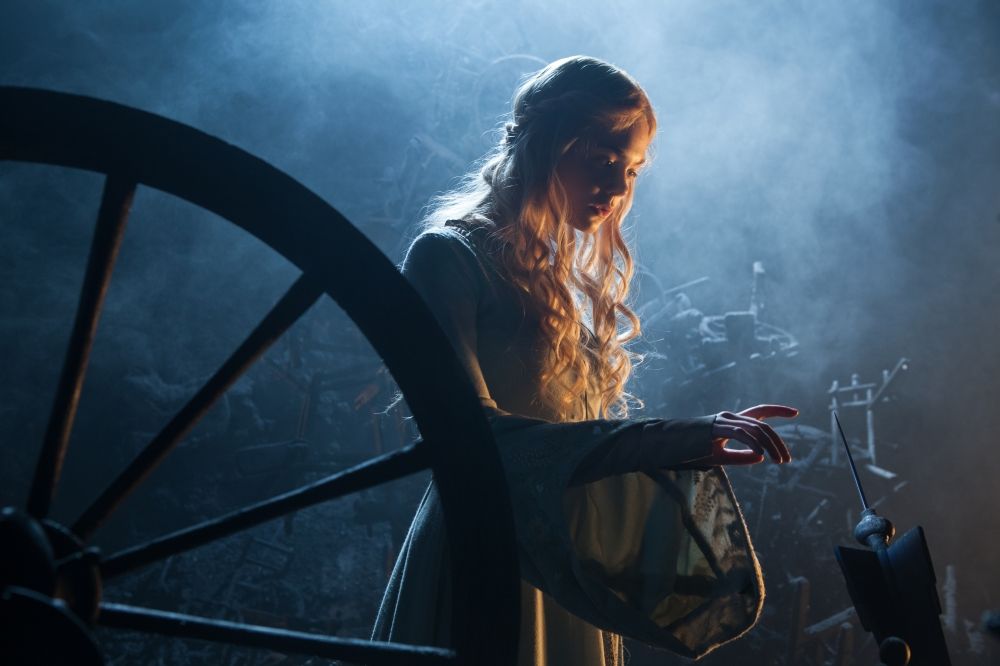
Until next year...the moon and the stars belong to everyone. The best things in life are free.

Miscellaneous Notes on Waterloo

--I know I skipped over everything with Sally but in short: despite her being a bit of a Betty clone this episode, she's still Sally and she still went for the nerdy boy in glasses instead of a the hot stud. Props to the actress who managed to embody bot her parents: forging her own path like her father, but dressed exactly like Betty. And check out how body language when she takes a drag on her cigarette: January Jones to a T.

--Meredith is officially my favorite secretary in the history of ever. That incredibly awkward attempt to hit on Don was deliciously silly.

--Can we have Nick come back and woo Peggy?

--"That is a very sensitive piece of horseflesh. He shouldn't be rattled" 

--"I don't want to go to Newark!" "No one does..."

--"We have no liquor!"

--Harry Crane once again misses his chance to become a partner because he waited too long to sign the papers. He's now out several million dollars. 

--I really need this show to not go off the air.